


Identification and expression profiles of neuropeptides and their G protein-coupled receptors in the rice stem borer Chilo suppressalis
- PMID: 27353701
- PMCID: PMC4926255
- DOI: 10.1038/srep28976
Identification and expression profiles of neuropeptides and their G protein-coupled receptors in the rice stem borer Chilo suppressalis
Abstract
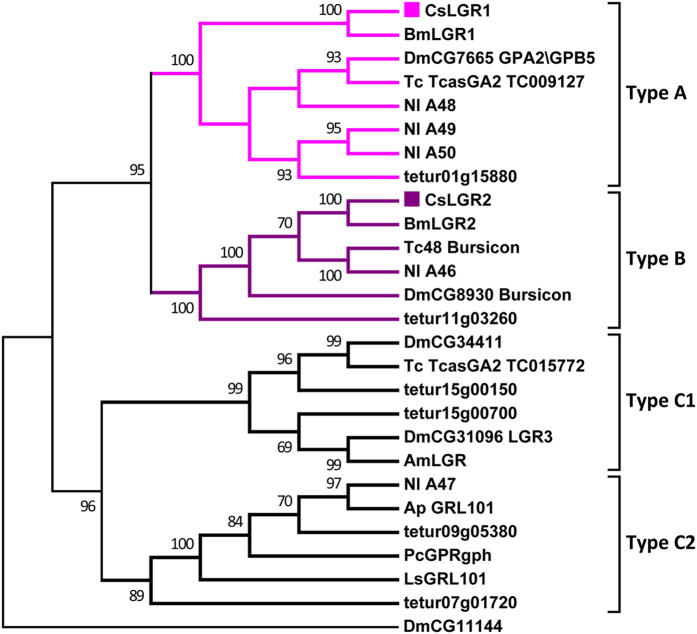
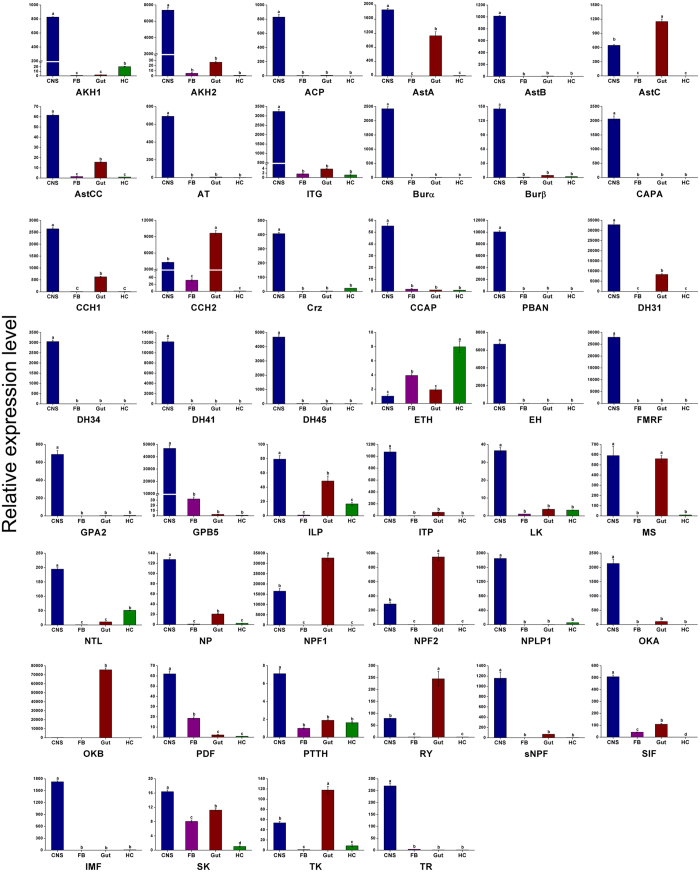
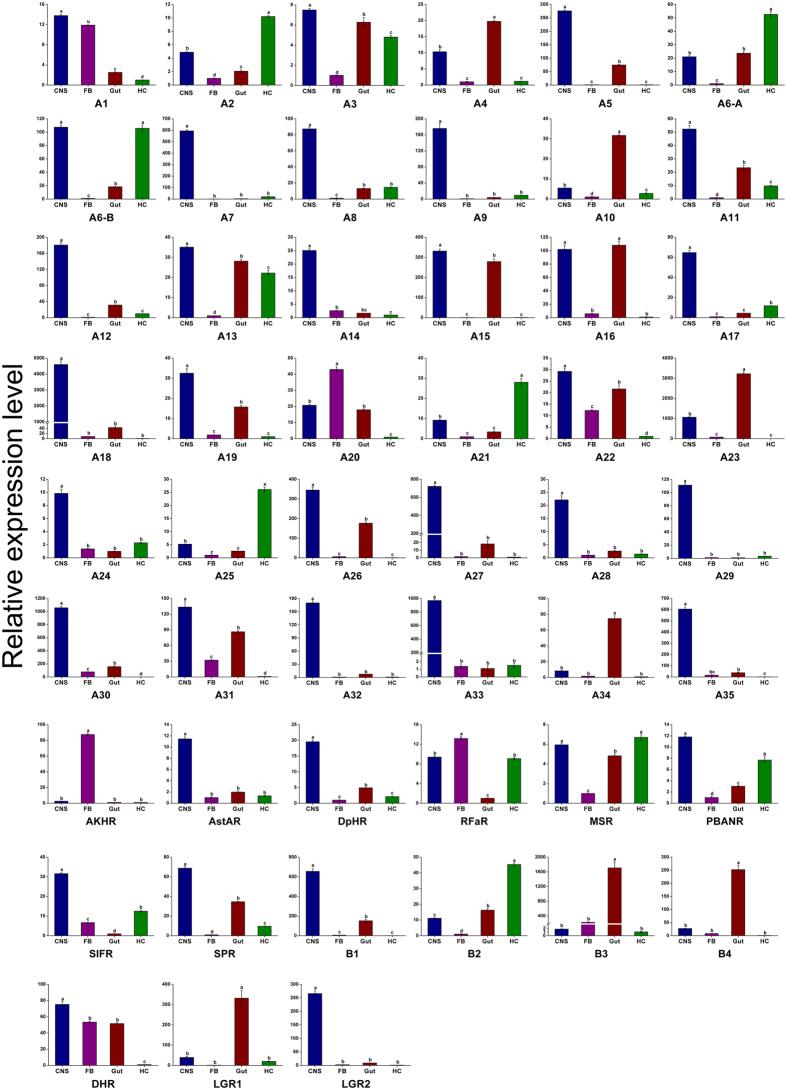
In insects, neuropeptides play important roles in the regulation of multiple physiological processes by binding to their corresponding receptors, which are primarily G protein-coupled receptors (GPCRs). The genes encoding neuropeptides and their associated GPCRs in the rice stem borer Chilo suppressalis were identified by a transcriptomic analysis and were used to identify potential targets for the disruption of physiological processes and the protection of crops. Forty-three candidate genes were found to encode the neuropeptide precursors for all known insect neuropeptides except for arginine-vasopressin-like peptide (AVLP), CNMamide, neuropeptide-like precursors 2-4 (NPLP2-4), and proctolin. In addition, novel alternative splicing variants of three neuropeptide genes (allatostatin CC, CCHamide 1, and short neuropeptide F) are reported for the first time, and 51 putative neuropeptide GPCRs were identified. Phylogenetic analyses demonstrated that 44 of these GPCRs belong to the A-family (or rhodopsin-like), 5 belong to the B-family (or secretin-like), and 2 are leucine-rich repeat-containing GPCRs. These GPCRs and their likely ligands were also described. qRT-PCR analyses revealed the expression profiles of the neuropeptide precursors and GPCR genes in various tissues of C. suppressalis. Our study provides fundamental information that may further our understanding of neuropeptidergic signaling systems in Lepidoptera and aid in the design of peptidomimetics, pseudopeptides or small molecules capable of disrupting the physiological processes regulated by these signaling molecules and their receptors.
Conflict of interest statement
The authors declare no competing financial interests.
Figures

References
-
- Nassel D. R. & Winther A. M. Drosophila neuropeptides in regulation of physiology and behavior. Prog. Neurobiol. 92, 42–104 (2010). - PubMed
-
- Sterkel M. et al. OKB, a novel family of brain-gut neuropeptides from insects. Insect Biochem. Mol. Biol. 42, 466–473 (2012). - PubMed
-
- Zandawala M. & Orchard I. Identification and functional characterization of FGLamide-related allatostatin receptor in Rhodnius prolixus. Insect Biochem. Mol. Biol. 57, 1–10 (2015). - PubMed
-
- Tanaka Y., Suetsugu Y., Yamamoto K., Noda H. & Shinoda T. Transcriptome analysis of neuropeptides and G-protein coupled receptors (GPCRs) for neuropeptides in the brown planthopper Nilaparvata lugens. Peptides 53, 125–133 (2014). - PubMed
Publication types
MeSH terms
Substances
LinkOut - more resources
Full Text Sources
Other Literature Sources
