


The Path towards Endangered Species: Prehistoric Fisheries in Southeastern Brazil
- PMID: 27355355
- PMCID: PMC4939631
- DOI: 10.1371/journal.pone.0154476
The Path towards Endangered Species: Prehistoric Fisheries in Southeastern Brazil
Abstract
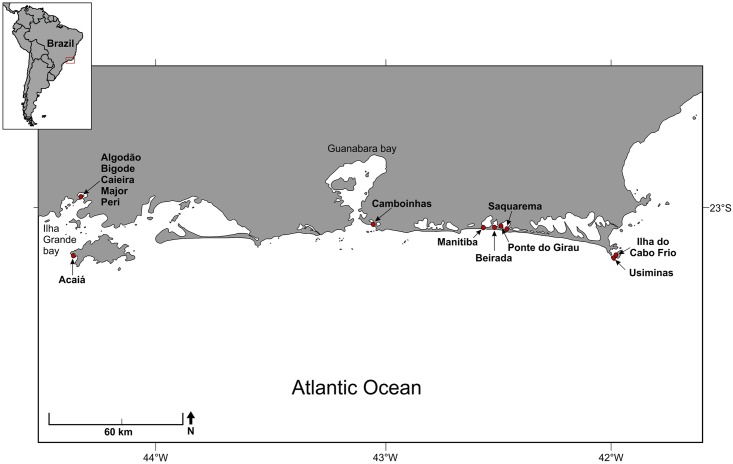
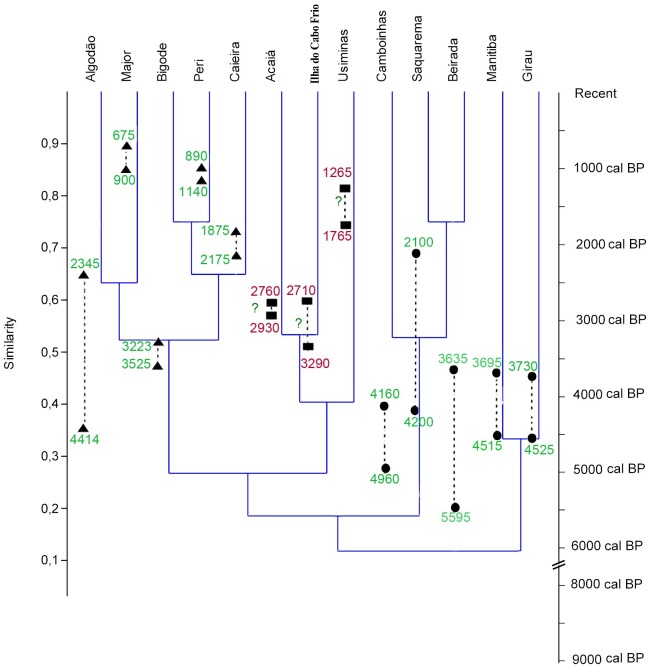
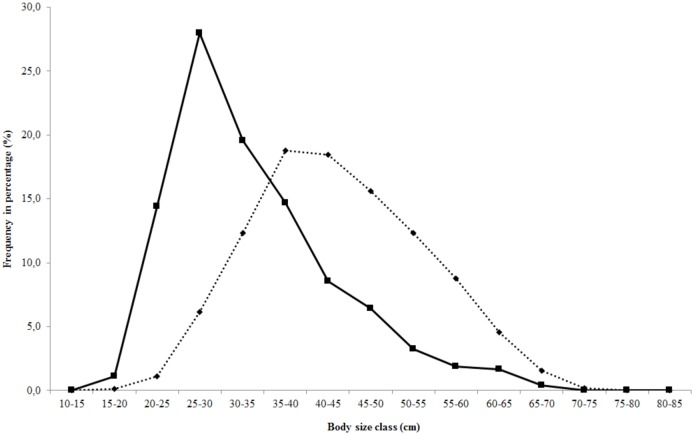
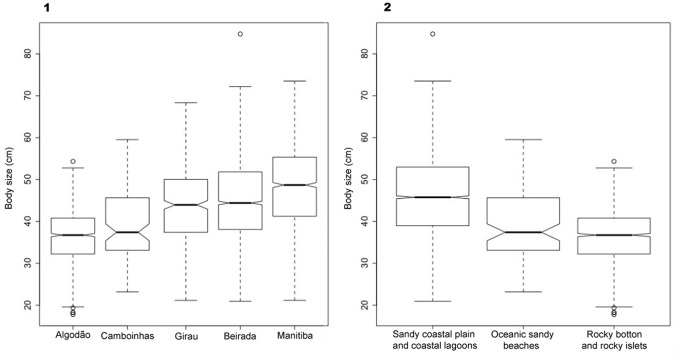
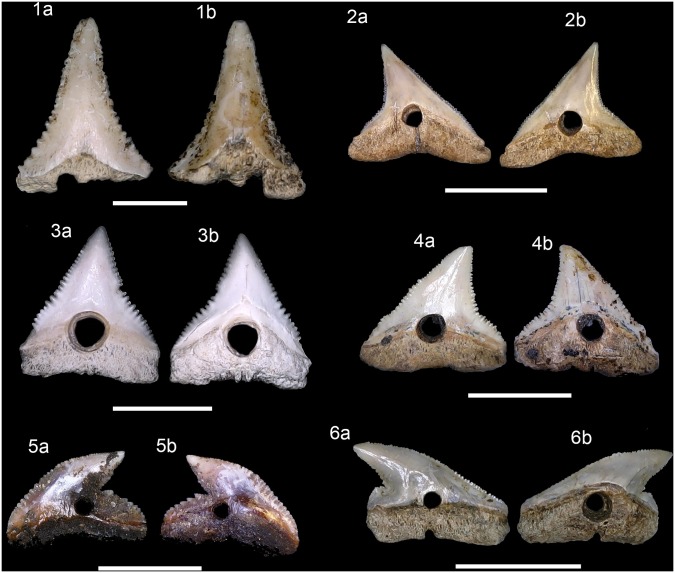
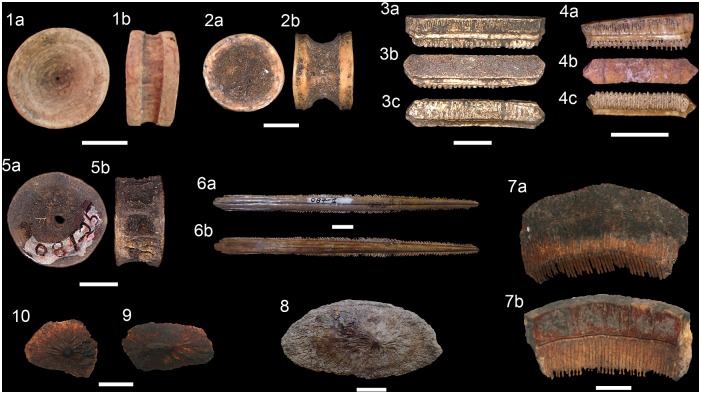
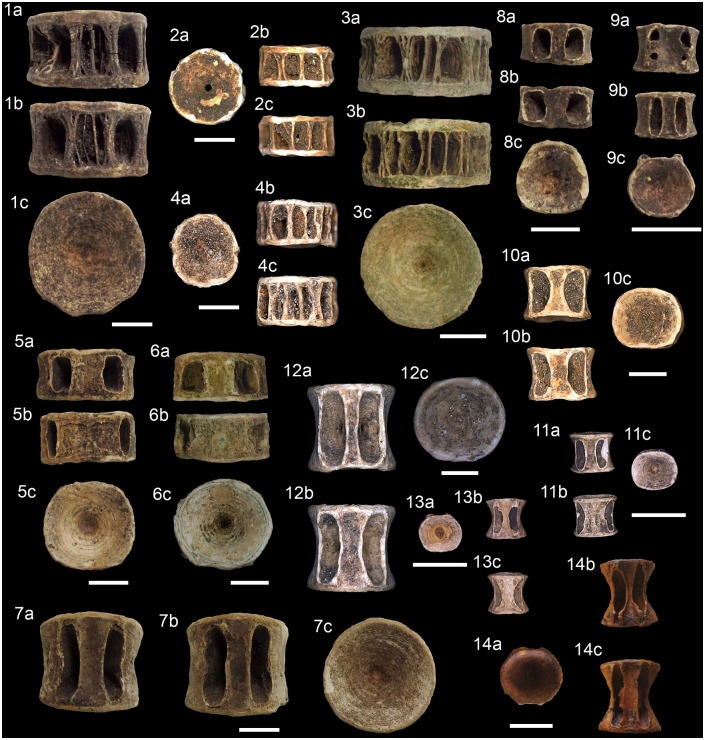
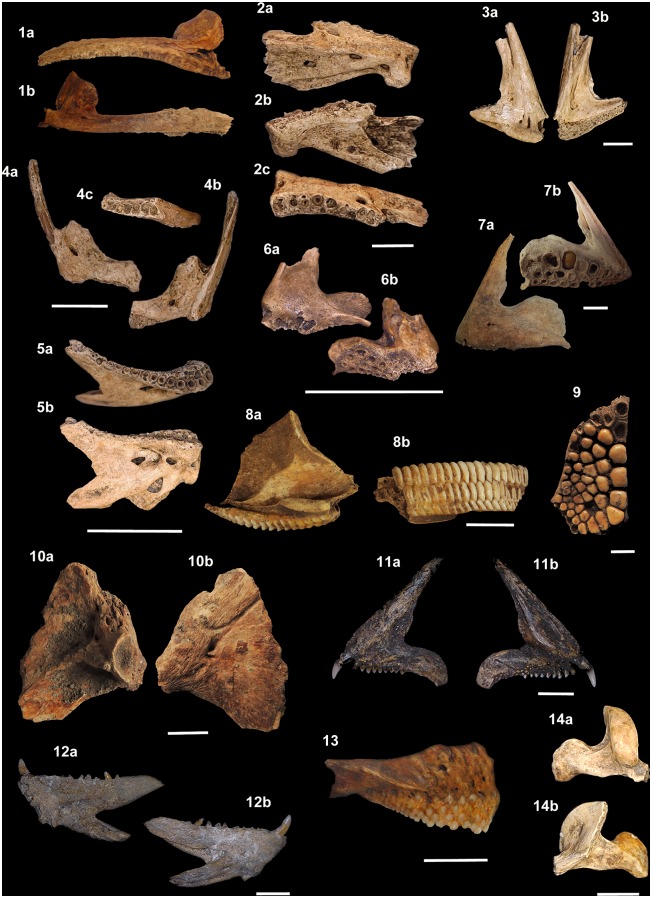
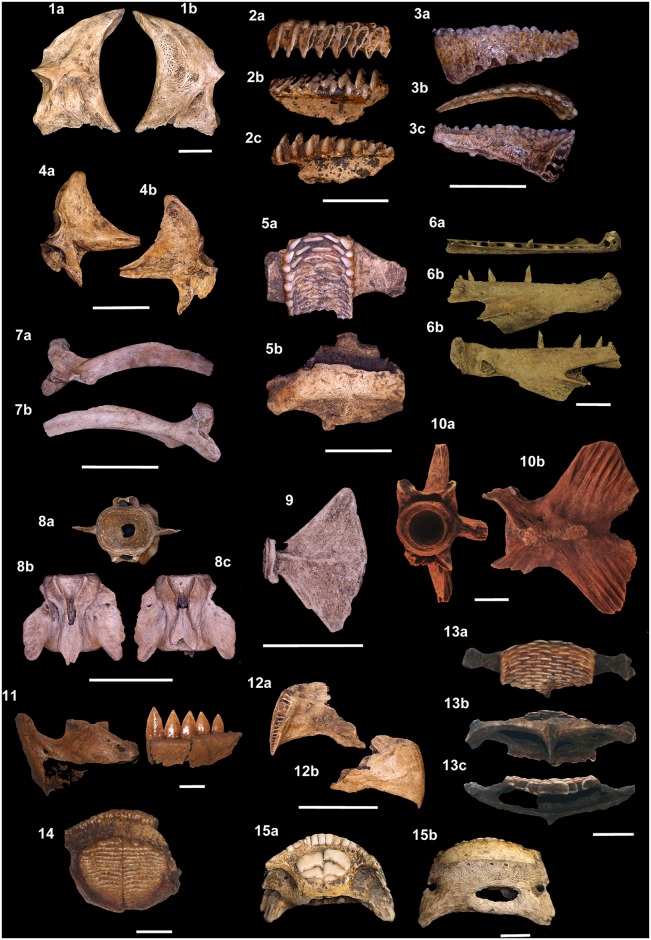
Brazilian shellmounds are archaeological sites with a high concentration of marine faunal remains. There are more than 2000 sites along the coast of Brazil that range in age from 8,720 to 985 cal BP. Here, we studied the ichthyoarchaeological remains (i.e., cranial/postcranial bones, otoliths, and teeth, among others) at 13 shellmounds on the southern coast of the state of Rio de Janeiro, which are located in coastal landscapes, including a sandy plain with coastal lagoons, rocky islands, islets and rocky bays. We identified patterns of similarity between shellmounds based on fish diversity, the ages of the assemblages, littoral geomorphology and prehistoric fisheries. Our new radiocarbon dating, based on otolith samples, was used for fishery characterization over time. A taxonomical study of the ichthyoarchaeological remains includes a diversity of 97 marine species, representing 37% of all modern species (i.e., 265 spp.) that have been documented along the coast of Rio de Janeiro state. This high fish diversity recovered from the shellmounds is clear evidence of well-developed prehistoric fishery activity that targeted sharks, rays and finfishes in a productive area influenced by coastal marine upwelling. The presence of adult and neonate shark, especially oceanic species, is here interpreted as evidence of prehistoric fisheries capacity for exploitation and possibly overexploitation in nursery areas. Various tools and strategies were used to capture finfish in seasonal fisheries, over rocky reef bottoms and in sandy littoral environments. Massive catches of whitemouth croaker, main target dermersal species of South Atlantic coast, show evidence of a reduction in body size of approximately 28% compared with modern fisheries. Fishery activity involving vulnerable species, especially in nursery areas, could mark the beginning of fish depletion along the southeastern Brazilian coast and the collapse of natural fish populations.
Conflict of interest statement
Figures





References
-
- Wagner G, Hilbert K, Bandeira D, Tenório MC, Okumura MM. Sambaquis (shell mounds) of the Brazilian coast. Quat Int. 2011; 239: 51–60.
-
- Lima TA. Dos mariscos aos peixes: um estudo zooarqueológico de mudança de subsistência na pré-história do Rio de Janeiro. M.Sc. Thesis, Universidade de São Paulo. 1991. Available: http://www.worldcat.org/title/dos-mariscos-aos-peixes-um-estudo-zoo-arqu....
-
- Dos Santos CMC. A Ictiofauna do sambaqui de Camboinhas, Niterói, RJ. Documento de trabalho: Sér Arqueol. 1995; 3: 65–72.
-
- Magalhaes RMM, Curvelo MA, Mello EMB. O sambaqui de Manitiba I e outros sambaquis de Saquarema, RJ In: A fauna na alimentação. Documentos de Trabalho, Sér Arqueol Mus Nac, UFRJ; 2001; 5: 55–69.
-
- Kneip LM. O sambaqui de Manitiba I e outros sambaquis de Saquarema, RJ Sér Arqueol Mus Nac. UFRJ; 2001; 5–91.
Publication types
MeSH terms
LinkOut - more resources
Full Text Sources
Other Literature Sources
Miscellaneous
