. 2016 Jun 29;11(6):e0158315.
doi: 10.1371/journal.pone.0158315. eCollection 2016.

Temporal Changes in BEXSERO® Antigen Sequence Type Associated with Genetic Lineages of Neisseria meningitidis over a 15-Year Period in Western Australia

Affiliations

Temporal Changes in BEXSERO® Antigen Sequence Type Associated with Genetic Lineages of Neisseria meningitidis over a 15-Year Period in Western Australia

Shakeel Mowlaboccus et al. PLoS One. .

Abstract

Neisseria meningitidis is the causative agent of invasive meningococcal disease (IMD). The BEXSERO® vaccine which is used to prevent serogroup B disease is composed of four sub-capsular protein antigens supplemented with an outer membrane vesicle. Since the sub-capsular protein antigens are variably expressed and antigenically variable amongst meningococcal isolates, vaccine coverage can be estimated by the meningococcal antigen typing system (MATS) which measures the propensity of the strain to be killed by vaccinated sera. Whole genome sequencing (WGS) which identifies the alleles of the antigens that may be recognised by the antibody response could represent, in future, an alternative estimate of coverage. In this study, WGS of 278 meningococcal isolates responsible for 62% of IMD in Western Australia from 2000-2014 were analysed for association of genetic lineage (sequence type [ST], clonal complex [cc]) with BEXSERO® antigen sequence type (BAST) and MATS to predict the annual vaccine coverage. A hyper-endemic period of IMD between 2000-05 was caused by cc41/44 with the major sequence type of ST-146 which was not predicted by MATS or BAST to be covered by the vaccine. An increase in serogroup diversity was observed between 2010-14 with the emergence of cc11 serogroup W in the adolescent population and cc23 serogroup Y in the elderly. BASTs were statistically associated with clonal complex although individual antigens underwent antigenic drift from the major type. BAST and MATS predicted an annual range of 44-91% vaccine coverage. Periods of low vaccine coverage in years post-2005 were not a result of the resurgence of cc41/44:ST-146 but were characterised by increased diversity of clonal complexes expressing BASTs which were not predicted by MATS to be covered by the vaccine. The driving force behind the diversity of the clonal complex and BAST during these periods of low vaccine coverage is unknown, but could be due to immune selection and inter-strain competition with carriage of non-disease causing meningococci.


Conflict of interest statement

Competing Interests: The authors wish to acknowledge that HS, TS and ST were recipients of funding from Novartis to undertake the MATs assays. SM, CK and TTP received support from Illumina and the not-for-profit charity The Amanda Young Foundation to undertake the genetic sequencing. This does not alter the authors' adherence to PLOS ONE policies on sharing data and materials

Figures

Fig 1
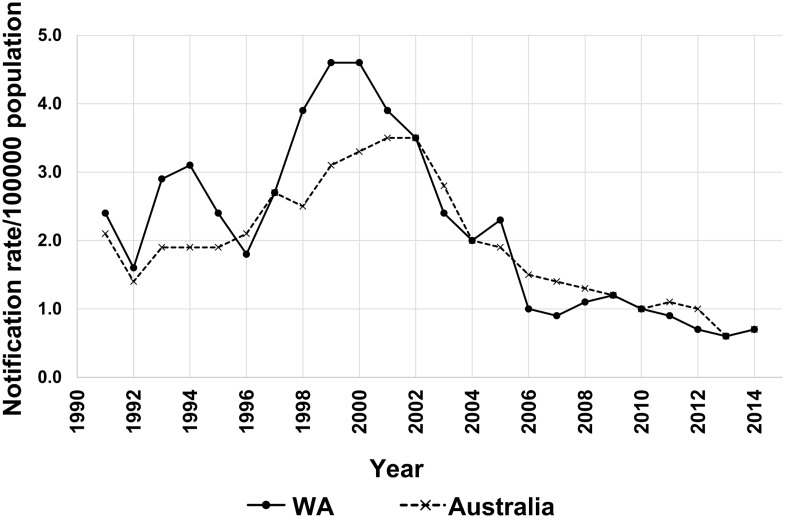
Fig 1. Annual notification rates of meningococcal disease in Australia and Western Australia, 1999–2014.
The records represent the National Notifiable Diseases Surveillance System (NNDSS) data for Western Australia and Australia obtained from http://www9.health.gov.au/cda/source/rpt_4.cfm.
Fig 2
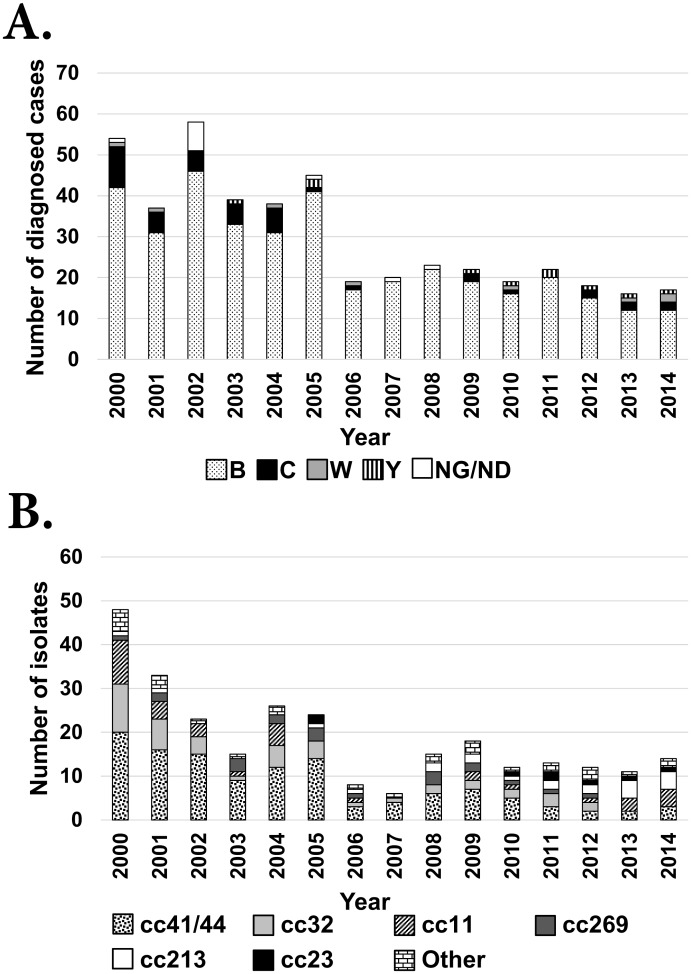
Fig 2. Serogroup (Panel A) and clonal complex (Panel B) distribution per annum from 2000–2014.
(A) Serogroup was reported for 436 IMD cases. (B) Clonal complex was reported for 278 cultured isolates. The category “Other” indicates clonal complexes with rare frequency (less than 5 isolates) and represents cc8, cc22, cc35, cc60, cc162, cc167, cc212, cc461, cc1157 and no assigned cc.
Fig 3
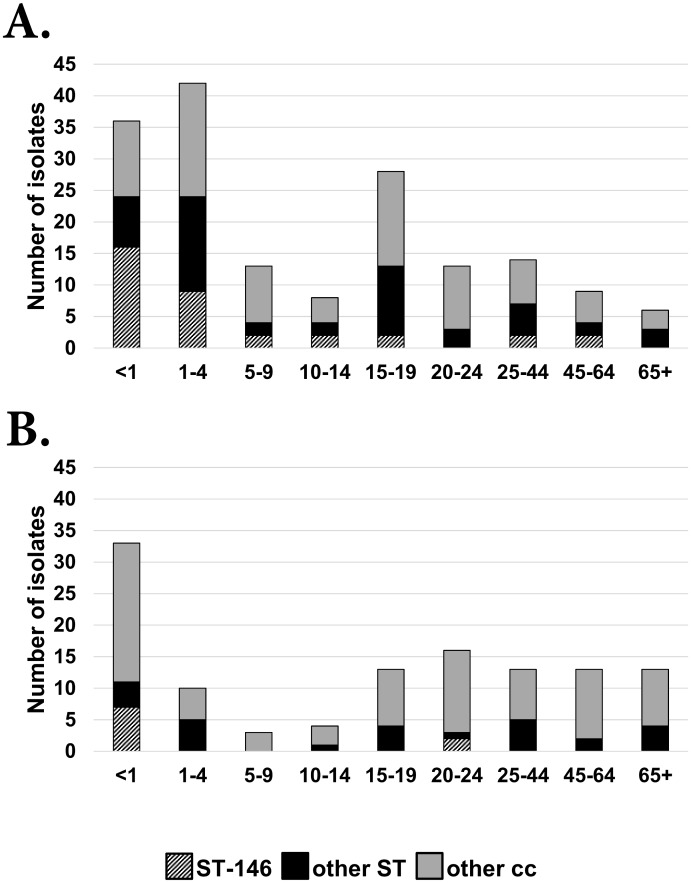
Fig 3. Distribution of cc41/44 in different age groups.
Panel A and Panel B show the prevalence of cc41/44 in 2000–05 and 2006–14 respectively. All other clonal complexes other than cc41/44 are shaded in grey, while all cc41/44 isolates are represented by the black and stripped boxes. The stripped boxes represent cc41/44: ST-146 only.
Fig 4
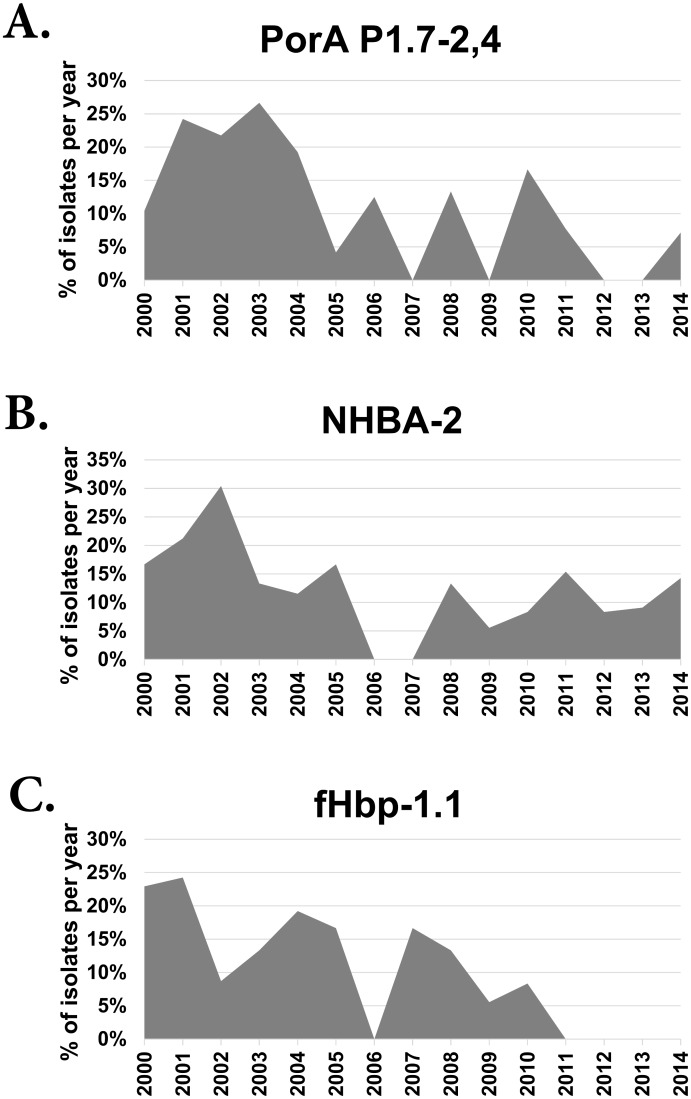
Fig 4. Persistence of the PorA, NHBA and fHbp sub/variants included in BEXSERO® from 2000 to 2014.
Fig 5
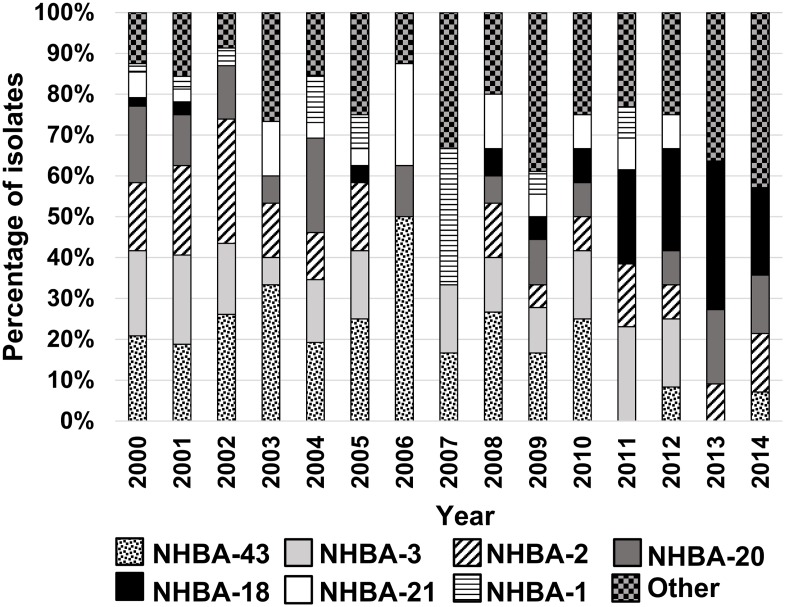
Fig 5. Annual distribution of NHBA peptides from 2000 to 2014.
The category “Other” indicates NHBA peptides with rare frequency (less than 7 isolates in total) and represents 28 different NHBA peptides.
Fig 6
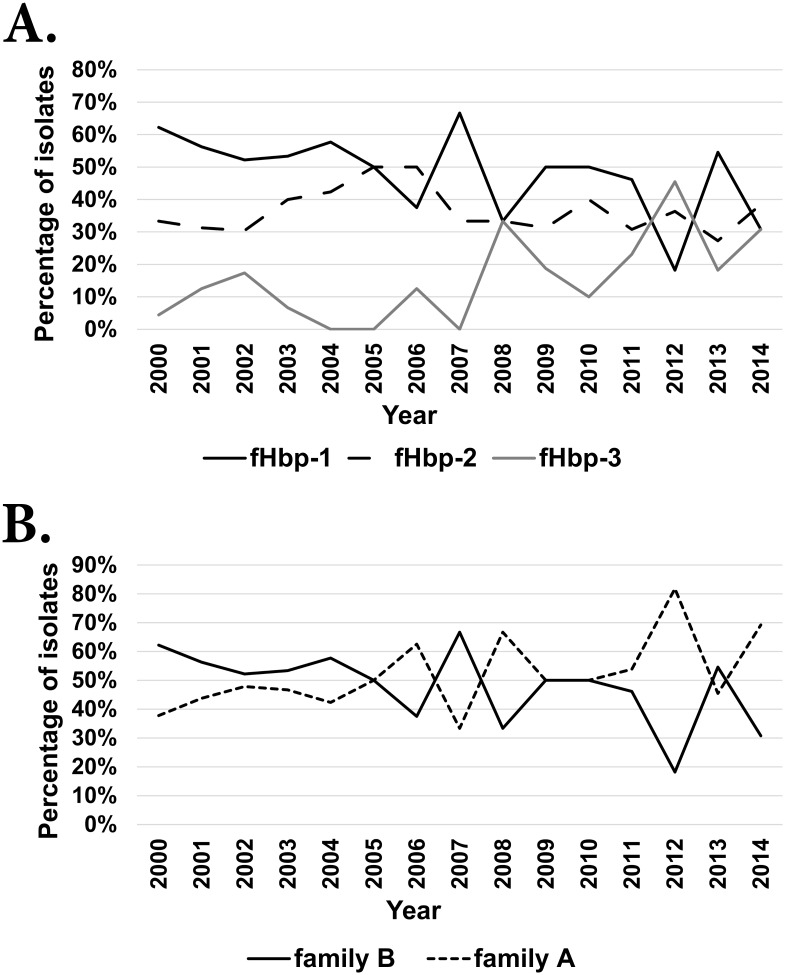
Fig 6. Annual distribution of the fHbp variants based on the Novartis nomenclature (variant 1/2/3, Panel A) and the Pfizer subfamily nomenclature (family A contains variant 1 and family B contains variant 2/3, Panel B).
Fig 7
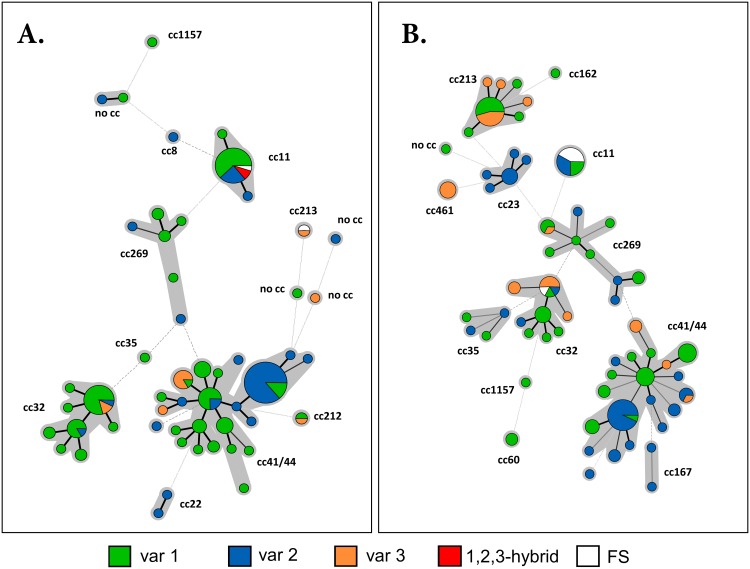
Fig 7. Minimum spanning tree of MLST clonal complexes of N. meningitidis showing the prevalence of the three fHbp variants during 2000–2004 (Panel A) and 2005–2014 (Panel B).
Each circle represents a sequence type (ST) and the size of each circle is proportional to the number of isolates described by the ST. Thick black solid lines denote connections between STs which differ at one locus; grey lines denote connections between STs which differ at two or three loci. Broken lines denote connections between STs that differ at four or more loci. The length of a line connecting two circles is proportional to the number of loci by which the two STs differ. The grey highlight groups circles which are identical at four or more loci and represents STs belonging to one clonal complex were generated by the BioNumerics software. The clonal complexes are indicated outside the grouped circles. The colour of a circle or a sector represents the fHbp variant. FS stands for alleles containing a frameshift. The increase in fHbp-3 was associated with the emergence of cc461, the clonal expansion of cc213 and antigenic drift within cc32.
Fig 8
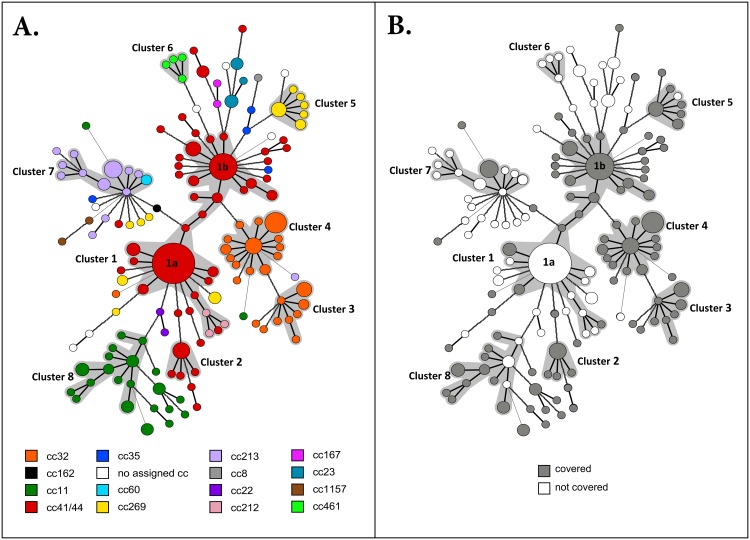
Fig 8. Minimum spanning tree of BEXSERO® antigen sequence type (BAST) of 278 meningococcal isolates using fHbp, NHBA, NadA and PorA peptides.
Each circle represents a BAST and the size of each circle is proportional to the frequency at which the BAST was recorded. Thick solid lines connect two circles which represents BASTs that differ at one antigen; broken lines represent two antigenic differences; thin solid lines represent three antigenic differences. Eight main clusters were observed (highlighted in grey) as assigned by the BioNumerics software, each of which contained at least two different BASTs identical at three of the four loci. The most common BAST (labelled 1a) in this study was fHbp-2.19:NadA-absent:NHBA-43:P1.22,14–6. The colours of the circles indicate the MLST clonal complexes of the isolates. A) Different colours show the different clonal complexes in which each BAST was identified. B) BASTs which are predicted to be covered by the BEXSERO® vaccine are showed coloured in grey—these BASTs include one or more of the following antigenic variants: fHbp-1 (except fHbp-1.13), NHBA-1, NHBA-2, NadA-1, NadA-2/3, and P1.7–2,4.

References

    1. Harrison LH, Pass MA, Mendelsohn AB, Egri M, Rosenstein NE, Bustamante A, et al. Invasive meningococcal disease in adolescents and young adults. Jama. 2001;286(6):694–9. - PubMed
    1. Delrieu I, Yaro S, Tamekloe TA, Njanpop-Lafourcade BM, Tall H, Jaillard P, et al. Emergence of epidemic Neisseria meningitidis serogroup X meningitis in Togo and Burkina Faso. PLoS One. 2011;6(5):e19513 10.1371/journal.pone.0019513 - DOI - PMC - PubMed
    1. Xie O, Pollard AJ, Mueller JE, Norheim G. Emergence of serogroup X meningococcal disease in Africa: need for a vaccine. Vaccine. 2013;31(27):2852–61. 10.1016/j.vaccine.2013.04.036 - DOI - PubMed
    1. Maiden MC. The impact of protein-conjugate polysaccharide vaccines: an endgame for meningitis? Philos Trans R Soc Lond B Biol Sci. 2013;368(1623):20120147 10.1098/rstb.2012.0147 - DOI - PMC - PubMed
    1. Serruto D, Bottomley MJ, Ram S, Giuliani MM, Rappuoli R. The new multicomponent vaccine against meningococcal serogroup B, 4CMenB: immunological, functional and structural characterization of the antigens. Vaccine. 2012;30 Suppl 2:B87–97. 10.1016/j.vaccine.2012.01.033 - DOI - PMC - PubMed

MeSH terms