


Acute care patient portals: a qualitative study of stakeholder perspectives on current practices
- PMID: 27357830
- PMCID: PMC7651924
- DOI: 10.1093/jamia/ocw081
Acute care patient portals: a qualitative study of stakeholder perspectives on current practices
Abstract
Objective: To describe current practices and stakeholder perspectives of patient portals in the acute care setting. We aimed to: (1) identify key features, (2) recognize challenges, (3) understand current practices for design, configuration, and use, and (4) propose new directions for investigation and innovation.
Materials and methods: Mixed methods including surveys, interviews, focus groups, and site visits with stakeholders at leading academic medical centers. Thematic analyses to inform development of an explanatory model and recommendations.
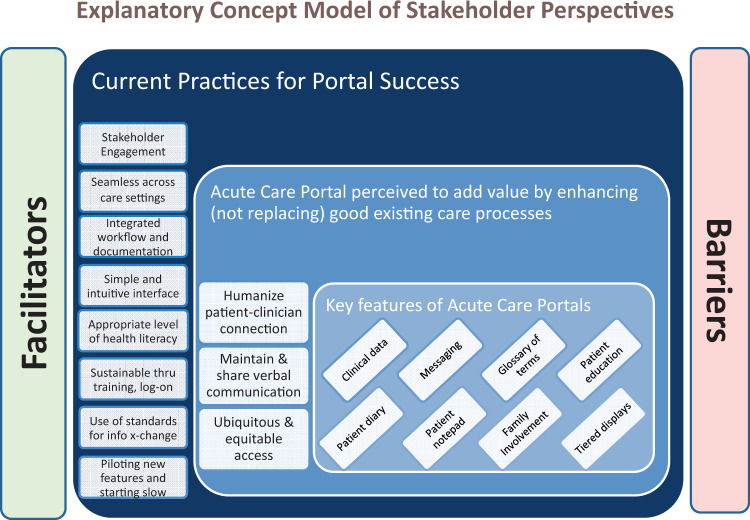
Results: Site surveys were administered to 5 institutions. Thirty interviews/focus groups were conducted at 4 site visits that included a total of 84 participants. Ten themes regarding content and functionality, engagement and culture, and access and security were identified, from which an explanatory model of current practices was developed. Key features included clinical data, messaging, glossary, patient education, patient personalization and family engagement tools, and tiered displays. Four actionable recommendations were identified by group consensus.
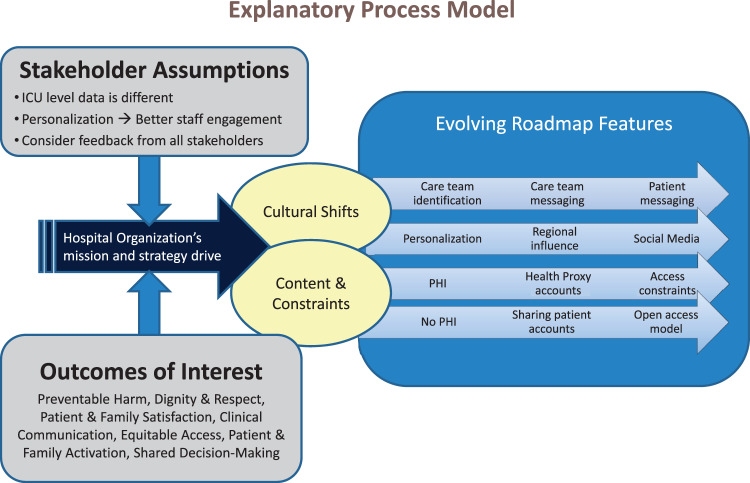
Discussion: Design, development, and implementation of acute care patient portals should consider: (1) providing a single integrated experience across care settings, (2) humanizing the patient-clinician relationship via personalization tools, (3) providing equitable access, and (4) creating a clear organizational mission and strategy to achieve outcomes of interest.
Conclusion: Portals should provide a single integrated experience across the inpatient and ambulatory settings. Core functionality includes tools that facilitate communication, personalize the patient, and deliver education to advance safe, coordinated, and dignified patient-centered care. Our findings can be used to inform a "road map" for future work related to acute care patient portals.
Keywords: acute care; patient engagement; patient portal; patient-centered care.
© The Author 2016. Published by Oxford University Press on behalf of the American Medical Informatics Association. All rights reserved. For Permissions, please email: journals.permissions@oup.com
Figures
References
-
- Rozenblum R, Miller P, Pearson D, et al. Patient-centered healthcare, patient engagement and health information technology: the perfect storm. In: Grando M, Rozenblum R, Bates D, eds. Information Technology for Patient Empowerment in Healthcare. Berlin: Walter de Gruyter Inc.; 2015:3–22.
-
- Bitton A, Poku M, Bates DW. Policy context and considerations for patient engagement with health information technology. In: Grando MA, Rozenblum R, Bates DW, eds. Information Technology for Patient Empowerment in Healthcare. Berlin: Walter de Gruyter Inc.; 2015:75–90.
MeSH terms
LinkOut - more resources
Full Text Sources
Other Literature Sources
