


Systematic Review of Willingness to Pay for Health Insurance in Low and Middle Income Countries
- PMID: 27362356
- PMCID: PMC4928775
- DOI: 10.1371/journal.pone.0157470
Systematic Review of Willingness to Pay for Health Insurance in Low and Middle Income Countries
Abstract
Objective: Access to healthcare is mostly contingent on out-of-pocket spending (OOPS) by health seekers, particularly in low- and middle-income countries (LMICs). This would require many LMICs to raise enough funds to achieve universal health insurance coverage. But, are individuals or households willing to pay for health insurance, and how much? What factors positively affect WTP for health insurance? We wanted to examine the evidence for this, through a review of the literature.
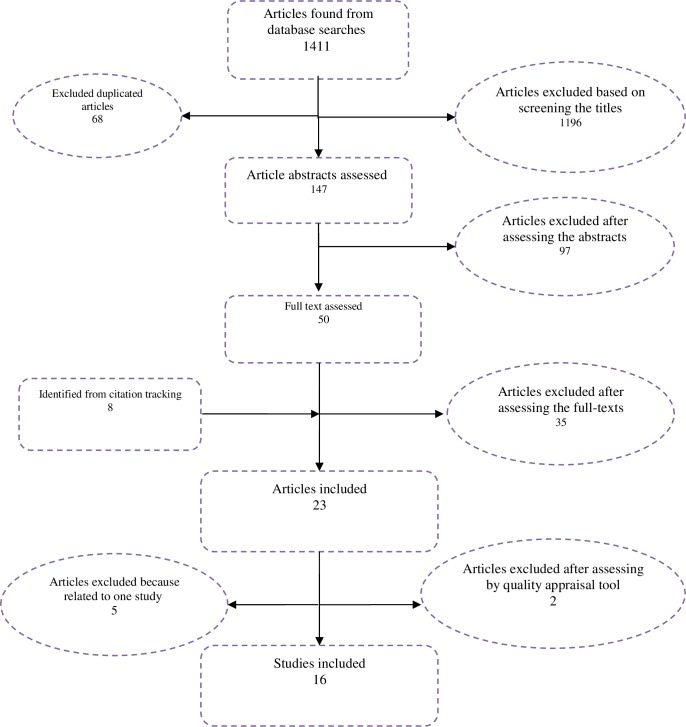
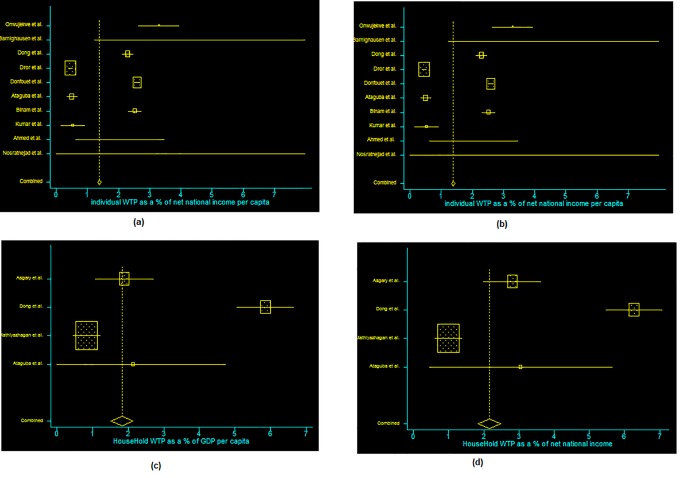
Methods: We systematically searched databases up to February 2016 and included studies of individual or household WTP for health insurance. Two authors appraised the identified studies. We estimated the WTP as a percentage of GDP per capita, and adjusted net national income per capita of each country. We used meta-analysis to calculate WTP means and confidence intervals, and vote-counting to identify the variables that more often affected WTP.
Result: 16 studies (21 articles) from ten countries met the inclusion criteria. The mean WTP of individuals was 1.18% of GDP per capita and 1.39% of adjusted net national income per capita. The corresponding figures for households were 1.82% and 2.16%, respectively. Increases in family size, education level and income were consistently correlated with higher WTP for insurance, and increases in age were correlated with reduced WTP.
Conclusions: The WTP for healthcare insurance among rural households in LMICs was just below 2% of the GPD per capita. The findings demonstrate that in moving towards universal health coverage in LMICs, governments should not rely on households' premiums as a major financing source and should increase their fiscal capacity for an equitable health care system using other sources.
Conflict of interest statement
Figures
References
-
- Soini EJ. Contingent valuation of Eight new treatments: What is the clinician’s and politician’s willingness to pay? The Open Complementary Medicine Journal. 2012. April 20;4(1):1–11S.
-
- Ciriacy-Wantrup SV. Capital returns from soil-conservation practices. Journal of farm economics, 1947. 29(4 Part II): p. 1181–1196.
-
- Hanley N, Ryan M, Wright R. Estimating the monetary value of health care: lessons from environmental economics. Health economics, 2003. 12(1): p. 3–16. - PubMed
-
- Dror DM, Koren R. Micro Insurance Compendium II Churchill C, Matul M, editors. Geneva: ILO; 2012. The Elusive Quest for Estimates of Willingness to Pay for Health Micro Insurance among the Poor in Low-Income Countries; p. 156–73.
Publication types
MeSH terms
LinkOut - more resources
Full Text Sources
Other Literature Sources
Medical
Miscellaneous
