


Speech intelligibility assessment of protective facemasks and air-purifying respirators
- PMID: 27362358
- PMCID: PMC5065390
- DOI: 10.1080/15459624.2016.1200723
Speech intelligibility assessment of protective facemasks and air-purifying respirators
Abstract
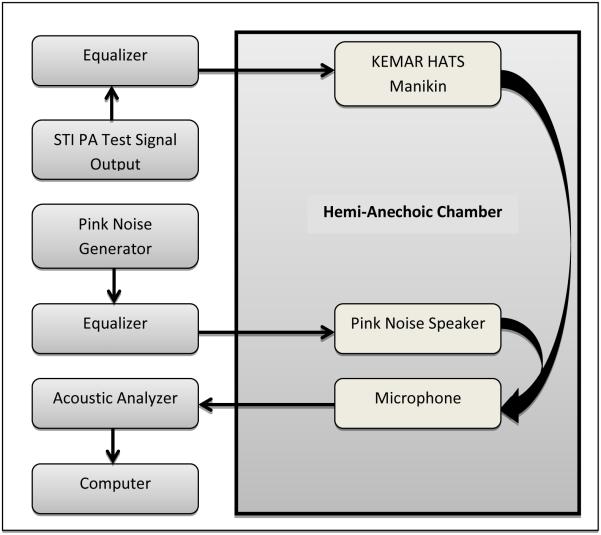
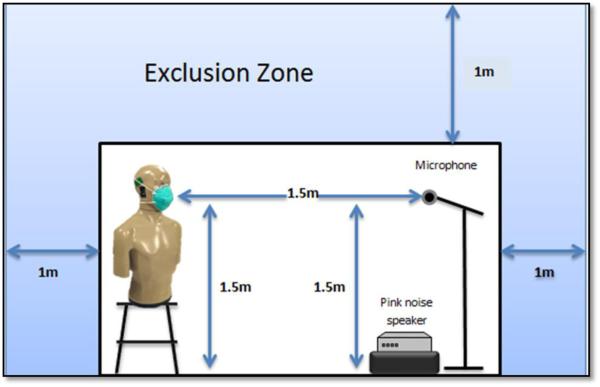
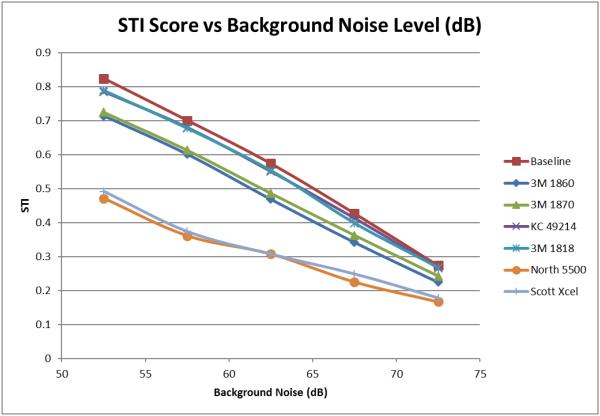
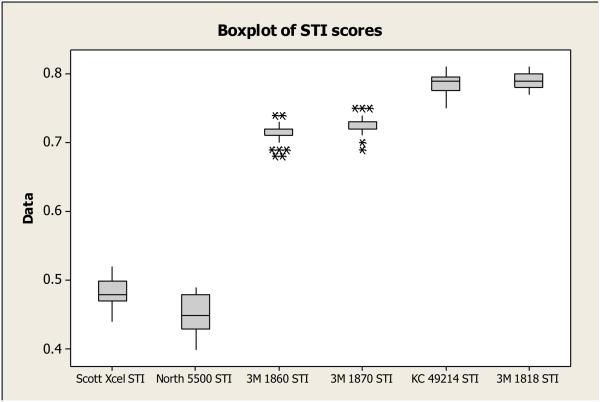
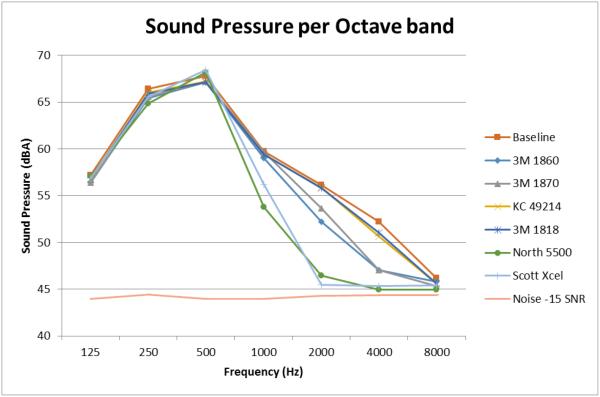
Speech Intelligibility (SI) is the perceived quality of sound transmission. In healthcare settings, the ability to communicate clearly with coworkers, patients, etc., is crucial to quality patient care and safety. The objectives of this study were to: (1) assess the suitability of the Speech Transmission Index (STI) methods for testing reusable and disposable facial and respiratory personal protective equipment (protective facemasks [PF], N95 filtering facepiece respirators [N95 FFR], and elastomeric half-mask air-purifying respirators [EAPR]) commonly worn by healthcare workers; (2) quantify STI levels of these devices; and (3) contribute to the scientific body of knowledge in the area of SI. SI was assessed using the STI under two experimental conditions: (1) a modified version of the National Fire Protection Association 1981 Supplementary Voice Communications System Performance Test at a Signal to Noise Ratio (SNR) of -15 (66 dBA) and (2) STI measurements utilizing a range of modified pink noise levels (52.5 dBA (-2 SNR) - 72.5 dBA (+7 SNR)) in 5.0 dBA increments. The PF models (Kimberly Clark 49214 and 3 M 1818) had the least effect on SI interference, typically deviating from the STI baseline (no-mask condition) by 3% and 4% STI, respectively. The N95FFR (3 M 1870, 3 M 1860) had more effect on SI interference, typically differing from baseline by 13% and 17%, respectively, for models tested. The EAPR models (Scott Xcel and North 5500) had the most significant impact on SI, differing from baseline by 42% for models tested. This data offers insight into the performance of these apparatus with respect to STI and may serve as a reference point for future respirator design considerations, standards development, testing and certification activities.
Keywords: Communication; facemask; healthcare; respiratory protection; speech intelligibility.
Figures

References
-
- Busch I, West J, Barnhill C, Hunter T, Orellana D, Chivukula R. Noise levels in Johns Hopkins Hospital. J. Acoust. Soc. Am. 2005;118(6):3629–3645. - PubMed
-
- Berglund B, Lindvall T, Schwelaand DH, Goh TK. Protection of the human environment. World Health Organization; Geneva, Switzerland: 1999. Guidelines for community noise.
-
- Aaron JN, Carlisle CC, Carskadon MA, Meyer TJ, Hill NS, Millman RP. Environmental noise as a cause of sleep disruption in an intermediate respiratory care unit. Sleep. 1996;19(9):707–10. - PubMed
-
- Balogh D, Kittinger E, Benzer A, Hackl JM. Noise in the ICU. Intensive Care Medicine. 1993;19(6):343–46. - PubMed
MeSH terms
Grants and funding
LinkOut - more resources
Full Text Sources
Other Literature Sources