


The influence of gender on respiratory outcomes in children with bronchopulmonary dysplasia during the first 3 years of life
- PMID: 27362897
- PMCID: PMC5557406
- DOI: 10.1002/ppul.23520
The influence of gender on respiratory outcomes in children with bronchopulmonary dysplasia during the first 3 years of life
Abstract
Introduction: Since premature males are more likely to be diagnosed with bronchopulmonary dysplasia we hypothesized that differences in respiratory outcomes after initial hospital discharge and during the first 3 years of life would exist between females and males diagnosed with BPD.
Methods: Subjects with the diagnosis of BPD were recruited from the Johns Hopkins Bronchopulmonary Dysplasia Clinic between 2008 and 2014. Clinical features were assessed through chart review (n = 482). Respiratory morbidities were assessed by caregiver questionnaires at clinic visits (n = 429), including emergency department visits, hospital admissions, systemic steroid use, and antibiotic use for respiratory reasons since the last BPD clinic visit or after initial hospital discharge if assessed at the first visit.
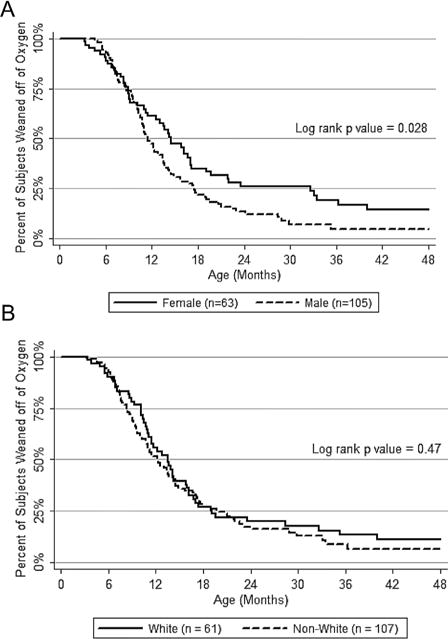
Results: Male infants weighed significantly more at birth, had higher birth weight percentiles and were more likely to be non-white compared to female infants. The frequency of ever acute care use was 36.9% for emergency department visits, 27.4% for hospital admissions, 36.9% for systemic steroid use, and 40.5% for antibiotic use for a respiratory illness. No differences in respiratory morbidities were found between males and females. Females however, tended to be weaned from supplemental oxygen over 3 months later than males.
Conclusions: Compared to females with BPD, males were more likely to weigh more, have higher birth weight percentiles and be non-white. After initial hospital discharge, there were no difference in respiratory morbidities between males and females with BPD. Female infants however were more likely to be weaned from supplemental oxygen at a later age than male infants. Pediatr Pulmonol. 2017;52:217-224. © 2016 Wiley Periodicals, Inc.
Keywords: bronchopulmonary dysplasia; gender; prematurity; preterm; sex.
© 2016 Wiley Periodicals, Inc.
Conflict of interest statement
Conflicts of Interest: None.
Figures
Comment in
-
Sex differences after NICU discharge in infants with BPD: Observations from one center.Pediatr Pulmonol. 2017 Jan;52(1):7-9. doi: 10.1002/ppul.23603. Epub 2016 Sep 18. Pediatr Pulmonol. 2017. PMID: 27640903 No abstract available.
References
-
- Martin JA, Hamilton BE, Osterman MJ, Curtin SC, Matthews TJ. Births: final data for 2013. Natl Vital Stat Rep. 2015;64:1–65. - PubMed
-
- Ehrenkranz RA, Walsh MC, Vohr BR, Jobe AH, Wright LL, Fanaroff AA, Wrage LA, Poole K, National Institutes of Child Health and Human Development Neonatal Research Network Validation of the National Institutes of Health consensus definition of bronchopulmonary dysplasia. Pediatrics. 2005;116:1353–1360. - PubMed
MeSH terms
Grants and funding
LinkOut - more resources
Full Text Sources
Other Literature Sources
Medical
