


Short-acting insulin analogues versus regular human insulin for adults with type 1 diabetes mellitus
- PMID: 27362975
- PMCID: PMC6597145
- DOI: 10.1002/14651858.CD012161
Short-acting insulin analogues versus regular human insulin for adults with type 1 diabetes mellitus
Abstract
Background: Short-acting insulin analogue use for people with diabetes is still controversial, as reflected in many scientific debates.
Objectives: To assess the effects of short-acting insulin analogues versus regular human insulin in adults with type 1 diabetes.
Search methods: We carried out the electronic searches through Ovid simultaneously searching the following databases: Ovid MEDLINE(R), Ovid MEDLINE(R) In-Process & Other Non-Indexed Citations, Ovid MEDLINE(R) Daily and Ovid OLDMEDLINE(R) (1946 to 14 April 2015), EMBASE (1988 to 2015, week 15), the Cochrane Central Register of Controlled Trials (CENTRAL; March 2015), ClinicalTrials.gov and the European (EU) Clinical Trials register (both March 2015).
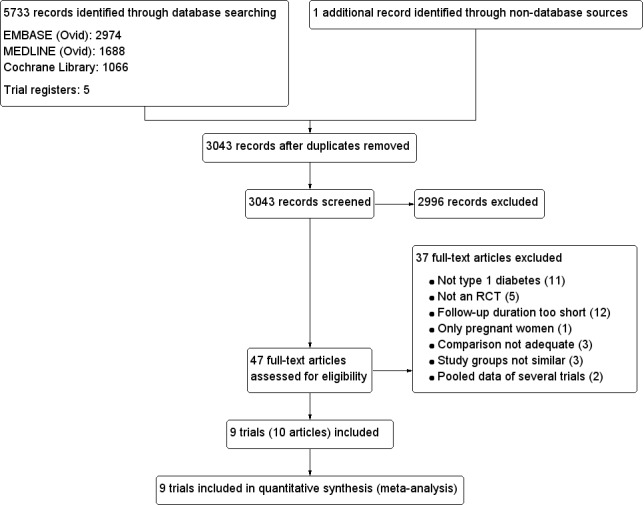
Selection criteria: We included all randomised controlled trials with an intervention duration of at least 24 weeks that compared short-acting insulin analogues with regular human insulins in the treatment of adults with type 1 diabetes who were not pregnant.
Data collection and analysis: Two review authors independently extracted data and assessed trials for risk of bias, and resolved differences by consensus. We graded overall study quality using the Grading of Recommendations Assessment, Development, and Evaluation (GRADE) instrument. We used random-effects models for the main analyses and presented the results as odds ratios (OR) with 95% confidence intervals (CI) for dichotomous outcomes.
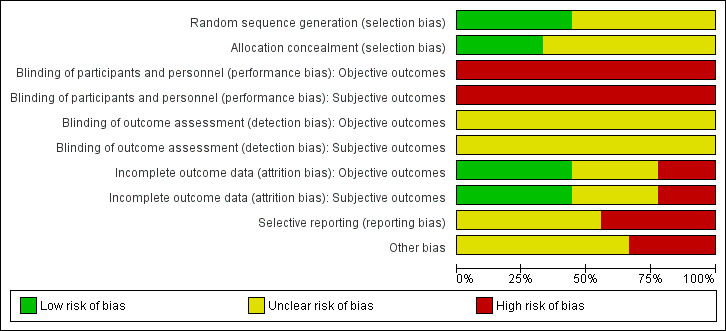
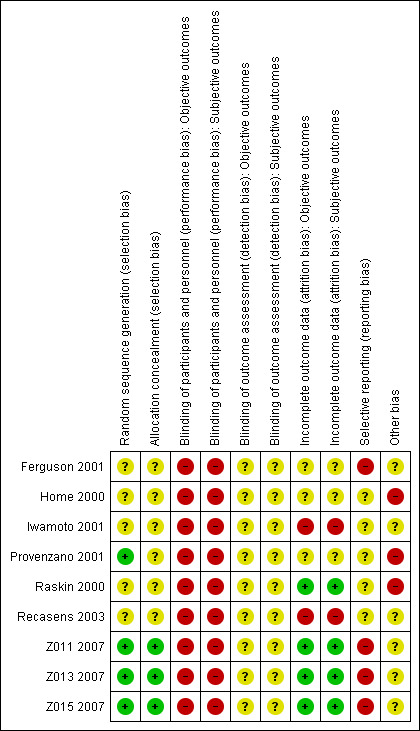
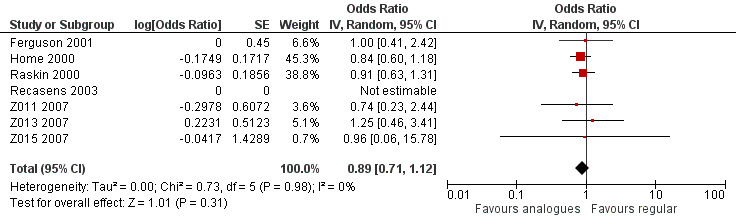
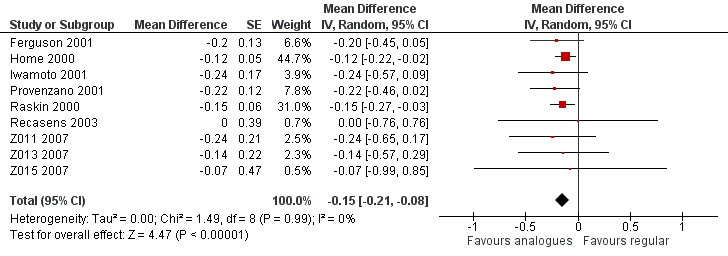
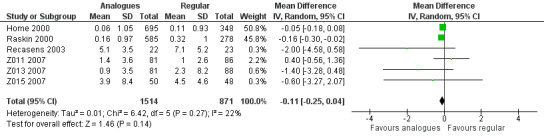
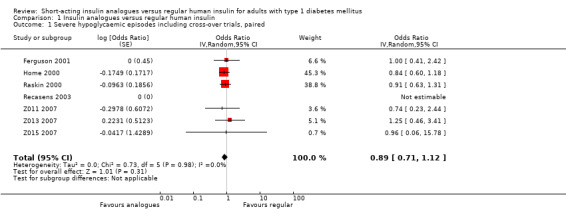
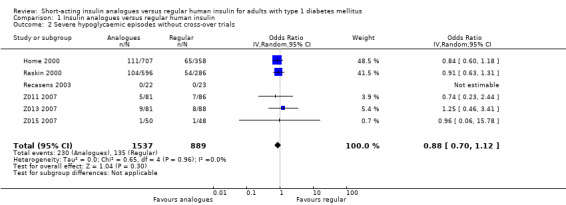
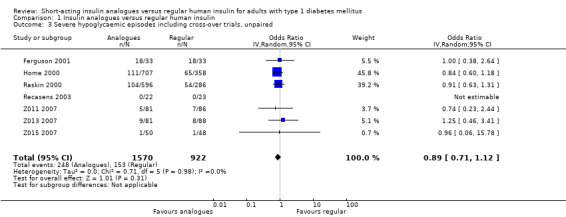
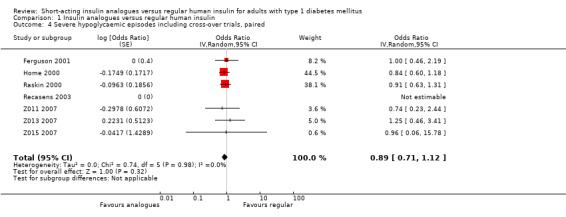
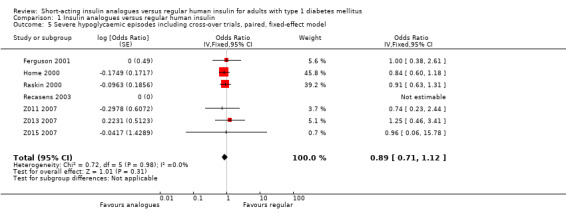
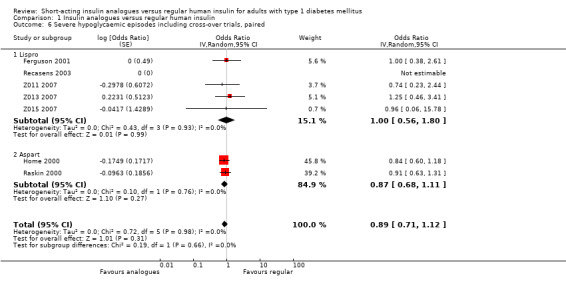
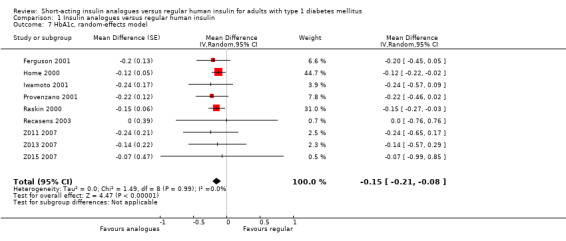
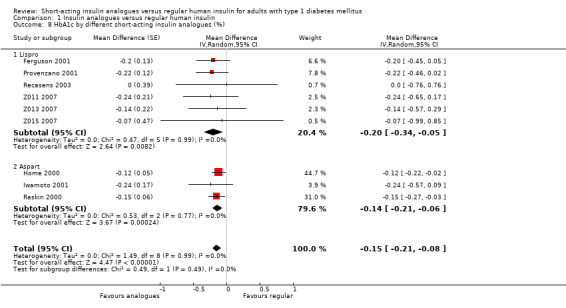
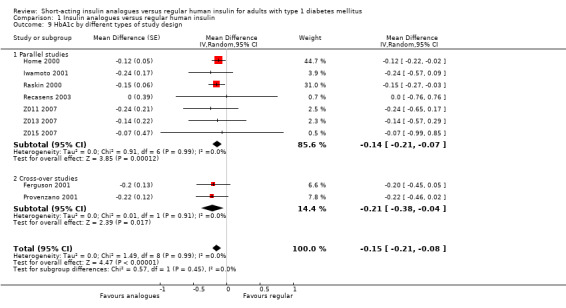
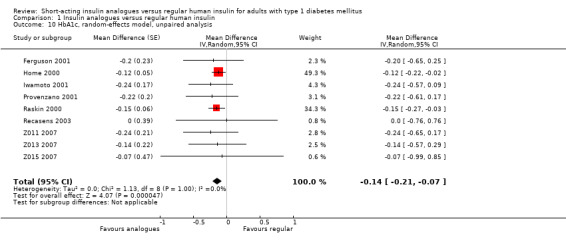
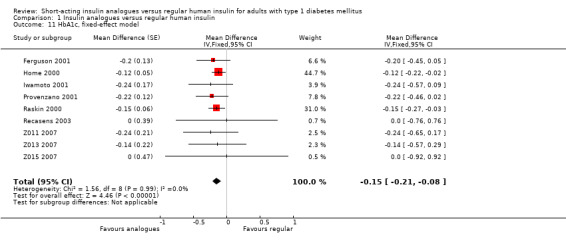
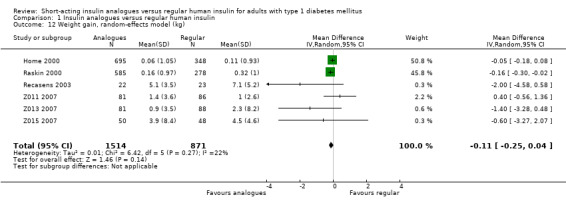
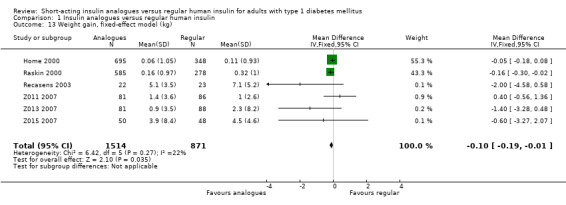
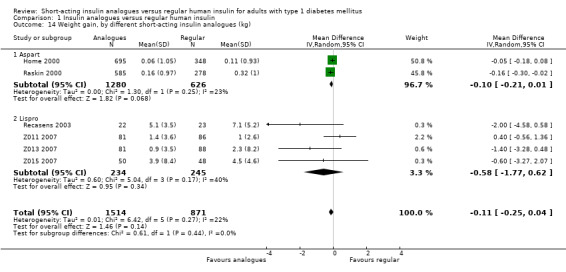
Main results: We identified nine trials that fulfilled the inclusion criteria including 2693 participants. The duration of interventions ranged from 24 to 52 weeks with a mean of about 37 weeks. The participants showed some diversity, mainly with regard to diabetes duration and inclusion/exclusion criteria. The majority of the trials were carried out in the 1990s and participants were recruited from Europe, North America, Africa and Asia. None of the trials was carried out in a blinded manner so that the risk of performance bias, especially for subjective outcomes such as hypoglycaemia, was present in all of the trials. Furthermore, several trials showed inconsistencies in the reporting of methods and results.The mean difference (MD) in glycosylated haemoglobin A1c (HbA1c) was -0.15% (95% CI -0.2% to -0.1%; P value < 0.00001; 2608 participants; 9 trials; low quality evidence) in favour of insulin analogues. The comparison of the risk of severe hypoglycaemia between the two treatment groups showed an OR of 0.89 (95% CI 0.71 to 1.12; P value = 0.31; 2459 participants; 7 trials; very low quality evidence). For overall hypoglycaemia, also taking into account mild forms of hypoglycaemia, the data were generally of low quality, but also did not indicate substantial group differences. Regarding nocturnal severe hypoglycaemic episodes, two trials reported statistically significant effects in favour of the insulin analogue, insulin aspart. However, due to inconsistent reporting in publications and trial reports, the validity of the result remains questionable.We also found no clear evidence for a substantial effect of insulin analogues on health-related quality of life. However, there were few results only based on subgroups of the trial populations. None of the trials reported substantial effects regarding weight gain or any other adverse events. No trial was designed to investigate possible long-term effects (such as all-cause mortality, diabetic complications), in particular in people with diabetes related complications.
Authors' conclusions: Our analysis suggests only a minor benefit of short-acting insulin analogues on blood glucose control in people with type 1 diabetes. To make conclusions about the effect of short acting insulin analogues on long-term patient-relevant outcomes, long-term efficacy and safety data are needed.
Conflict of interest statement
BF: none known.
AS: was involved in the preparation of the report on short‐acting insulin analogues for the treatment of type 1 diabetes mellitus for the Institute for Quality and Efficiency in Health Care (
KJ: was involved in the preparation of the report on short‐acting insulin analogues for the treatment of type 1 diabetes mellitus for the Institute for Quality and Efficiency in Health Care (
KH: was involved in the preparation of the report on short‐acting insulin analogues for the treatment of type 1 diabetes mellitus for the Institute for Quality and Efficiency in Health Care (
TS: none known.
AB: none known.
JP: none known.
TRP: the Medical University of Graz (employee of Thomas Pieber) has received unrestricted grants from AstraZenaca and Novo Nordisk.Thomas Pieber has received personal fees for advisory boards and steering committees for AstraZeneca, Eli Lilly and Novo Nordisk; and has received personal fees in speaker bureaus for AstraZeneca and Novo Nordisk.
FMG: none known.
Figures
References
References to studies included in this review
Ferguson 2001 {published data only}
-
- Ferguson SC, Strachan MWJ, Janes JM, Frier BM. Severe hypoglycaemia in patients with type 1 diabetes and impaired awareness of hypoglycaemia: a comparative study of insulin lispro and regular human insulin. Diabetes/Metabolism Research and Reviews 2001;17(4):285‐91. [MEDLINE: ] - PubMed
-
- Institut für Qualität und Wirtschaftlichkeit im Gesundheitswesen. Short acting insulin analogues for the treatment of type 1 diabetes mellitus, 2007. www.iqwig.de/download/A05‐02_Abschlussbericht_Kurzwirksame_Insulinanalog.... Köln, (accessed 29 January 2016).
Home 2000 {published data only}
-
- Bott U, Ebrahim S, Hirschberger S, Skovlund SE. Effect of the rapid‐acting insulin analogue insulin aspart on quality of life and treatment satisfaction in patients with type 1 diabetes. Diabetic Medicine 2003;20:626‐34. - PubMed
-
- Home PD, Hallgren P, Usadel KH, Sane T, Faber J, Grill V, et al. Pre‐meal insulin aspart compared with pre‐meal soluble human insulin in type 1 diabetes. Diabetes Research and Clinical Practice 2006;71(2):131‐39. - PubMed
-
- Home PD, Lindholm A, Riis A. Insulin aspart vs. human insulin in the management of long‐term blood glucose control in type 1 diabetes mellitus: a randomized controlled trial. Diabetic Medicine 2000;17(11):762‐70. [MEDLINE: ] - PubMed
-
- Institut für Qualität und Wirtschaftlichkeit im Gesundheitswesen. Short acting insulin analogues for the treatment of type 1 diabetes mellitus, 2007. www.iqwig.de/download/A05‐02_Abschlussbericht_Kurzwirksame_Insulinanalog.... Köln, (accessed 29 January 2016).
Iwamoto 2001 {published data only}
-
- Iwamoto Y, Akanuma Y, Niimi H, Sasaki N, Tajima N, Kawamori R, et al. Comparison between insulin aspart and soluble human insulin in type 1 diabetes (IDDM) patients treated with basal‐bolus insulin therapy ‐ Phase III clinical trial in Japan. Journal of the Japan Diabetes Society 2001;44(10):799‐811.
Provenzano 2001 {published data only}
-
- Provenzano C, Vero R, Oliva A, Leto G, Puccio L, Vecci E, et al. Lispro insulin in type 1 diabetic patients on a Mediterranean or normal diet: a randomized, cross‐over comparative study with regular insulin. Diabetes, Nutrition & Metabolism 2001;14(3):133‐9. [MEDLINE: ] - PubMed
Raskin 2000 {published data only}
-
- Institut für Qualität und Wirtschaftlichkeit im Gesundheitswesen. Short acting insulin analogues for the treatment of type 1 diabetes mellitus, 2007. www.iqwig.de/download/A05‐02_Abschlussbericht_Kurzwirksame_Insulinanalog.... Köln, (accessed 29 January 2016).
-
- Raskin P, Guthrie RA, Leiter L, Riis A, Jovanovic L. Use of insulin aspart, a fast‐acting insulin analog, as the mealtime insulin in the management of patients with type 1 diabetes. Diabetes Care 2000;23(5):583‐8. [MEDLINE: ] - PubMed
Recasens 2003 {published data only}
-
- Institut für Qualität und Wirtschaftlichkeit im Gesundheitswesen. Short acting insulin analogues for the treatment of type 1 diabetes mellitus, 2007. www.iqwig.de/download/A05‐02_Abschlussbericht_Kurzwirksame_Insulinanalog.... Köln, accessed 29 January 2016.
-
- Recasens M, Aguilera E, Morinigo R, Casamitjana R, Nicoletti F, Gomis R, et al. Insulin lispro is as effective as regular insulin in optimising metabolic control and preserving β‐cell function at onset of type 1 diabetes mellitus. Diabetes Research and Clinical Practice 2003;60:153‐9. - PubMed
Z011 2007 {published data only}
-
- Anderson JH Jr, Brunelle RL, Koivisto VA, Trautmann ME, Vignati L, DiMarchi R. Improved mealtime treatment of diabetes mellitus using an insulin analogue. Clinical Therapeutics 1997;19(1):62‐72. - PubMed
-
- Garg SK, Carmain JA, Braddy KC, Anderson JH, Vignati L, Jennings MK, et al. Pre‐meal insulin analogue insulin lispro vs humulin insulin treatment in young subjects with type 1 diabetes. Diabetic Medicine 1996;13(1):47‐52. [MEDLINE: ] - PubMed
-
- Institut für Qualität und Wirtschaftlichkeit im Gesundheitswesen. Short acting insulin analogues for the treatment of type 1 diabetes mellitus, 2007. www.iqwig.de/download/A05‐02_Abschlussbericht_Kurzwirksame_Insulinanalog.... Köln, (accessed 29 January 2016).
Z013 2007 {published data only}
-
- Anderson JH Jr, Brunelle RL, Koivisto VA, Trautmann ME, Vignati L, DiMarchi R. Improved mealtime treatment of diabetes mellitus using an insulin analogue. Clinical Therapeutics 1997;19(1):62‐72. - PubMed
-
- Garg SK, Carmain JA, Braddy KC, Anderson JH, Vignati L, Jennings MK, et al. Pre‐meal insulin analogue insulin lispro vs humulin insulin treatment in young subjects with type 1 diabetes. Diabetic Medicine 1996;13(1):47‐52. [MEDLINE: ] - PubMed
-
- Institut für Qualität und Wirtschaftlichkeit im Gesundheitswesen. Short acting insulin analogues for the treatment of type 1 diabetes mellitus, 2007. www.iqwig.de/download/A05‐02_Abschlussbericht_Kurzwirksame_Insulinanalog... (accessed 29 January 2016).
Z015 2007 {published data only}
-
- Garg SK, Carmain JA, Braddy KC, Anderson JH, Vignati L, Jennings MK, et al. Pre‐meal insulin analogue insulin lispro vs Humulin R insulin treatment in young subjects with type 1 diabetes. Diabetic Medicine 1996;13(1):47‐52. - PubMed
-
- Institut für Qualität und Wirtschaftlichkeit im Gesundheitswesen. Short acting insulin analogues for the treatment of type 1 diabetes mellitus, 2007. www.iqwig.de/download/A05‐02_Abschlussbericht_Kurzwirksame_Insulinanalog.... Köln, (accessed 29 January 2016).
References to studies excluded from this review
Altuntas 2003 {published data only}
-
- Altuntas Y, Ozen B, Ozturk B, Sengul A, Ucak S, Ersoy O, et al. Comparison of additional metformin or NPH insulin to mealtime insulin lispro therapy with mealtime human insulin therapy in secondary OAD failure. Diabetes, Obesity & Metabolism 2003;5(6):371‐8. - PubMed
Bastyr 2000 {published data only}
-
- Bastyr III EJ, Huang Y, Brunelle RL, Vignati L, Cox DJ, Kotsanos JG. Factors associated with nocturnal hypoglycaemia among patients with type 2 diabetes new to insulin therapy: experience with insulin lispro. Diabetes Obesity and Metabolism 2000;2(1):39‐46. - PubMed
Bi 2007 {published data only}
-
- Bi YF, Zhao LB, Li XY, Wang WQ, Sun SY, Chen YH, et al. A 2‐way cross‐over, open‐labeled trial to compare efficacy and safety of insulin aspart and Novolin R delivered with CSII in 21 Chinese diabetic patients. Chinese Medical Journal 2007;120(19):1700‐3. - PubMed
Boehm 2004 {published data only}
-
- Boehm BO, Vaz JA, Brøndsted L, Home PD. Long‐term efficacy and safety of biphasic insulin aspart in patients with type 2 diabetes. European Journal of Internal Medicine 2004;15(8):496‐502. - PubMed
Boivin 1999 {published data only}
-
- Boivin S, Belicar P, Melki V. Assessment of in vivo stability of a new insulin preparation for implantable insulin pumps. A randomized multicenter prospective trial. Diabetes Care 1999;22(12):2089‐90. - PubMed
Caixàs 1998 {published data only}
-
- Caixàs A, Pérez A, Payés A, Otal C, Carreras G, Ordóñez‐Llanos J, et al. Effects of a short‐acting insulin analog (Insulin Lispro) versus regular insulin on lipid metabolism in insulin‐dependent diabetes mellitus. Metabolism: Clinical & Experimental 1998;47(4):371‐6. - PubMed
Chan 2004 {published data only}
-
- Chan WB, Chow CC, Yeung VT, Chan JC, So WY, Cockram CS. Effect of insulin lispro on glycaemic control in Chinese diabetic patients receiving twice‐daily regimens of insulin. Chinese Medical Journal 2004;117(9):1404‐7. - PubMed
Chen 2011 {published data only}
-
- Chen SF, Li H. Comparison on the efficacy of biphasic insulin aspart 30 and premixed human insulin 30/70 through continuous glucose monitoring system [Chinese]. Chung‐Hua Liu Hsing Ping Hsueh Tsa Chih Chinese Journal of Epidemiology 2011;32(8):827‐9. - PubMed
Chlup 2004 {published data only}
-
- Chlup R, Zapletalová J, Seckar P, Chlupová L, Táncosová S, Reznícková M. Benefits of insulin aspart vs phosphate‐buffered human regular insulin in persons with type 1 Diabetes treated by means of an insulin pump. Biomedical Papers of the Medical Faculty of Palacky University in Olomouc, Czech Republic 2004;148(1):27‐32. - PubMed
Cypryk 2004 {published data only}
-
- Cypryk K, Sobczak M, Petynska‐Marczewska M, Zawodniak‐Szalapska M, Szymczak W, Wilczynski J, et al. Pregnancy complications and perinatal outcome in diabetic women treated with Humalog (insulin lispro) or regular human insulin during pregnancy. Medical Science Monitor: International Medical Journal of Experimental and Clinical Research 2004;10(2):29‐32. - PubMed
Dailey 2004 {published data only}
-
- Dailey G, Rosenstock J, Moses RG, Ways K. Insulin glulisine provides improved glycemic control in patients with type 2 diabetes. Diabetes Care 2004;27(10):2363‐8. - PubMed
Fineberg 1996 {published data only}
-
- Fineberg NS, Fineberg SE, Anderson JH, Birkett MA, Gibson RG, Hufferd S. Immunologic effects of insulin lispro [Lys (B28), Pro (B29) human insulin] in IDDM and NIDDM patients previously treated with insulin. Diabetes 1996;45(12):1750‐4. - PubMed
Gao 2009 {published data only}
-
- Gao Y, Pan CY, Zou DJ, Xu ZR, Liu XM, Guo XH. Postprandial glycemic control using insulin aspart with NPH in inadequately controlled diabetics [Chinese]. Chung‐Hua i Hsueh Tsa Chih [Chinese Medical Journal] 2009;89(28):1960‐3. - PubMed
Garg 2000 {published data only}
-
- Garg SK, Anderson JH, Gerard LA, Mackenzie TA, Gottlieb PA, Jennings MK, et al. Impact of insulin lispro on HbA1c values in insulin pump users. Diabetes Obesity and Metabolism 2000;2(5):307‐11. [MEDLINE: ] - PubMed
Gram 2011 {published data only}
Herrmann 2013 {published data only}
-
- Herrmann BL, Kasser C, Keuthage W, Huptas M, Dette H, Klute A. Comparison of insulin aspart vs. regular human insulin with or without insulin detemir concerning adipozytokines and metabolic effects in patients with type 2 diabetes mellitus. Experimental & Clinical Endocrinology & Diabetes 2013;121(4):210‐3. - PubMed
Holleman 1997 {published data only}
-
- Holleman F, Schmitt H, Symanowski S, Rees A, Rottiers R, Anderson J. Pre‐meal therapy with lispro insulin and regular insulin in IDDM patients. The Netherlands Journal of Medicine 1997;50(5):A20‐1.
Iwamoto 2002 {published data only}
-
- Iwamoto Y. An open‐labelled, randomised, parallel group, multicentre, safety and efficacy study of NN‐X14Mix50 (BIAsp50) in a twice daily regimen in type 2 diabetic subjects, 2002. novonordisk‐trials.com/website/pdf/registry/bin_20080410‐024437‐672.pdf (last accessed 25 June 2015).
Kaplan 2004 {published data only}
-
- Kaplan W, Rodriguez LM, Smith OE, Haymond MW, Heptulla RA. Effects of mixing glargine and short‐acting insulin analogs on glucose control. Diabetes Care 2004;27(11):2739‐40. - PubMed
Lalli 1999 {published data only}
-
- Lalli C, Ciofetta M, Sindaco P, Torlone E, Pampanelli S, Compagnucci P, et al. Long‐term intensive treatment of type 1 diabetes with the short‐acting insulin analog lispro in variable combination with NPH insulin at mealtime. Diabetes Care 1999;22(3):468‐77. - PubMed
Laube 1996 {published data only}
-
- Laube H, Heller M, Liersch J, Mäser E, Linn Th. Experience with lispro‐insulin in the intensified therapy of IDDM and NIDDM patients. Diabetes und Stoffwechsel 1996;5(6):273‐6.
Lindholm 1999 {published data only}
-
- Lindholm A, McEwen J, Riis AP. Improved postprandial glycemic control with insulin aspart. A randomized double‐blind cross‐over trial in type 1 diabetes. Diabetes Care 1999;22(5):801‐5. - PubMed
Lindholm 2002 {published data only}
-
- Lindholm A, Jensen LB, Home PD, Raskin P, Boehm BO, Rastam J. Immune responses to insulin aspart and biphasic insulin aspart in people with type 1 and type 2 diabetes. Diabetes Care 2002;25(5):876‐82. - PubMed
Loukovaara 2003 {published data only}
-
- Loukovaara S, Immonen I, Teramo KA, Kaaja R. Progression of retinopathy during pregnancy in type 1 diabetic women treated with insulin lispro. Diabetes Care 2003;26(4):1193‐8. - PubMed
Pérez‐Maraver 2013 {published data only}
-
- Pérez‐Maraver M, Caballero‐Corchuelo J, Boltana A, Insa R, Soler J, Montanya E. Comparison of human insulin and insulin analogues on hypoglycaemia and metabolic variability in type 1 diabetes using standardized measurements (HYPO score and Lability Index). Acta Diabetologica 2013;50(4):529‐35. - PubMed
Perriello 2005 {published data only}
-
- Perriello G, Pampanelli S, Porcellati F, Avogaro A, Bosi E, Petrella G, et al. Insulin aspart improves meal time glycaemic control in patients with type 2 diabetes: a randomized, stratified, double‐blind and cross‐over trial. Diabetic Medicine 2005;22(5):606‐11. - PubMed
Persson 2002 {published data only}
-
- Persson B, Swahn ML, Hjertberg R, Hanson U, Nord E, Nordlander E, et al. Insulin lispro therapy in pregnancies complicated by type 1 diabetes mellitus. Diabetes Research & Clinical Practice 2002;58(2):115‐21. - PubMed
Pfützner 2013 {published data only}
-
- Pfützner A, Forst T, Mitri M, Löffler A, Heise J, Forkel C, et al. Impact of short‐acting insulin analogs on biomarkers of oxidative stress and chronic systemic inflammation in patients with type 2 diabetes: results from a pilot study. Diabetes. 2013; Vol. 62 Suppl:A235‐6.
Rami 1997 {published data only}
-
- Rami B, Schober E. Postprandial glycaemia after regular and lispro insulin in children and adolescents with diabetes. European Journal of Pediatrics 1997;156(11):838‐40. - PubMed
Rayman 2007 {published data only}
-
- Rayman G, Profozic V, Middle M. Insulin glulisine imparts effective glycaemic control in patients with type 2 diabetes. Diabetes Research & Clinical Practice 2007;76(2):304‐12. - PubMed
Roach 2001 {published data only}
-
- Roach P, Strack T, Arora V, Zhao Z. Improved glycemic control with the use of self‐prepared mixtures of insulin lispro and insulin lispro protamine suspension in patients with types 1 and 2 diabetes. International Journal of Clinical Practice 2001;55(3):177‐82. - PubMed
Ross 2001 {published data only}
-
- Ross SA, Zinman B, Campos RV, Strack T. A comparative study of insulin lispro and human regular insulin in patients with type 2 diabetes mellitus and secondary failure of oral hypoglycemic agents. Clinical & Investigative Medicine ‐ Medecine Clinique et Experimentale 2001;24(6):292‐8. - PubMed
Schernthaner 2004 {published data only}
-
- Schernthaner G, Kopp HP, Ristic S, Muzyka B, Peter L, Mitteregger G. Metabolic control in patients with type 2 diabetes using humalog mix 50 injected three times daily: crossover comparison with human insulin 30/70. Hormone and Metabolic Research 2004;36(3):188‐93. - PubMed
Skrha 2002 {published data only}
-
- Skrha J, Smahelova A, Andĕl M, Vrtovec M, Subić J, Kreze A, et al. Insulin lispro improves postprandial glucose control in patients with diabetes mellitus. Sbornik Lekarsky 2002;103(1):15‐21. - PubMed
Tubiana‐Rufi 1997 {published data only}
-
- Tubiana‐Rufi N, Munz‐Licha G. Lispro analog and quality of life. Diabetes & Metabolism 1997;3:58‐62. - PubMed
Vignati 1997 {published data only}
-
- Vignati L, Anderson JH Jr, Iversen PW. Efficacy of insulin lispro in combination with NPH human insulin twice per day in patients with insulin‐dependent or non‐insulin dependent diabetes. Clinical Therapeutics 1997;19(6):1408‐21. - PubMed
Yanagisawa 2013 {published data only}
-
- Yanagisawa K, Yamagishi S, Ashihara J, Obara S, Wada N. Evaluation of efficacy, safety and QoL of glulisine on Japanese type 1 diabetes. Diabetes 2013;62 Suppl:A654.
Additional references
ADA 1999
-
- The Expert Committee on the Diagnosis and Classification of Diabetes Mellitus. Report of the expert committee on the diagnosis and classification of diabetes mellitus. Diabetes Care 1999;22(Suppl 1):S5‐19. - PubMed
ADA 2008
-
- American Diabetes Association. Standards of medical care in diabetes ‐ 2008. Diabetes Care 2008;31(Suppl 1):S12‐54. [PUBMED: 18165335] - PubMed
Anderson 1997
-
- Anderson JH Jr, Brunelle RL, Koivisto VA, Trautmann ME, Vignati L, DiMarchi R. Improved mealtime treatment of diabetes mellitus using an insulin analogue. Clinical Therapeutics 1997;19(1):62‐72. - PubMed
Annuzzi 2001
-
- Annuzzi G, Prato S, Arcari R, Bellomo Damato A, Benzi L, Bruttomesso D, et al. Preprandial combination of lispro and NPH insulin improves overall blood glucose control in type 1 diabetic patients: a multicenter randomized crossover trial. Nutrition, Metabolism, and Cardiovascular Diseases 2001;11:168‐75. - PubMed
Ashwell 2006
-
- Ashwell SG, Amiel SA, Bilous RW, Dashora U, Heller SR, Hepburn DA, et al. Improved glycaemic control with insulin glargine plus insulin lispro: a multicentre, randomized, cross‐over trial in people with type 1 diabetes. Diabetic Medicine 2006;23:285‐92. - PubMed
Banerjee 2007
-
- Banerjee S, Tran K, Li H, Cimon K, Daneman D, Simpson S, et al. Short‐Acting Insulin Analogues for Diabetes Mellitus: Meta‐analysis of Clinical Outcomes and Assessment of Cost Effectiveness (Technology Report No. 87). Ottawa: Canadian Agency for Drugs and Technologies in Health, 2007.
Becker 1993
-
- Becker MP, Balagtas CC. Marginal modeling of binary cross‐over data. Biometrics 1993;49:997‐1009. - PubMed
Berger 2001
-
- Berger M, Jörgens V. Insulintherapie in der Praxis. Berlin, Heidelberg: Springer Verlag, 2001.
Bode 2002
-
- Bode B, Weinstein R, Bell D, McGill J, Nadeau D, Raskin P, et al. Comparison of insulin aspart with buffered regular insulin and insulin lispro in continuous subcutaneous insulin infusion. Diabetes Care 2002;25(3):439‐44. - PubMed
Bott 2003
-
- Bott U, Ebrahim S, Hirschberger S, Skovlund SE. Effect of the rapid‐acting insulin analogue insulin aspart on quality of life and treatment satisfaction in patients with type 1 diabetes. Diabetic Medicine 2003;20:626‐34. - PubMed
Bradley 1990
-
- Bradley C, Lewis KS. Measures of psychological well‐being and treatment satisfaction developed from the responses of people with tablet‐treated diabetes. Diabetic Medicine 1990;7(5):445‐51. - PubMed
Brunelle 1998
-
- Brunelle RL, Llewelyn J, Anderson JH Jr, Gale EAM, Koivisto VA. Meta‐analysis of the effect of insulin lispro on severe hypoglycemia in patients with type 1 diabetes. Diabetes Care 1998;21(10):1726‐31. - PubMed
Brunner 2000
-
- Brunner GA, Hirschberger S, Sendlhofer G, Wutte A, Ellmerer M, Balent B, et al. Post‐prandial administration of the insulin analogue insulin aspart in patients with type 1 diabetes mellitus. Diabetic Medicine 2000;17(5):371‐5. - PubMed
Cameron 2009
Cohen 2011
-
- Cohen 2011. The prickly problem of access to insulin. BMJ 2011;343:d5782. - PubMed
Colquitt 2003
-
- Colquitt J, Royle P, Waugh N. Are analogue insulins better than soluble in continuous subcutaneous insulin infusion? Results of a meta‐analysis. Diabetic Medicine 2003;20:863‐6. - PubMed
Curtin 2002
-
- Curtin F, Altman DG, Elbourne DR. Meta‐analysis combining parallel and cross‐over clinical trials II: binary outcomes. Statistics in Medicine 2002;21:2145‐59. - PubMed
Davidson 2014
DCCT 1993
-
- The Diabetes Control and Complications Trial Research Group. The effect of intensive treatment of diabetes on the development and progression of long‐term complications in insulin‐dependent diabetes mellitus. New England Journal of Medicine 1993;329:977‐86. - PubMed
DeWitt 2003
-
- DeWitt DE, Hirsch IB. Outpatient insulin therapy in type 1 and type 2 diabetes mellitus: scientific review. JAMA 2003;289(17):2254‐64. - PubMed
Elbourne 2002
-
- Elbourne DR, Altman DG, Higgins JPT, Curtin F, Worthington HV, Vail A. Meta‐analysis involving cross‐over trials: methodological issues. International Journal of Epidemiology 2002;31:140‐9. - PubMed
EMA 2002
-
- European Medicines Agency. Note for guidance on clinical investigation of medicinal products in the treatment of diabetes mellitus, 2002. www.emea.europa.eu/docs/en_GB/document_library/Scientific_guideline/2009... (accessed 14 April 2016).
Engwerda 2011
Frick 2008
Gale 2011
-
- Gale, EAM. Commentary: politics of affordable insulin. BMJ 2011;343:d5675. - PubMed
Garg 1996
-
- Garg SK, Carmain JA, Braddy KC, Anderson JH, Vignati L, Jennings MK, et al. Pre‐meal insulin analogue insulin lispro vs humulin insulin treatment in young subjects with type 1 diabetes. Diabetic Medicine 1996;13(1):47‐52. [MEDLINE: ] - PubMed
Garg 2010
-
- Garg S, Ampudia‐Blasco FJ, Pfohl M. Rapid‐acting insulin analogues in basal‐bolus regimens in type 1 diabetes mellitus. Endocrine Practice 2010;16(3):486‐505. - PubMed
Gerstein 2001
-
- Gerstein HC, Haynes RB. Evidence‐Based Diabetes Care. Hamilton: BC Decker Inc, 2001.
Gough 2007
-
- Gough SC. A review of human and analogue insulin trials. Diabetes Research and Clinical Practice 2007;77(11):1‐15. - PubMed
Grant 1993
-
- Grant MB, Mames RN, Fitzgerald C, Ellis EA, Aboufrikha M, Guy J. Insulin‐like growth factor I acts as an angiogenic agent in rabbit cornea and retina: comparative studies with basic fibroblast growth factor. Diabetologia 1993;36:282‐91. - PubMed
Grunberger 2014
-
- Grunberger G. Insulin analogs ‐ are they worth it? Yes!. Diabetes Care 2014;37(6):1767‐70. - PubMed
Haffner 1998
-
- Haffner SM. The importance of hyperglycemia in the nonfasting state to the development of cardiovascular disease. Endocrine Reviews 1998;19(5):583‐92. - PubMed
Heinemann 1996
-
- Heinemann L, Kapitza C, Starke AAR, Heise T. Time‐action profile of the insulin analogue B28Asp. Diabetic Medicine 1996;13:683‐4. - PubMed
Heise 2014
-
- Heise T, Haahr H, Jensen L, Erichsen L, Hompesch M. Faster‐acting insulin aspart improves postprandial glycaemia versus insulin aspart in patients with type 1 diabetes mellitus. Diabetes 2014;63(Suppl 1):A34.
Heller 2013
Hermansen 2004
-
- Hermansen K, Fontaine P, Kukolja KK, Peterkova V, Leth G, Gall MA. Insulin analogues (insulin detemir and insulin aspart) versus traditional human insulins (NPH insulin and regular human insulin) in basal‐bolus therapy for patients with type 1 diabetes. Diabetologia 2004;47(4):622‐29. - PubMed
Higgins 2002
-
- Higgins JPT, Thompson SG. Quantifying heterogeneity in a meta‐analysis. Statistics in Medicine 2002;21:1539‐58. - PubMed
Higgins 2003
Higgins 2009
Higgins 2011a
-
- Higgins JPT, Green S (editors). Cochrane Handbook for Systematic Reviews of Interventions Version 5.1.0 [updated March 2011]. The Cochrane Collaboration, 2011. Available from www.cochrane‐handbook.org.
Higgins 2011b
Holden 2011
Holleman 1997b
-
- Holleman F, Schmitt H, Rottiers R, Rees A, Symanowski S, Anderson JH. Reduced frequency of severe hypoglycemia and coma in well‐controlled IDDM patients treated with insulin lispro. Diabetes Care 1997;20(12):1827‐32. - PubMed
Holleman 2007a
-
- Holleman F, Gale EAM. Nice insulins, pity about the evidence. Diabetologia 2007;50:1783‐90. - PubMed
Home 2012
-
- Home, PD. The pharmacokinetics and pharmacodynamics of rapid‐acting insulin analogues and their clinical consequences. Diabetes, Obesity and Metabolism 2012;14(9):780‐88. - PubMed
Howey 1994
-
- Howey DC, Bowsher RR, Brunelle RL, Woodworth JR. [Lys(B28),Pro(B29)]‐human insulin A rapidly absorbed analogue of human insulin. Diabetes 1994;43:396‐402. - PubMed
Hróbjartsson 2013
-
- Hróbjartsson A, Thomsen AS, Emanuelsson F, Tendal B, Hilden J, Boutron I, et al. Observer bias in randomized clinical trials with measurement scale outcomes: a systematic review of trials with both blinded and nonblinded assessors. Canadian Medical Association Journal 2013;185(4):E201‐11. - PMC - PubMed
IQWIG 2007
-
- Institut für Qualität und Wirtschaftlichkeit im Gesundheitswesen. Short acting insulin analogues for the treatment of type 1 diabetes mellitus, 2007. www.iqwig.de/download/A05‐02_Abschlussbericht_Kurzwirksame_Insulinanalog.... Köln, (accessed 29 January 2016).
Johansson 2000
-
- Johansson UB, Adamson UCK, Lins PES, Wredling RAM. Improved blood glucose variability, HbA1c Insuman Infusat and less insulin requirement in IDDM patients using insulin lispro in CSII. The Swedish multicenter lispro insulin study. Diabetes Metabolism 2000;26(3):192‐6. - PubMed
Johnson 2013
-
- Johnson SR, Cooper MN, Jones TW, Davis EA. Long‐term outcome of insulin pump therapy in children with type 1 diabetes assessed in a large population‐based case‐control study. Diabetologia 2013;56(11):2392‐400. - PubMed
Jørgensen 1992
-
- Jørgensen LN, Didriksen LH, Drejer K. Carciogenic effect of the human insulin analogue B10 Asp in female rats. Diabetologia 1992;35 Suppl 1:A3.
Kaye 2013
-
- Kaye J, Krasner A, Canney L, Pichotta P, Simms P, Krishnarajah J, et al. Novel formulations BIOD‐238 and BIOD‐250 result in more rapid absorption and declines from peak than Humalog. Proceeding of the 49th Annual Meeting of the European Association for the Study of Diabetes; 2013 Sept 23‐27; Barcelona. Barcelona, Spain: EASD, 2013:56 S413.
King 1985
Kirkham 2010
Krasner 2012
Kurtzhals 2000
-
- Kurtzhals P, Schäffer L, Sorensen A, Kristensen C, Jonassen I, Schmid C, et al. Correlation of receptor binding and metabolic and metogenic potencies of insulin analogues designed for clinical use. Diabetes 2000;49:999‐1005. - PubMed
Landau 2014
-
- Landau Z, Klonoff D, Nayberg I, Feldman D, Levit SB, Lender D, et al. Improved pharmacokinetic and pharmacodynamic profiles of insulin analogues using InsuPatch, a local heating device. Diabetes/Metabolism Research and Reviews 2014;30(8):686‐92. - PubMed
Liberati 2009
Marshall 1999
-
- Marshall SM, Home PD, Rizza RA. The Diabetes Annual 12. Amsterdam: Elsevier Science Ltd, 1999.
Mosekilde 1989
-
- Mosekilde E, Skovbo JK, Binder C, Pramming S, Thorsteinsson B. Modeling absorption kinetics of subcutaneous injected soluble insulin. Journal of Pharmacokinetics and Biopharmaceutics 1989;17(1):67‐87. - PubMed
Muehlhauser 1998
-
- Muehlhauser I, Overmann H, Bender R, Bott U, Berger M. Risk factors of severe hypoglycaemia in adult patients with type 1 diabetes ‐ a prospective population based study. Diabetologia 1998;41:1274‐82. - PubMed
Müller 2013
National Diabetes Data Group 1979
-
- National Diabetes Data Group. Classification and diagnosis of diabetes mellitus and other categories of glucose intolerance. Diabetes 1979;28:1039‐57. - PubMed
Overmann 1999
-
- Overmann H, Heinemann L. Injection‐meal interval: recommendations of diabetologists and how patients handle it. Diabetes Research and Clinical Practice 1999;43:137‐42. - PubMed
Pedersen‐Bjergaard 2014
-
- Pedersen‐Bjergaard U, Kristensen PL, Beck‐Nielsen H, Norgaard K, Perrild H, Christiansen JS, et al. Effect of insulin analogues on risk of severe hypoglycaemia in patients with type 1 diabetes prone to recurrent severe hypoglycaemia (HypoAna trial): a prospective, randomised, open‐label, blinded‐endpoint crossover trial. The Lancet Diabetes & Endocrinology 2014;2(7):S84. - PubMed
Pfützner 2014
-
- Pfützner A, Dissel S, Forkel C, Grenningloh M, Bitton G, Nagar R, et al. Standardized modulation of the injection site allows for insulin dose reduction without deterioration of metabolic control. Current Medical Research & Opinion 2014;30(10):2001‐8. - PubMed
Pozzilli 2015
Renner 1999
-
- Renner R, Pfützner A, Trautmann ME, Harzer O, Sauter K, Landgraf R. Use of insulin lispro in continuous subcutaneous insulin infusion treatment. Diabetes Care 1999;22(5):784‐8. - PubMed
Riley 2011
-
- Riley RD, Higgins JP, Deeks JJ. Interpretation of random effects meta‐analyses. BMJ 2011;342:d549. - PubMed
Russell‐Jones 2007
-
- Russell‐Jones D, Khan R. Insulin‐associated weight gain in diabetes ‐ causes, effects and coping strategies. Diabetes, Obesity and Metabolism 2007;9(6):799‐812. - PubMed
Rys 2011
-
- Rys P, Pankiewicz O, Łach K, Kwaskowski A, Skrzekowska‐Baran I, Malecki MT. Efficacy and safety comparison of rapid‐acting insulin aspart and regular human insulin in the treatment of type 1 and type 2 diabetes mellitus: a systematic review. Diabetes & Metabolism 2011;37(3):190‐200. - PubMed
Sawicki 2011
-
- Sawicki PT. Commentary: does additional benefit justify additional costs of insulin analogues?. BMJ 2011;343:d5858. - PubMed
Scheen 1999
-
- Scheen AJ, Letiexhe MR, Lefebvre PJ. Minimal influence of the time interval between injection of regular insulin and food intake on blood glucose control of type 1 diabetic patients on a basal‐bolus insulin scheme. Diabetes & Metabolism 1999;25(2):157‐62. - PubMed
Schernthaner 1998
-
- Schernthaner G, Wein W, Sandholzer K, Equiluz‐Bruck S, Bates PC, Birkett MA. Postprandial insulin lispro: a new therapeutic option for type 1 diabetic patients. Diabetes Care 1998;21(4):570‐3. - PubMed
Sciacca 2012
Siebenhofer 2006
Singh 2009
Smith 2009
-
- Smith U, Gale EAM. Does diabetes therapy influence the risk of cancer?. Diabetologia 2009;52(9):1699‐708. - PubMed
Stedman 2009
-
- Stedman MR, Curtin F, Elbourne DR, Kesselheim AS, Brookhart MA. Meta‐analyses involving cross‐over trials: methodological issues. International Journal of Epidemiology 2009;40(6):1732‐4. - PubMed
Sterne 2011
-
- Sterne JA, Sutton AJ, Ioannidis JP, Terrin N, Jones DR, Lau J, et al. Recommendations for examining and interpreting funnel plot asymmetry in meta‐analyses of randomised controlled trials. BMJ 2011;343:d4002. - PubMed
Torlone 1994
-
- Torlone E, Fanelli C, Rambotti AM, Kassi G, Modarelli F, Vicenzo A, et al. Pharmacokinetics, pharmacodynamics and glucose counterregulation following subcutaneous injection of the monomeric insulin analogue [Lys(B28),Pro(B29)] in IDDM. Diabetologia 1994;37(7):713‐20. - PubMed
WHO 1980
-
- World Health Organization Expert Committee on Diabetes Mellitus. Second report. WHO Technical Report Series 1980; Vol. No. 646. - PubMed
WHO 1998
-
- Alberti KM, Zimmet PZ. Definition, diagnosis and classification of diabetes mellitus and its complications. Part I: diagnosis and classification of diabetes mellitus. Provisional report of a WHO consultation. Diabetic Medicine 1998;15:539‐53. - PubMed
WHO 2011
-
- World Health Organization. 18th Expert Committee on the Selection and Use of Essential Medicines. Review of the evidence comparing insulin (human or animal) with analogue insulins; 2011 Mar 21‐25; Accra, Ghana. 2011.
Wood 2008
Zinman 1989
-
- Zinman B. The physiological replacement of insulin: an elusive goal. New England Journal of Medicine 1989;321(6):363‐70. - PubMed
Zinman 1997
-
- Zinman B, Tildesley H, Chiasson JL, Tsui E, Strack T. Insulin lispro in CSII: results of a double‐blind crossover study. Diabetes 1997;46(3):440‐3. - PubMed
Publication types
MeSH terms
Substances
LinkOut - more resources
Full Text Sources
Other Literature Sources
Medical
Miscellaneous
