


The Nucleus Accumbens: Mechanisms of Addiction across Drug Classes Reflect the Importance of Glutamate Homeostasis
- PMID: 27363441
- PMCID: PMC4931870
- DOI: 10.1124/pr.116.012484
The Nucleus Accumbens: Mechanisms of Addiction across Drug Classes Reflect the Importance of Glutamate Homeostasis
Abstract
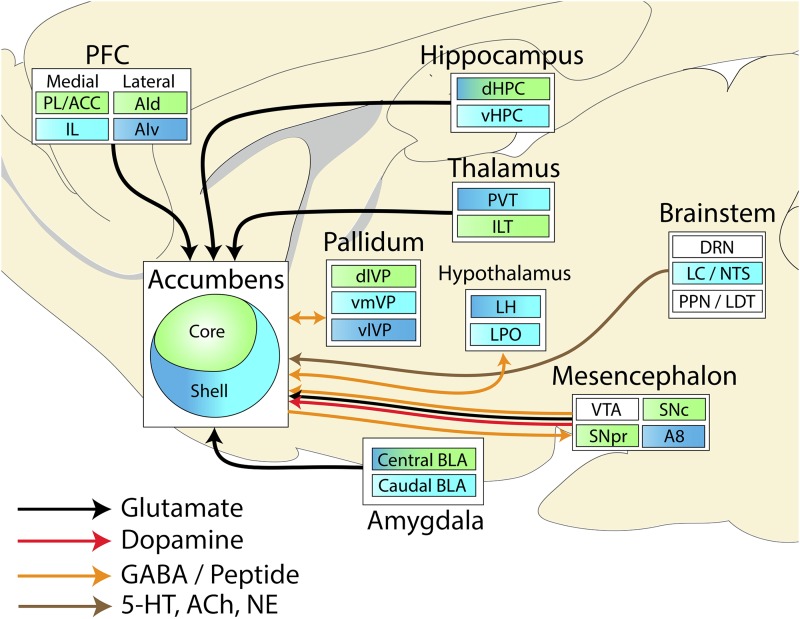
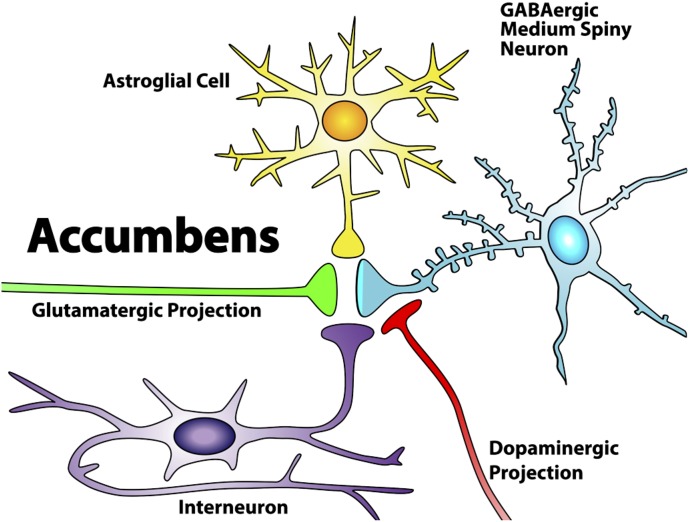
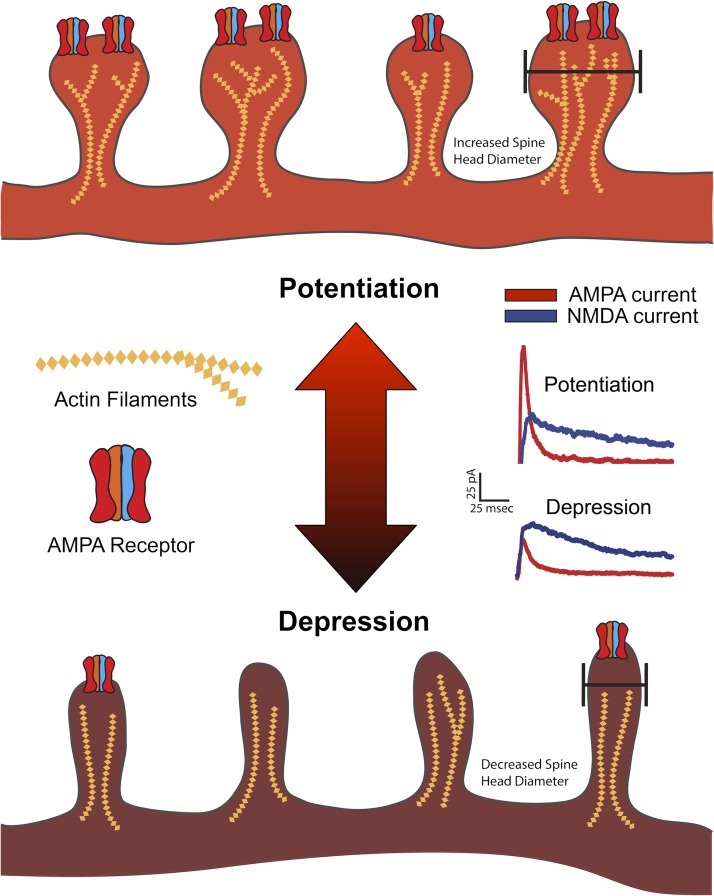
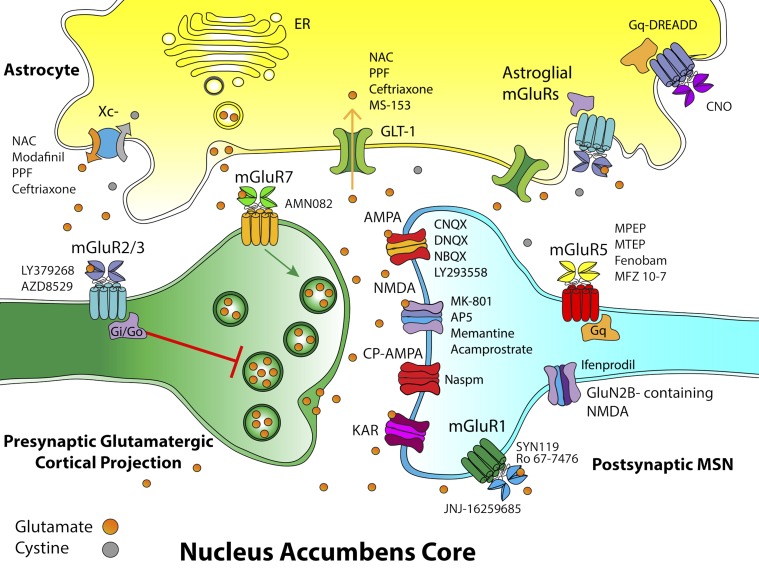
The nucleus accumbens is a major input structure of the basal ganglia and integrates information from cortical and limbic structures to mediate goal-directed behaviors. Chronic exposure to several classes of drugs of abuse disrupts plasticity in this region, allowing drug-associated cues to engender a pathologic motivation for drug seeking. A number of alterations in glutamatergic transmission occur within the nucleus accumbens after withdrawal from chronic drug exposure. These drug-induced neuroadaptations serve as the molecular basis for relapse vulnerability. In this review, we focus on the role that glutamate signal transduction in the nucleus accumbens plays in addiction-related behaviors. First, we explore the nucleus accumbens, including the cell types and neuronal populations present as well as afferent and efferent connections. Next we discuss rodent models of addiction and assess the viability of these models for testing candidate pharmacotherapies for the prevention of relapse. Then we provide a review of the literature describing how synaptic plasticity in the accumbens is altered after exposure to drugs of abuse and withdrawal and also how pharmacological manipulation of glutamate systems in the accumbens can inhibit drug seeking in the laboratory setting. Finally, we examine results from clinical trials in which pharmacotherapies designed to manipulate glutamate systems have been effective in treating relapse in human patients. Further elucidation of how drugs of abuse alter glutamatergic plasticity within the accumbens will be necessary for the development of new therapeutics for the treatment of addiction across all classes of addictive substances.
Copyright © 2016 by The American Society for Pharmacology and Experimental Therapeutics.
Figures
References
-
- Adams DH, Kinon BJ, Baygani S, Millen BA, Velona I, Kollack-Walker S, Walling DP. (2013) A long-term, phase 2, multicenter, randomized, open-label, comparative safety study of pomaglumetad methionil (LY2140023 monohydrate) versus atypical antipsychotic standard of care in patients with schizophrenia. BMC Psychiatry 13:143. - PMC - PubMed
-
- Ahmed SH, Kenny PJ, Koob GF, Markou A. (2002) Neurobiological evidence for hedonic allostasis associated with escalating cocaine use. Nat Neurosci 5:625–626. - PubMed
-
- Ahmed SH, Koob GF. (1998) Transition from moderate to excessive drug intake: change in hedonic set point. Science 282:298–300. - PubMed
Publication types
MeSH terms
Substances
Grants and funding
- T32 DA007288/DA/NIDA NIH HHS/United States
- TL1 TR000061/TR/NCATS NIH HHS/United States
- F30 DA038893/DA/NIDA NIH HHS/United States
- K99 DA041462/DA/NIDA NIH HHS/United States
- R01 DA003906/DA/NIDA NIH HHS/United States
- TL1 TR001451/TR/NCATS NIH HHS/United States
- R00 DA040004/DA/NIDA NIH HHS/United States
- R01 DA038700/DA/NIDA NIH HHS/United States
- R01 DA012513/DA/NIDA NIH HHS/United States
- K99 DA040004/DA/NIDA NIH HHS/United States
- P50 DA015369/DA/NIDA NIH HHS/United States
- R37 DA003906/DA/NIDA NIH HHS/United States
- T32 GM008716/GM/NIGMS NIH HHS/United States
- UL1 TR001450/TR/NCATS NIH HHS/United States
- R00 DA036569/DA/NIDA NIH HHS/United States
LinkOut - more resources
Full Text Sources
Other Literature Sources
Medical
