


Callous-unemotional traits affect adolescents' perception of collaboration
- PMID: 27363607
- PMCID: PMC5132018
- DOI: 10.1111/jcpp.12588
Callous-unemotional traits affect adolescents' perception of collaboration
Abstract
Background: How is the perception of collaboration influenced by individual characteristics, in particular high levels of callous-unemotional (CU) traits? CU traits are associated with low empathy and endorsement of negative social goals such as dominance and forced respect. Thus, it is possible that they could relate to difficulties in interpreting that others are collaborating based on a shared goal.
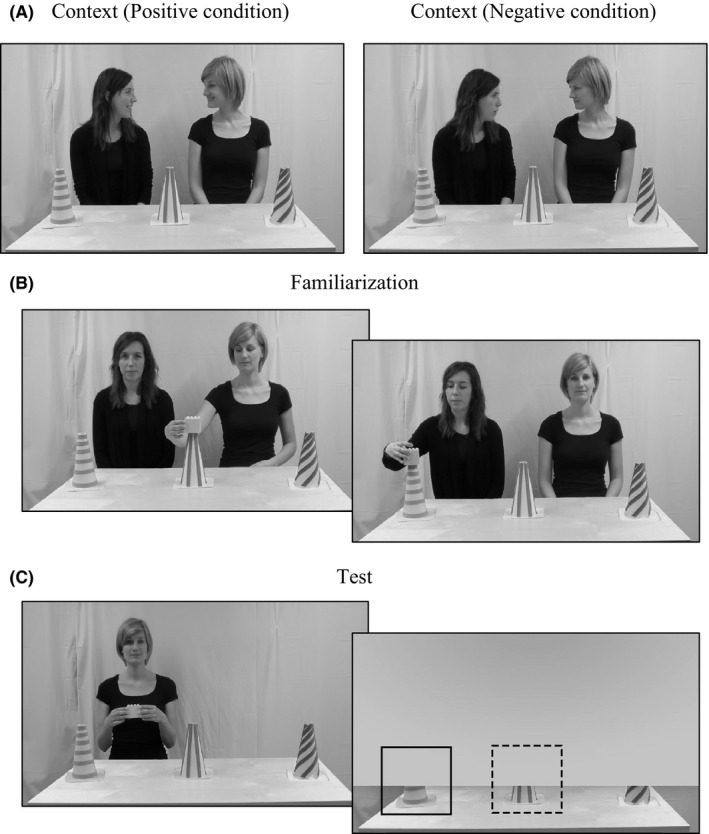
Methods: In the current study, a community sample of 15- to 16-year olds participated in an eye tracking task measuring whether they expect that others engaged in an action sequence are collaborating, depending on the emotion they display toward each other. Positive emotion would indicate that they share a goal, while negative emotion would indicate that they hold individual goals.
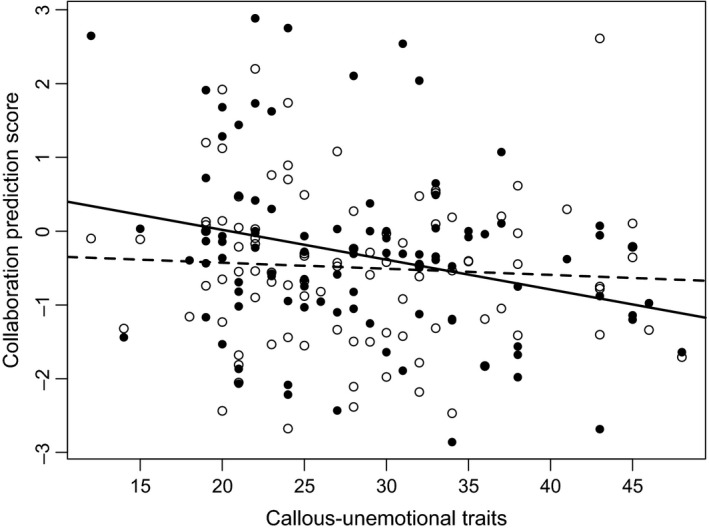
Results: When the actors showed positive emotion toward each other, expectations of collaboration varied with CU traits. The higher adolescents were on CU traits, the less likely they were to expect collaboration. When the actors showed negative emotion toward each other, CU traits did not influence expectations of collaboration.
Conclusions: The findings suggest that CU traits are associated with difficulty in perceiving positive social interactions, which could further contribute to the behavioral and emotional problems common to those with high CU traits.
Keywords: Callous-unemotional traits; adolescence; eye movement; social cognition.
© 2016 The Authors. Journal of Child Psychology and Psychiatry published by John Wiley & Sons Ltd on behalf of Association for Child and Adolescent Mental Health.
Figures
References
-
- American Psychiatric Association (1994). Diagnostic and statistical manual of mental disorders (DSM) (IV). Washington, DC: American Psychiatric Association.
-
- Baayen, R.H. , Davidson, D.J. , & Bates, D.M. (2008). Mixed‐effects modeling with crossed random effects for subjects and items. Journal of Memory and Language, 59, 390–412.
-
- Bates, D. , Maechler, M. , Bolker, B. , & Walker, S. (2014). lme4: Linear mixed‐effects models using Eigen and S4. R package version, 1(7).
-
- Beck, J.S. (2001). Manual for the Beck Youth Inventories of emotional and social adjustment. San Antonio, TX: Psychological Corporation.
-
- Bose‐Deakins, J.E. , & Floyd, R.G. (2004). A review of the Beck Youth Inventories of emotional and social impairment. Journal of School Psychology, 42, 333–340.
Publication types
MeSH terms
LinkOut - more resources
Full Text Sources
Other Literature Sources
Medical
