


Ipilimumab-induced colitis: experience from a tertiary referral center
- PMID: 27366214
- PMCID: PMC4913344
- DOI: 10.1177/1756283X16646709
Ipilimumab-induced colitis: experience from a tertiary referral center
Abstract
Background: Ipilimumab is an anticytotoxic T-lymphocyte antigen-4 (CTLA-4) monoclonal antibody used for the treatment of malignant melanoma. It can cause immune-mediated inflammatory adverse events, including diarrhoea and even intestinal perforation or death in clinical trials but there is a dearth of data on postmarketing outcomes.
Methods: A total of 546 patients attending for treatment of metastatic melanoma between 1 January 2009 and 31 August 2015 were identified by interrogation of the oncology database. A total of 83 of these patients received ipilimumab. Clinical information was extracted from chart reviews, endoscopy and radiology reports, and prescription data.
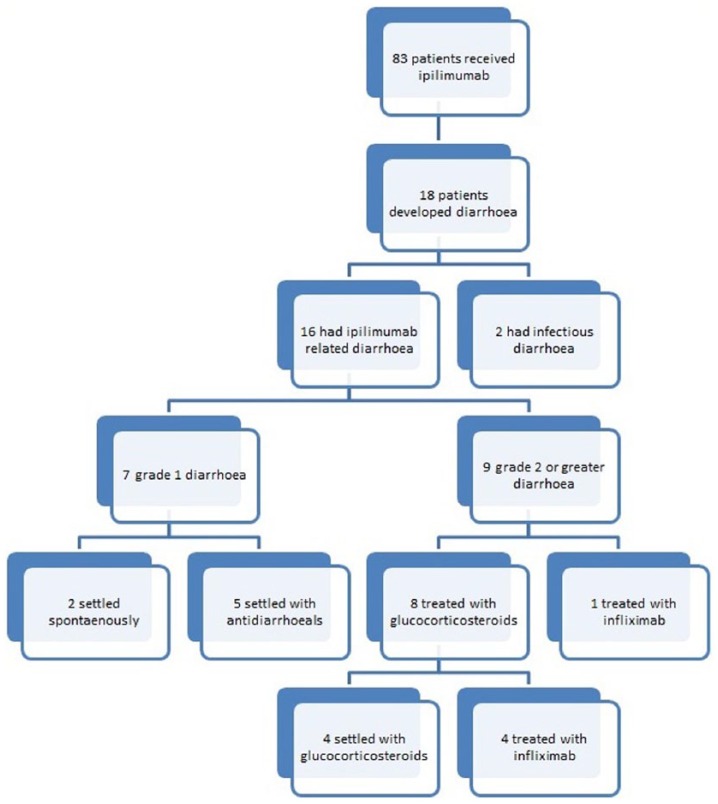
Results: A total of 83 patients received ipilimumab. Only 19.3% (n = 16) of patients developed a diarrhoeal illness not attributable to other causes. The median grade of diarrhoea among included patients was 2 (range 1-4). In two cases, diarrhoea settled spontaneously without any specific treatment. A total of 87.5% of patients received antidiarrhoeal agents such as loperamide or codeine. These resolved symptoms in all patients with grade 1 diarrhoea. For other treatment, 50% patients received systemic glucocorticosteroids and 31.3% required infliximab. Infliximab resolved symptoms in 100% of cases compared with 50% for systemic glucocorticosteroids.
Conclusions: The rate of diarrhoea related to ipilimumab in real-world practice is substantial, but below the range observed in data from RCTs. Grade 1 colitis can usually be managed symptomatically, without recourse to stopping ipilimumab. When diarrhoea was grade 2 or above, results from glucocorticosteroids use proved disappointing; but infliximab has been shown to work well. Further research is required into the earlier use of infliximab as an effective treatment for ipilimumab-induced diarrhoea.
Keywords: colitis; diarrhoea; infliximab; ipilimumab; melanoma.
Conflict of interest statement
References
-
- Bristol-Myers Squibb Pharmaceutical Limited (2015) Ipilimumab SPC. Available at: http://www.medicines.org.uk/emc/medicine/24779 (accessed 13 September 2015).
-
- Gupta A., De Felice K., Loftus E., Jr., Khanna S. (2015) Systematic review: colitis associated with anti-CTLA-4 therapy. Aliment Pharmacol Ther 42: 406–417. - PubMed
LinkOut - more resources
Full Text Sources
Other Literature Sources
