


Effect of Anaesthesia Methods for Regaining Daily Life Activities in Cesarean Patients
- PMID: 27366394
- PMCID: PMC4894162
- DOI: 10.5152/TJAR.2014.96630
Effect of Anaesthesia Methods for Regaining Daily Life Activities in Cesarean Patients
Abstract
Objective: Postpartum period is physically, socially and emotionally a difficult time for the parents and the baby to become a family. We tried to investigate how the anaesthesia method affects patients who underwent cesarean delivery, as a factor which also affects this period.
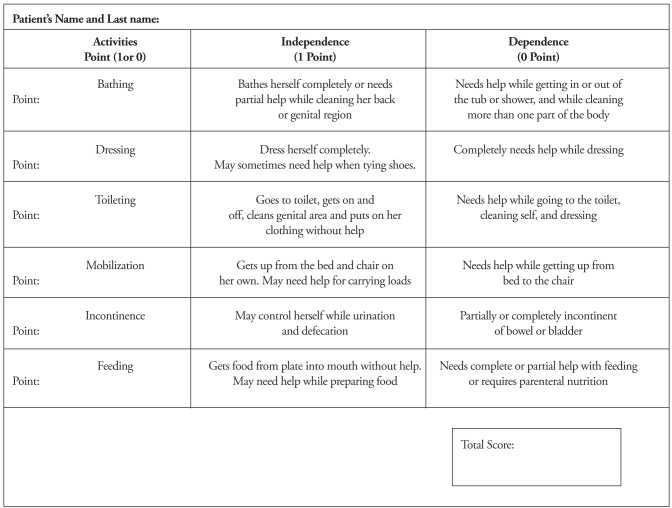
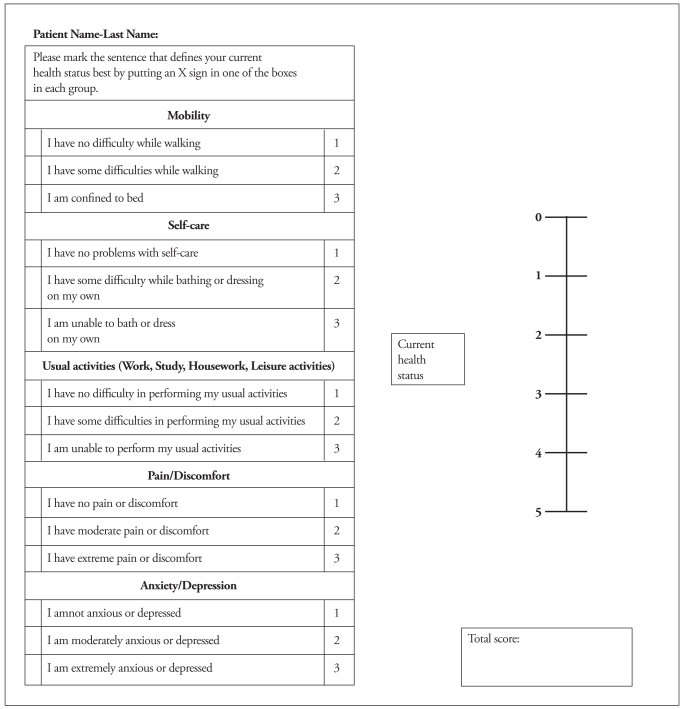
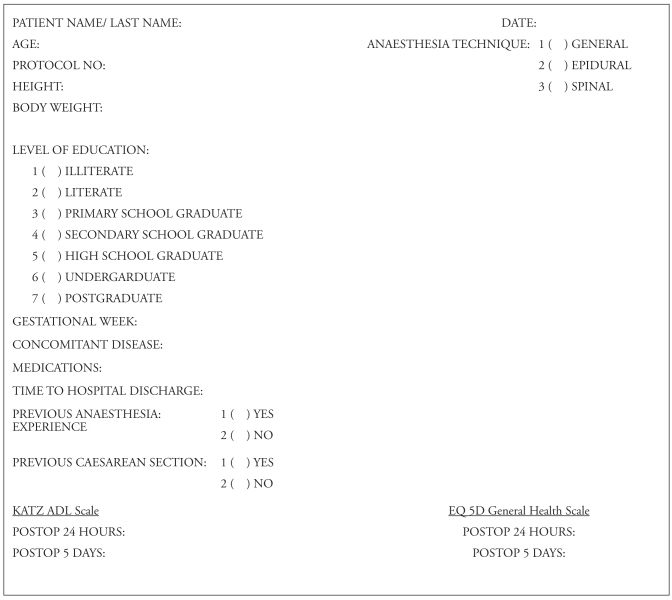
Methods: Two hundred and six parturients, who underwent elective cesarean delivery in Celal Bayar University Hafsa Sultan Hospital were recruited for our study. After demographic data and anaesthesia methods were noted, an EQ-5D health survey and Katz ADL scale were evaluated face to face 24 hours postoperatively, and by telephone on the 5th postoperative day.
Results: The percentage of patients who had general anaesthesia was 35.2% (n=71), while 19.8% (n=40) had epidural anaesthesia and 45% (n=91) had spinal anaesthesia. Among -these three methods, the EQ-5D health survey revealed that the outcome at postoperative 24 hours was best in epidural anaesthesia and that general anaesthesia outcome was the worst (p=0.007). The Katz ADL scale at postoperative 24. hours showed that epidural anaesthesia was better than the other methods for regaining daily life activities (p<0.05).
Conclusion: Our study showed that epidural anaesthesia had the most effective role among the methods in regaining daily life activities after elective cesarean delivery, which was demonstrated using the EQ-5D health survey and Katz ADL scale.
Keywords: Cesarean sectio; anaesthesia; quality of life.
Figures
References
-
- Levitt C, Shaw E, Wong S, Kaczorowski J, Springate R, Sellors J, et al. Systematic review of the literature on postpartum care: methodology and literature search results. Birth. 2004;31:196–202. http://dx.doi.org/10.1111/j.0730-7659.2004.00305.x. - DOI - PubMed
-
- Yelland J, McLachlan H, Forster D, Rayner J, Lumley J. How is maternal psychosocial health assessed and promoted in the early postnatal period? Findings from a review of hospital postnatal care in Victoria, Australia. Midwifery. 2007;23:287–97. http://dx.doi.org/10.1016/j.midw.2006.06.003. - DOI - PubMed
-
- Chaudron LH, Jefferson JW. Mood stabilizers during breastfeed ing: a review. J Clin Psychiatry. 2000;61:79–90. http://dx.doi.org/10.4088/JCP.v61n0202. - DOI - PubMed
-
- Bashiri N, Spielvogel AM. Postpartum depression: a cross-cultural perspective. Obs Gyns. 1999;6:82–7.
LinkOut - more resources
Full Text Sources
Other Literature Sources