doi: 10.3201/eid2209.160664.
Epub 2016 Sep 15.
Inactivation and Environmental Stability of Zika Virus
- PMID: 27367466
- PMCID: PMC4994368
- DOI: 10.3201/eid2209.160664
Item in Clipboard
Inactivation and Environmental Stability of Zika Virus
Emerg Infect Dis.
2016 Sep.
No abstract available
Keywords: Flavivirus; Zika virus; inactivation; vector-borne infections; viruses.
Figures
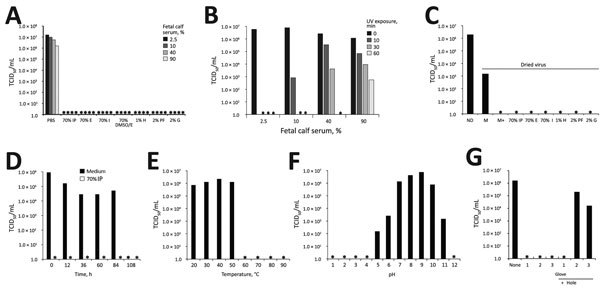
Inactivation and environmental stability of Zika virus. Asterisks (*) indicate lack of infection. A) Virus stocks containing 2.5%, 10%, 40%, or 90% fetal calf serum were incubated with alcohol-based disinfectants for 1 min. All disinfectants inactivated the virus. B) Virus stocks containing indicated concentrations of fetal calf serum were exposed to the ultraviolet (UV) light of a laminar flow hood. Higher concentrations of serum required more time to inactivate the virus. C) Virus stock was dried for 18 h and was then reconstituted in medium or the indicated disinfectants for 5 min or exposed to 10 min UV light before reconstitution. All disinfectants inactivated the virus. D) Virus was dried and incubated for indicated periods of time. Thereafter, dried virus was reconstituted in medium or 70% (vol/vol) isopropanol. Isopropanol inactivated the virus, but dried virus in medium remained infectious even after 84 h of incubation. E) Zika virus was incubated for 5 min at indicated temperatures. Temperatures > 60°C inactivated the virus. F) Stocks were adjusted to indicated pH values and incubated for 10 min. pH levels < 4 or >11 deactivated the virus. G) Finger tips of laboratory gloves were cut off, with or without introducing a hole by pinching with a needle, and put into medium. Glove tips were filled with virus stock and incubated for 90 min at room temperature. All gloves without needle holes were protective against transmission; 2 of 3 gloves with needle holes allowed virus transmission. For detailed experimental description, see Technical Appendix. DMSO, dimethyl sulfoxide; E, ethanol; G, glutaraldehyde; H, hypochlorite; I, incidin, IP, isopropanol; M, medium, M+, medium plus 10 min UV; ND, not dried; PBS, phosphate-buffered saline; PF, paraformaldehyde; TCID50, 50% tissue culture infective dose; UV, ultraviolet.
References
Publication types
MeSH terms
Substances
LinkOut - more resources
Full Text Sources
Other Literature Sources
Medical