


An Intervention with Mineral Water Decreases Cardiometabolic Risk Biomarkers. A Crossover, Randomised, Controlled Trial with Two Mineral Waters in Moderately Hypercholesterolaemic Adults
- PMID: 27367723
- PMCID: PMC4963876
- DOI: 10.3390/nu8070400
An Intervention with Mineral Water Decreases Cardiometabolic Risk Biomarkers. A Crossover, Randomised, Controlled Trial with Two Mineral Waters in Moderately Hypercholesterolaemic Adults
Abstract
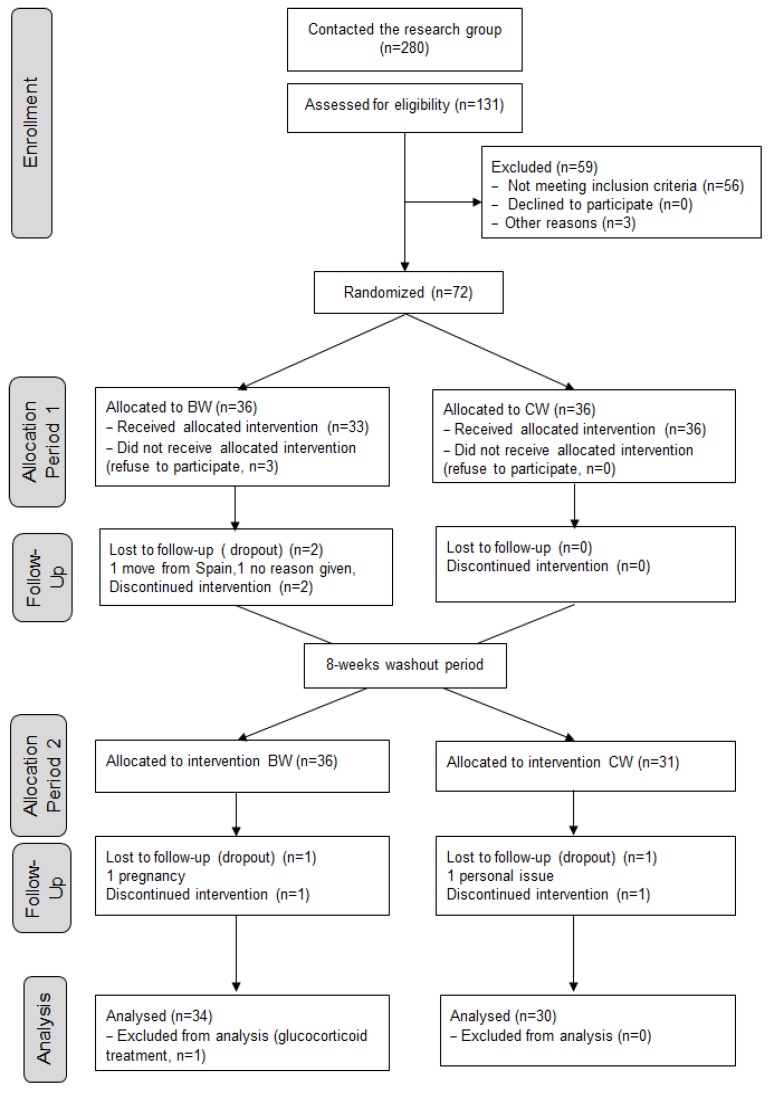
Water intake is essential for health maintenance and disease prevention. The effects of an intervention with two mineral waters, sodium-bicarbonated mineral water (BW) or control mineral water low in mineral content (CW), on cardiometabolic risk biomarkers were studied. In a randomised-controlled crossover-trial, sixty-four moderately hypercholesterolaemic adults were randomly assigned to consume 1 L/day of either BW (sodium, 1 g/L; bicarbonate, 2 g/L) or CW with the main meals for eight weeks, separated by an eight-week washout period. Blood lipids, lipid oxidation, glucose, insulin, aldosterone, urine pH, urinary electrolytes, blood pressure, body weight, fluid intake, energy, and nutrients from total diet and beverages were determined. Total cholesterol, LDL cholesterol, and glucose decreased (p < 0.01), oxidised LDL tended to decrease (p = 0.073), and apolipoprotein B increased during the intervention, without water type effect. Energy and carbohydrates from beverages decreased since soft drinks and fruit juice consumptions decreased throughout the trial. BW increased urinary pH (p = 0.006) and reduced calcium/creatinine excretion (p = 0.011). Urinary potassium/creatinine decreased with both waters. Consumption of 1 L/day of mineral water with the main meals reduces cardiometabolic risk biomarkers, likely to be attributed to a replacement of soft drinks by water. In addition, BW does not affect blood pressure and exerts a moderate alkalizing effect in the body.
Keywords: cardiometabolic risk; cholesterol; fluid intake; human; randomised controlled trial; sodium-bicarbonated mineral water.
Figures
References
-
- Schoppen S., Perez-Granados A.M., Carbajal A., Oubina P., Sanchez-Muniz F.J., Gomez-Gerique J.A., Vaquero M.P. A sodium-rich carbonated mineral water reduces cardiovascular risk in postmenopausal women. J. Nutr. 2004;134:1058–1063. - PubMed
Publication types
MeSH terms
Substances
LinkOut - more resources
Full Text Sources
Other Literature Sources
Medical
