


Viral Inhibition of the IFN-Induced JAK/STAT Signalling Pathway: Development of Live Attenuated Vaccines by Mutation of Viral-Encoded IFN-Antagonists
- PMID: 27367734
- PMCID: PMC5041017
- DOI: 10.3390/vaccines4030023
Viral Inhibition of the IFN-Induced JAK/STAT Signalling Pathway: Development of Live Attenuated Vaccines by Mutation of Viral-Encoded IFN-Antagonists
Abstract
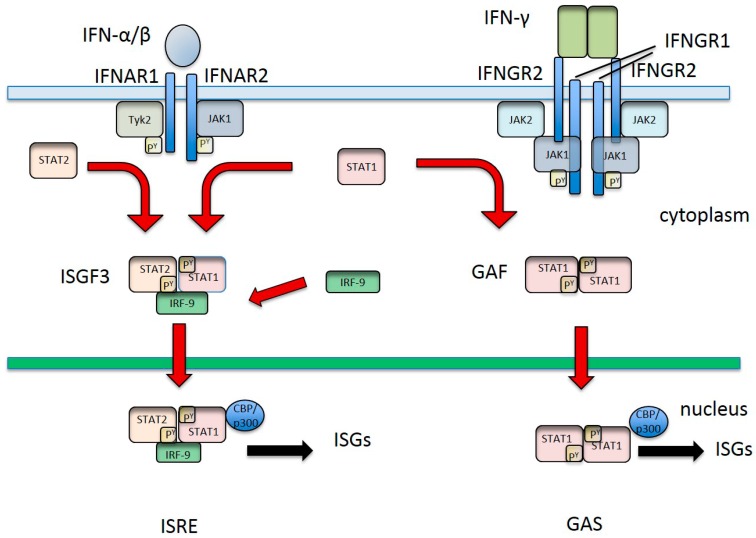
The interferon (IFN) induced anti-viral response is amongst the earliest and most potent of the innate responses to fight viral infection. The induction of the Janus kinase/signal transducer and activation of transcription (JAK/STAT) signalling pathway by IFNs leads to the upregulation of hundreds of interferon stimulated genes (ISGs) for which, many have the ability to rapidly kill viruses within infected cells. During the long course of evolution, viruses have evolved an extraordinary range of strategies to counteract the host immune responses in particular by targeting the JAK/STAT signalling pathway. Understanding how the IFN system is inhibited has provided critical insights into viral virulence and pathogenesis. Moreover, identification of factors encoded by viruses that modulate the JAK/STAT pathway has opened up opportunities to create new anti-viral drugs and rationally attenuated new generation vaccines, particularly for RNA viruses, by reverse genetics.
Keywords: JAK/STAT pathway; immune evasion; innate immunity; interferon; vaccines; viruses.
Conflict of interest statement
There are no conflicts of interest.
Figures
References
Publication types
LinkOut - more resources
Full Text Sources
Other Literature Sources
