


Clinicopathologic characteristics, treatment, and outcomes of tubulointerstitial nephritis and uveitis syndrome in adults: A national retrospective strobe-compliant study
- PMID: 27367994
- PMCID: PMC4937908
- DOI: 10.1097/MD.0000000000003964
Clinicopathologic characteristics, treatment, and outcomes of tubulointerstitial nephritis and uveitis syndrome in adults: A national retrospective strobe-compliant study
Abstract
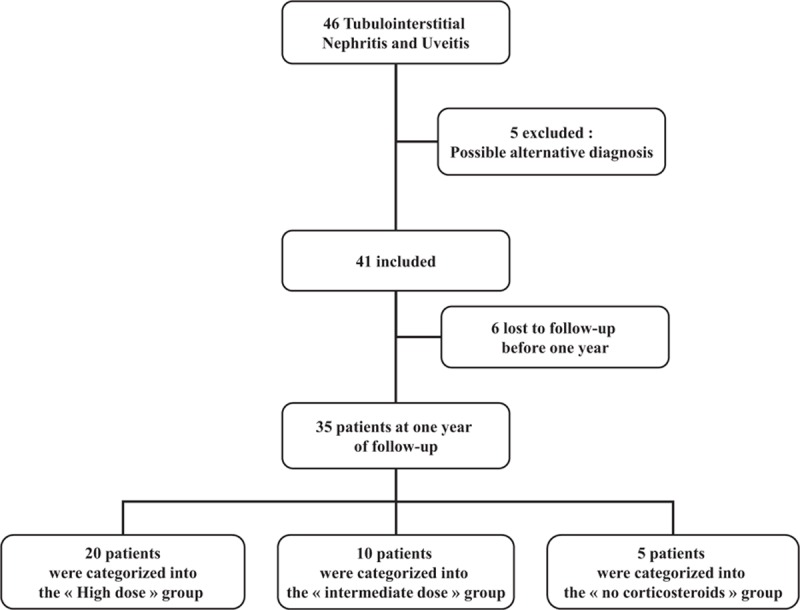
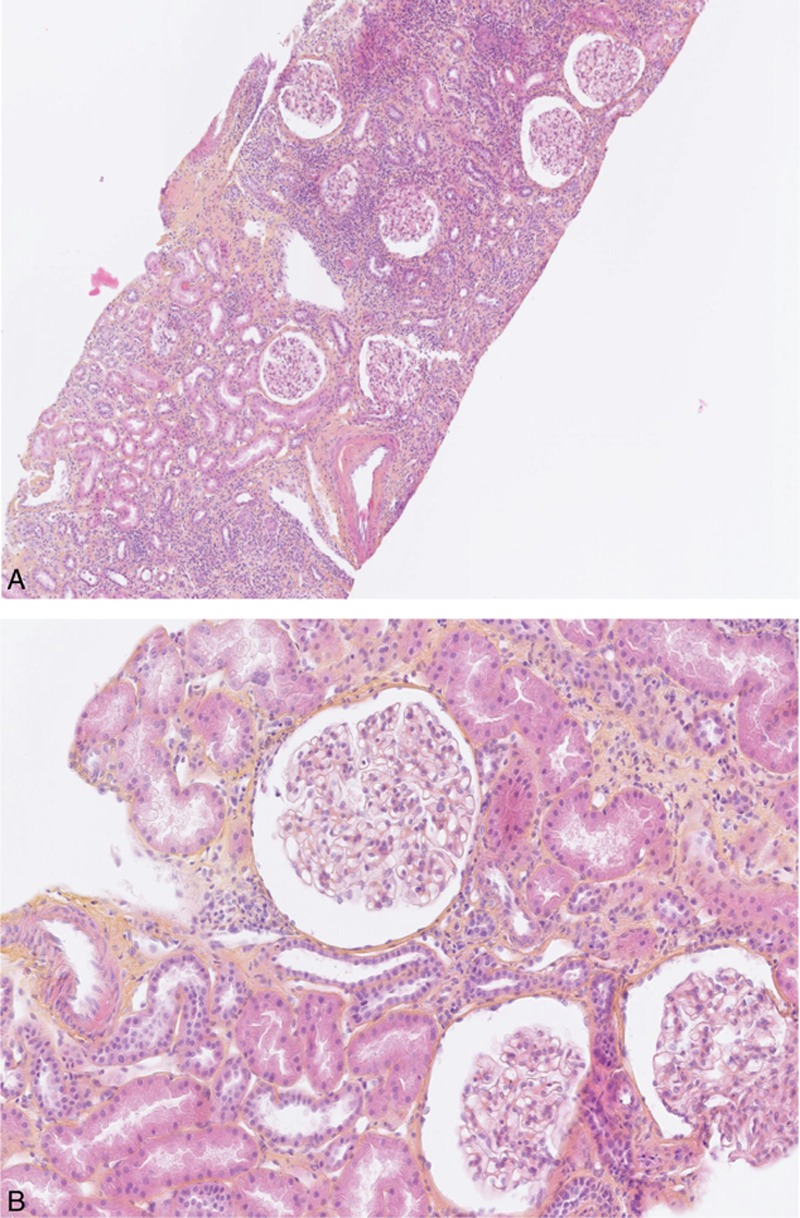
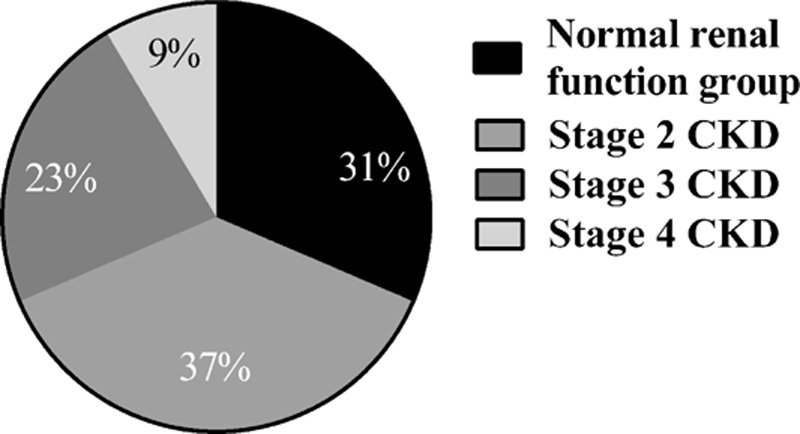
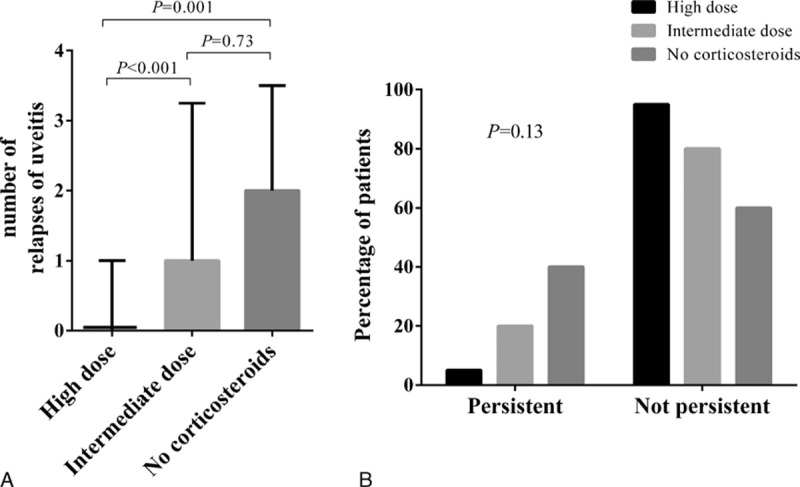
Tubulointerstitial nephritis and uveitis (TINU) syndrome is a rare disease, defined by the association of idiopathic acute TINU. The aim of our work was to determine the characteristics of adult TINU syndrome in France, and to assess factors (including treatment) influencing medium-term prognosis.We conducted a nationwide study including 20 French hospitals. Clinical, laboratory, and renal histopathologic data of 41 biopsy-proven TINU syndromes were retrospectively collected. The patients were diagnosed between January 1, 1999 and December 1, 2015.Twenty-five females and 16 males were included (F/M ratio: 1.6:1). The median age at disease onset was 46.8 years (range 16.8-77.4) with a median serum creatinine level at 207 μmol/L (range 100-1687) and a median estimated glomerular filtration rate (eGFR) at 27 mL/min per 1.73 m (range 2-73). Twenty-nine patients (71%) had a bilateral anterior uveitis and 24 (59%) had deterioration in general health at presentation. Moderate proteinuria was found in 32 patients (78%) (median proteinuria 0.52 g/24 h; range 0.10-2.10), aseptic leukocyturia in 25/36 patients (70%). The evaluation of renal biopsies revealed 41 patients (100%) with an acute tubulointerstitial nephritis, 19/39 patients (49%) with light to moderate fibrosis and 5 patients (12%) with an acute tubular necrosis. Thirty-six patients (88%) were treated with oral corticosteroids. After 1 year of follow-up, the median eGFR was 76 mL/min per 1.73 m (range 17-119) and 32% of the patients suffered from moderate to severe chronic kidney disease. Serum creatinine (P < 0.001, r = -0.54), serum bicarbonate and phosphate levels (respectively, P = 0.01, r = 0.53; and P = 0.04, r = 0.46), and age (P = 0.03, r = -0.37) at the 1st symptoms were associated with eGFR after 1 year. During the 1st year 40% of patients had uveitis relapses. The use of oral corticosteroids was not associated with a better kidney function but was associated with fewer uveitis relapses (P = 0.44 and 0.02, respectively).In our study, 32% of patients were suffering from moderate to severe chronic kidney disease after 1 year of follow-up, and 40% had uveitis relapses during this follow-up. This work also suggests that oral corticosteroids are effective for the treatment of TINU syndrome's uveitis.
Conflict of interest statement
The authors have no funding and conflicts of interest to disclose.
Figures
References
-
- Mackensen F, Billing H. Tubulointerstitial nephritis and uveitis syndrome. Curr Opin Ophthalmol 2009; 20:525–553. - PubMed
-
- Mandeville JTH, Levinson RD, Holland GN. The tubulointerstitial nephritis and uveitis syndrome. Surv Ophthalmol 2001; 46:195–208. - PubMed
-
- Peräsaari J, Saarela V, Nikkilä J, et al. HLA associations with tubulointerstitial nephritis with or without uveitis in Finnish pediatric population: a nation-wide study. Tissue Antigens 2013; 81:435–441. - PubMed
-
- Jahnukainen T, Ala-Houhala M, Karikoski R, et al. Clinical outcome and occurrence of uveitis in children with idiopathic tubulointerstitial nephritis. Pediatr Nephrol Berl Ger 2011; 26:291–299. - PubMed
-
- Reddy AK, Hwang Y-S, Mandelcorn ED, et al. HLA-DR, DQ class II DNA typing in pediatric panuveitis and tubulointerstitial nephritis and uveitis. Am J Ophthalmol 2014; 157:678–686. - PubMed
Publication types
MeSH terms
Substances
Supplementary concepts
LinkOut - more resources
Full Text Sources
Other Literature Sources
Research Materials
Miscellaneous
