


The role of MHC class Ib-restricted T cells during infection
- PMID: 27368413
- PMCID: PMC5003733
- DOI: 10.1007/s00251-016-0932-z
The role of MHC class Ib-restricted T cells during infection
Abstract
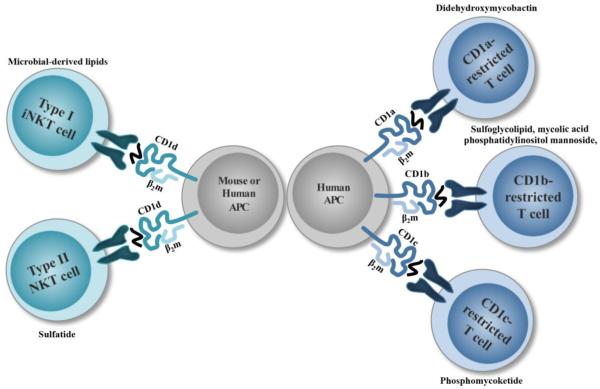
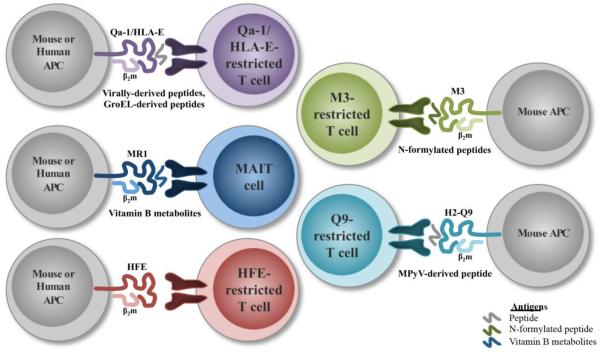
Even though major histocompatibility complex (MHC) class Ia and many Ib molecules have similarities in structure, MHC class Ib molecules tend to have more specialized functions, which include the presentation of non-peptidic antigens to non-classical T cells. Likewise, non-classical T cells also have unique characteristics, including an innate-like phenotype in naïve animals and rapid effector functions. In this review, we discuss the role of MAIT and NKT cells during infection but also the contribution of less studied MHC class Ib-restricted T cells such as Qa-1-, Qa-2-, and M3-restricted T cells. We focus on describing the types of antigens presented to non-classical T cells, their response and cytokine profile following infection, as well as the overall impact of these T cells to the immune system.
Keywords: Infectious diseases; MHC class Ib; NKT and MAIT cells; Non-classical T cells.
Figures

References
-
- Aldrich CJ, DeCloux A, Woods AS, Cotter RJ, Soloski MJ, Forman J. Identification of a Tap-dependent leader peptide recognized by alloreactive T cells specific for a class Ib antigen. Cell. 1994;79:649–658. - PubMed
-
- Attinger A, et al. Molecular basis for the high affinity interaction between the thymic leukemia antigen and the CD8alphaalpha molecule. Journal of immunology (Baltimore, Md : 1950) 2005;174:3501–3507. - PubMed
Publication types
MeSH terms
Substances
Grants and funding
LinkOut - more resources
Full Text Sources
Other Literature Sources
Research Materials
