


Population attributable risk estimates for factors associated with non-use of postnatal care services among women in Nigeria
- PMID: 27371552
- PMCID: PMC4947753
- DOI: 10.1136/bmjopen-2015-010493
Population attributable risk estimates for factors associated with non-use of postnatal care services among women in Nigeria
Abstract
Objectives: To determine population attributable risks (PARs) estimates for factors associated with non-use of postnatal care (PNC) in Nigeria.
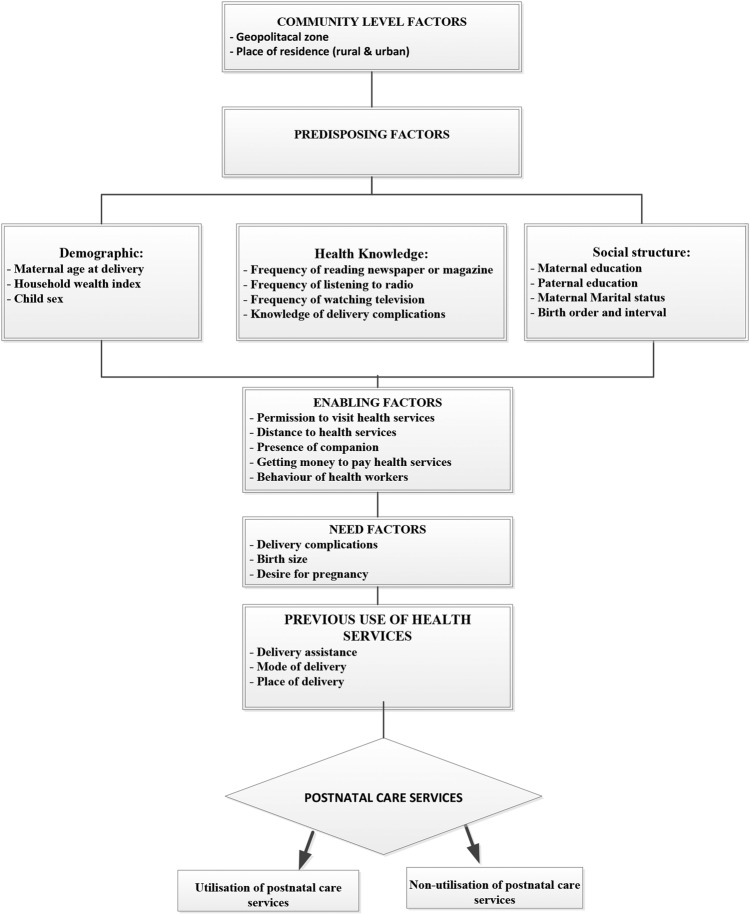
Design, setting and participants: The most recent Nigeria Demographic and Health Survey (NDHS, 2013) was examined. The study consisted of 20 467 mothers aged 15-49 years. Non-use of PNC services was examined against a set of demographic, health knowledge and social structure factors, using multilevel regression analysis. PARs estimates were obtained for each factor associated with non-use of PNC in the final multivariate logistic regression model.
Main outcome: PNC services.
Results: Non-use of PNC services was attributed to 68% (95% CI 56% to 76%) of mothers who delivered at home, 61% (95% CI 55% to 75%) of those who delivered with the help of non-health professionals and 37% (95% CI 31% to 45%) of those who lacked knowledge of delivery complications in the study population. Multiple variable analyses revealed that non-use of PNC services among mothers was significantly associated with rural residence, household poverty, no or low levels of mothers' formal education, small perceived size of neonate, poor knowledge of delivery-related complications, and limited or no access to the mass media.
Conclusions: PAR estimates for factors associated with non-use of PNC in Nigeria highlight the need for community-based interventions regarding maternal education and services that focus on mothers who delivered their babies at home. Our study also recommends financial support from the Nigerian government for mothers from low socioeconomic settings, so as to minimise the inequitable access to pregnancy and delivery healthcare services with trained healthcare personnel.
Keywords: Mortality; Nigeria; Postnatal care.
Published by the BMJ Publishing Group Limited. For permission to use (where not already granted under a licence) please go to http://www.bmj.com/company/products-services/rights-and-licensing/
Figures
References
-
- World Health Organization. WHO technical consultation on postpartum and postnatal care. Geneva: WHO, 2010. - PubMed
-
- World Health Organization. Antenatal care: report of a technical working group. 31 October-4 November 1994 Geneva: World Health Organization, 1996.
MeSH terms
LinkOut - more resources
Full Text Sources
Other Literature Sources
Medical
Miscellaneous
