


Using Interdisciplinary Workgroups to Educate Surgery Residents in Systems-Based Practice
- PMID: 27372271
- PMCID: PMC5124388
- DOI: 10.1016/j.jsurg.2016.05.017
Using Interdisciplinary Workgroups to Educate Surgery Residents in Systems-Based Practice
Abstract
Background: Meaningful education of residents in systems-based practice is notoriously challenging, despite its recognition as 1 of the 6 Accreditation Council for Graduate Medical Education core competencies. To address this challenge, surgery residents and other members of the health care team were organized into interdisciplinary workgroups that were tasked with developing solutions to "systems issues" confronted on a daily basis. The project's goals included providing more meaningful, hands-on educational experience for residents in system-based practice, while also generating practical solutions to workflow issues through interprofessional collaboration.
Project design: Project participants included all surgery residents at the University of Virginia in Charlottesville, VA, as well as surgical health care professionals across all disciplines. Participants were organized into workgroups. Over the course of 3 sessions, each of 1-hour, each workgroup identified commonly encountered systems issues, chose 1 issue to address, and determined an implementable solution for this issue. In total, 140 participants were divided among 13 workgroups.
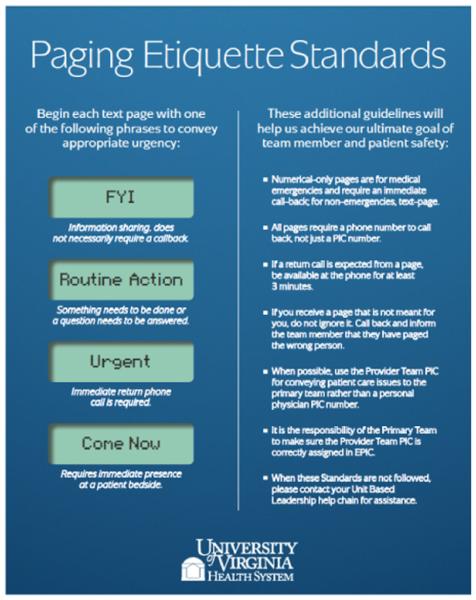
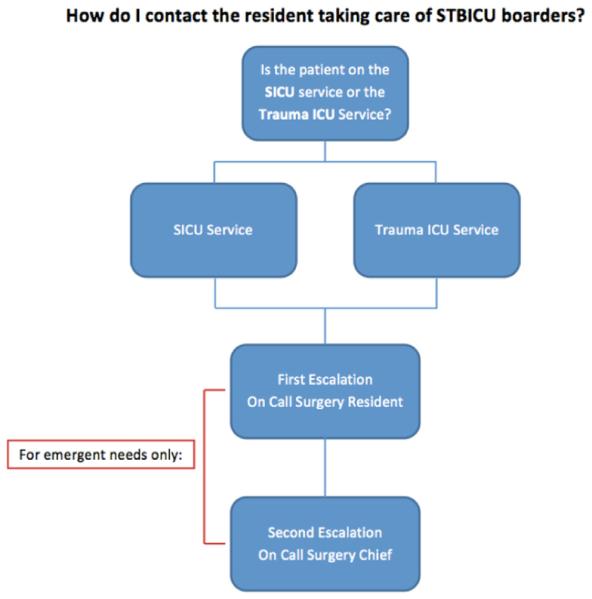
Project execution: Workgroup topics ranged from improving paging etiquette to standardizing interdisciplinary communication. In total, 9 of the 13 proposals have been piloted or fully implemented as standard practice at our institution, either within a single unit or over the entire health system.
Discussion: This project demonstrates an innovative approach toward resident education in system-based practice, providing residents with a hands-on experience in problem solving from a systems perspective. These interdisciplinary workgroups generated effective solutions to issues that were meaningful to frontline health care providers. Interdisciplinary collaboration within the workgroups served as a valuable team-building exercise to improve relations between the disciplines. This project can serve as a model for other institutions desiring meaningful education in the Accreditation Council for Graduate Medical Education competency of systems-based practice.
Keywords: ACGME milestones; Interpersonal and Communication Skills; Systems-Based Practice; interdisciplinary; problem-based learning; resident education; systems-based practice; workgroups.
Copyright © 2016 Association of Program Directors in Surgery. Published by Elsevier Inc. All rights reserved.
Figures

References
-
- ACGME Common Program Requirements. Available at: http://www.acgme.org/acgmeweb/Portals/0/PFAssets/ ProgramRequirements/CP...; 2013 Accessed 27.08.15.
-
- Clinical Learning Environment Review. Pathways to Excellence. Available at: https://www.acgme.org/acgme web/Portals/0/PDFs/CLER/CLER_Brochure.pdf. 2015 Accessed 27.08.15.
-
- Yaszay B, Kubiak E, Agel J, Hanel DP. ACGME core competencies: where are we? Orthopedics. 2009;32:171. - PubMed
-
- Roberts SM, Jarvis-Selinger S, Pratt DD, et al. Reshaping orthopaedic resident education in systems-based practice. J Bone Joint Surg Am. 2012;94:1131–1137. - PubMed
-
- Shaikh U, Natale JE, Nettiksimmons J, Li S-TT. Improving pediatric health care delivery by engaging residents in team-based quality improvement projects. Am J Med Quali. 2013;28:120–126. - PubMed
MeSH terms
Grants and funding
LinkOut - more resources
Full Text Sources
Other Literature Sources
