Review
. 2016 Nov;26(6):389-407.
doi: 10.1002/rmv.1894. Epub 2016 Jul 4.

The role of microRNAs in respiratory viral infection: friend or foe?

Affiliations
Review

The role of microRNAs in respiratory viral infection: friend or foe?

Alireza Tahamtan et al. Rev Med Virol. 2016 Nov.

Abstract

MicroRNAs (miRNAs) have emerged as a class of regulatory RNAs in host-pathogen interactions. Aberrant miRNA expression seems to play a central role in the pathology of several respiratory viruses, promoting development and progression of infection. miRNAs may thus serve as therapeutic and prognostic factors for respiratory viral infectious disease caused by a variety of agents. We present a comprehensive review of recent findings related to the role of miRNAs in different respiratory viral infections and discuss possible therapeutic opportunities aiming to attenuate the burden of viral infections. Our review supports the emerging concept that cellular and viral-encoded miRNAs might be broadly implicated in human respiratory viral infections, with either positive or negative effects on virus life cycle. Copyright © 2016 John Wiley & Sons, Ltd.


Figures
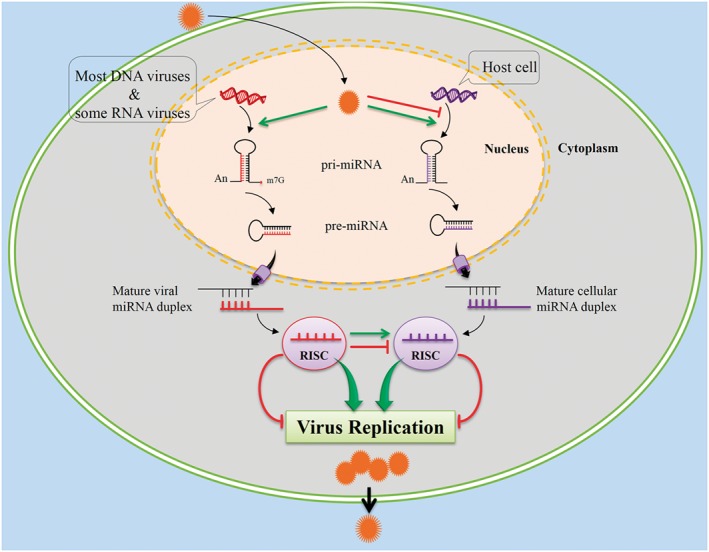
Figure 1
Figure 1
Following viral infection, host cells alter their microRNAs (miRNAs) expression as a defense against infection, while viruses can circumvent host defense and promote their own propagation by affecting host cellular miRNAs expression or by expressing their own miRNAs
Figure 2
Figure 2
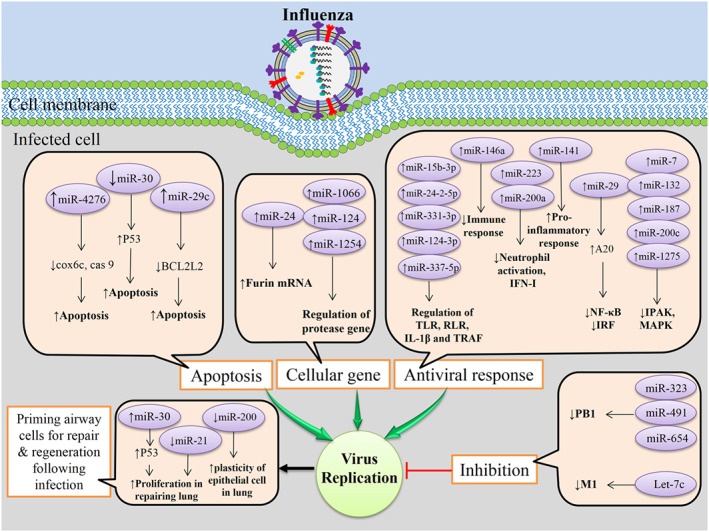
Influenza infection of airway epithelial cells induces or inhibits certain cellular microRNAs (miRNAs) expression in favor of viral replication, pathogenesis, and also suppress anti‐viral responses. However, certain cellular miRNAs can inhibit replication of influenza in infected cells, and certain miRNAs play important roles in priming airway cells for repair and regeneration following influenza infection
Figure 3
Figure 3
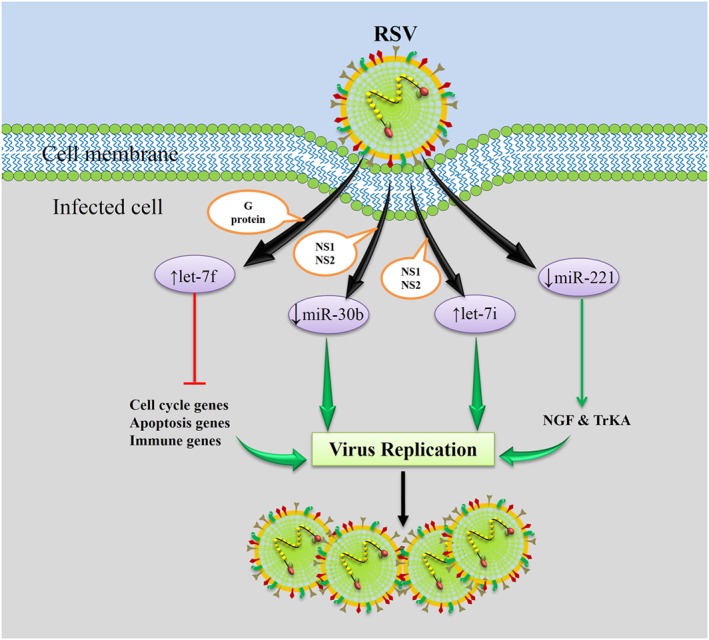
Following RSV respiratory infection, an altered expression profile of certain cellular miRNAs, specifically immune‐associated miRNAs, occurs in order to inhibit viral replication and preserve the airway epithelial barrier; meanwhile, the virus induces or inhibits the expression of other miRNAs that favor viral replication. The RSV G protein enhances let‐7f, the RSV NS1/NS2 proteins decrease miR‐30b and enhance let‐7i, and RSV infection decrease miR‐221, which is an advantage for the virus
Figure 4
Figure 4
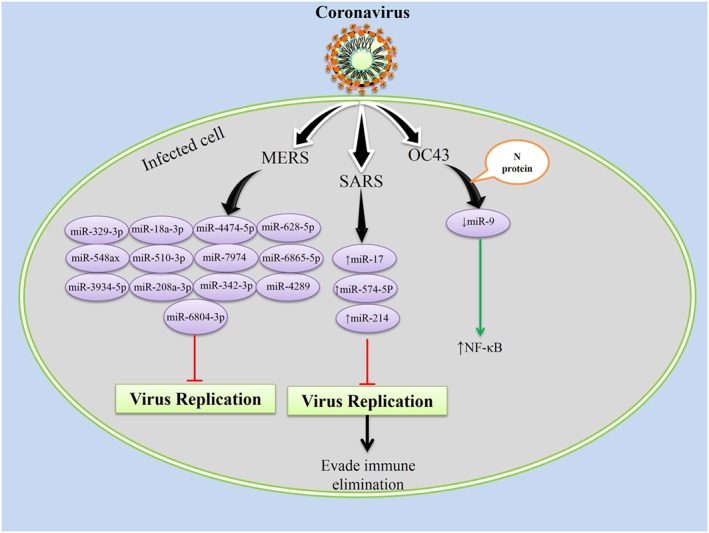
Coronaviruses interact with the host cell at the onset of infection and induces several changes in host cellular microRNAs (miRNAs) expression profile to their own advantage; severe acute respiratory syndrome‐coronavirus (SARS‐CoV) uses cellular miRNAs machinery to evade immune elimination 64; in Middle East respiratory syndrome‐coronavirus (MERS‐CoV), host cells miRNAs would be an anti‐viral therapeutic agent 111, and the N protein of OC43‐coronavirus (OC43‐CoV) causes potentiation of nuclear factor kappa B (NF‐kB) activation via binding to its negative regulator miR‐9 65
Figure 5
Figure 5
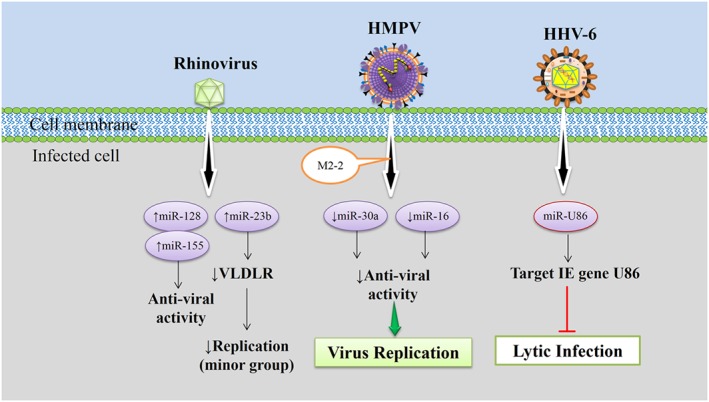
In rhinoviruses infection, cellular microRNAs play anti‐viral responses against viruses 38, human metapneumovirus (HMPV) M2‐2 regulates the host cell microRNAs response to infection 67, and HHV‐6A miR‐U86 targets the HHV‐6A IE gene U86, thereby regulating virus lytic replication 116.
Figure 6
Figure 6
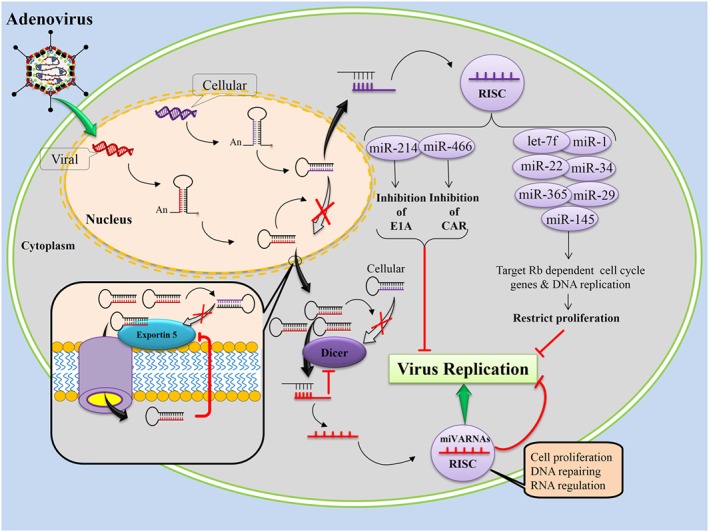
Adenovirus encodes viral miRNAs (miVARNAs) that potently inhibit human pre‐microRNA (miRNA) via inhibition the nuclear export of pre‐miRNA, competition for the exportin 5, and inhibition of Dicer activity by direct binding of Dicer. The miVARNAs are able to target cellular and viral genes that are important for virus cell cycle. Adenovirus miVARNAs target cellular genes involved in cell proliferation, DNA repairing, and RNA regulation. However, cellular miRNAs may play a role in anti‐adenovirus replication by regulating virus gene expression.
Figure 7
Figure 7
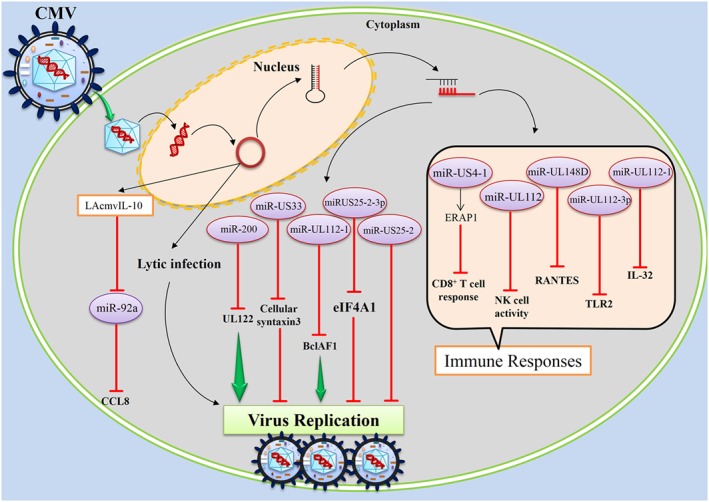
Human cytomegalovirus, a DNA virus, encodes its own microRNAs, and human cytomegalovirus microRNAs target both viral and cellular genes in order to; first regulation of viral replication, second regulation of viral latency infection, and third regulation of cellular anti‐viral immunity.

References

    1. Bartel DP. MicroRNAs: genomics, biogenesis, mechanism, and function. Cell 2004; 116: 281–97. DOI: 10.1016/S0092-8674(04)00045-5. - DOI - PubMed
    1. Krol J, Loedige I, Filipowicz W. The widespread regulation of microRNA biogenesis, function and decay. Nature Reviews Genetics 2010; 11: 597–610. DOI: 10.1038/nrg2843. - DOI - PubMed
    1. Fabbri M, Garzon R, Cimmino A, et al. MicroRNA‐29 family reverts aberrant methylation in lung cancer by targeting DNA methyltransferases 3A and 3B. Proceedings of the National Academy of Sciences USA 2007; 104: 15805–10. DOI: 10.1073/pnas.0707628104. - DOI - PMC - PubMed
    1. Griffiths‐Jones S, Grocock RJ, Van Dongen S, et al. miRBase: microRNA sequences, targets and gene nomenclature. Nucleic Acids Research 2006; 34: D140–D4. DOI: 10.1093/nar/gkj112. - DOI - PMC - PubMed
    1. Hammond SM. An overview of microRNAs. Advance Drug Delivery Reviews 2015; 87: 3–14. DOI: 10.1016/j.addr.2015.05.001. - DOI - PMC - PubMed

Publication types

MeSH terms