


Androgen deprivation leads to increased carbohydrate metabolism and hexokinase 2-mediated survival in Pten/Tp53-deficient prostate cancer
- PMID: 27375016
- PMCID: PMC6639059
- DOI: 10.1038/onc.2016.223
Androgen deprivation leads to increased carbohydrate metabolism and hexokinase 2-mediated survival in Pten/Tp53-deficient prostate cancer
Abstract
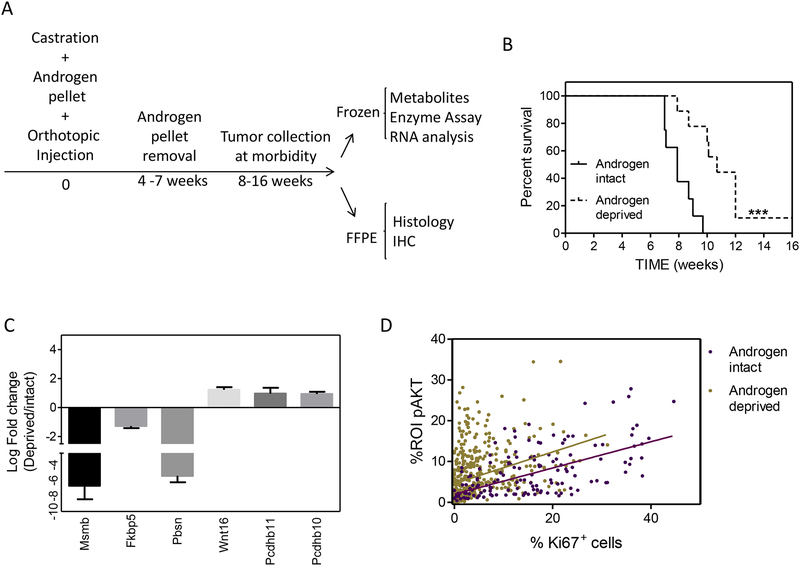
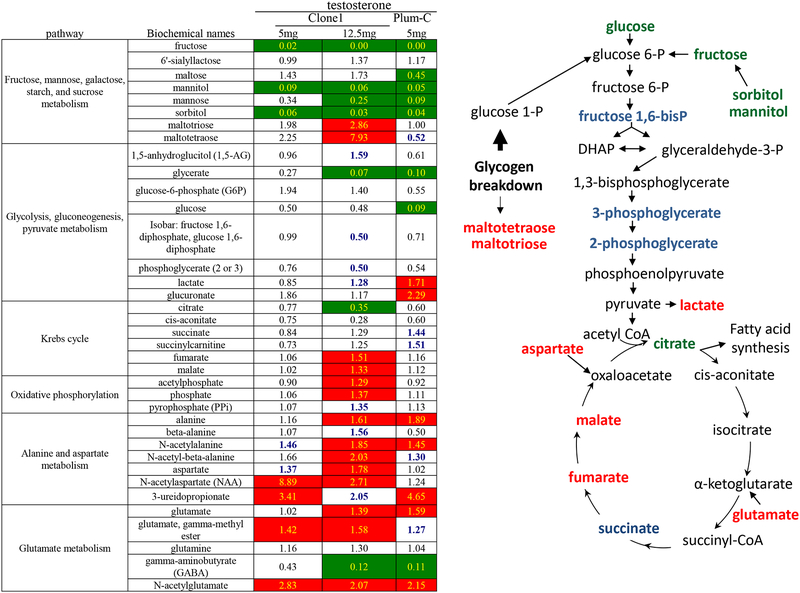
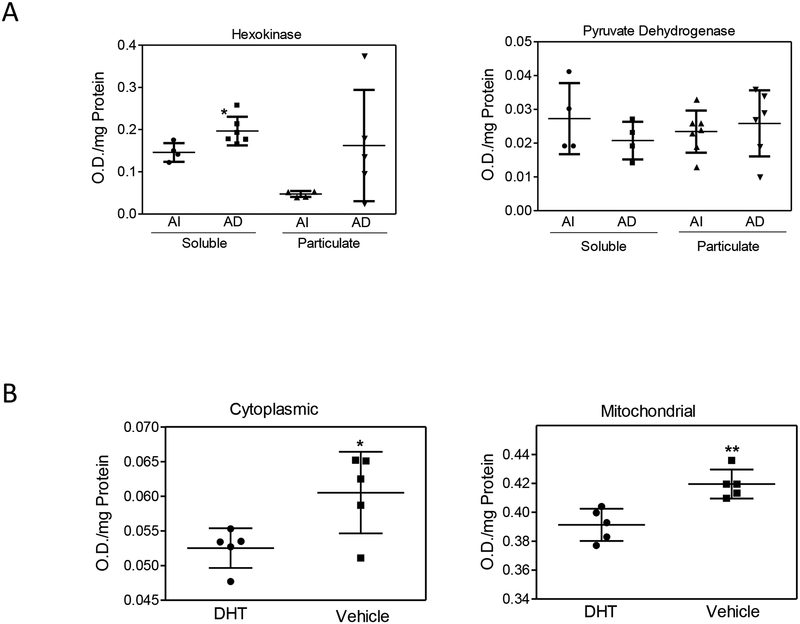
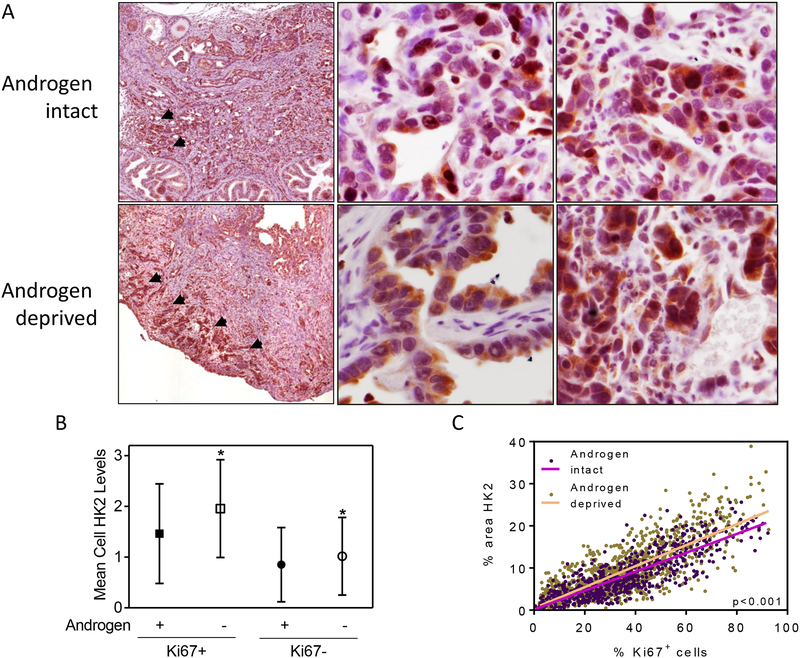
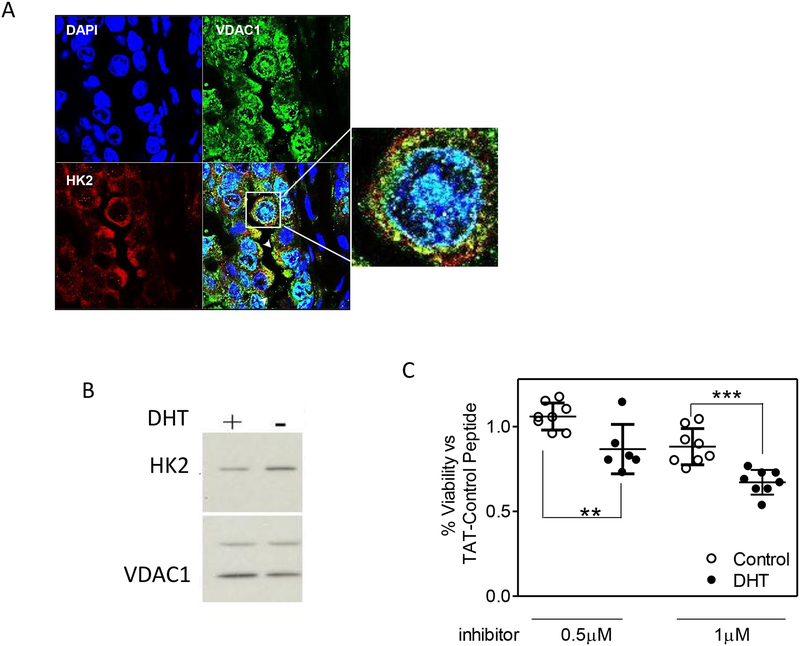
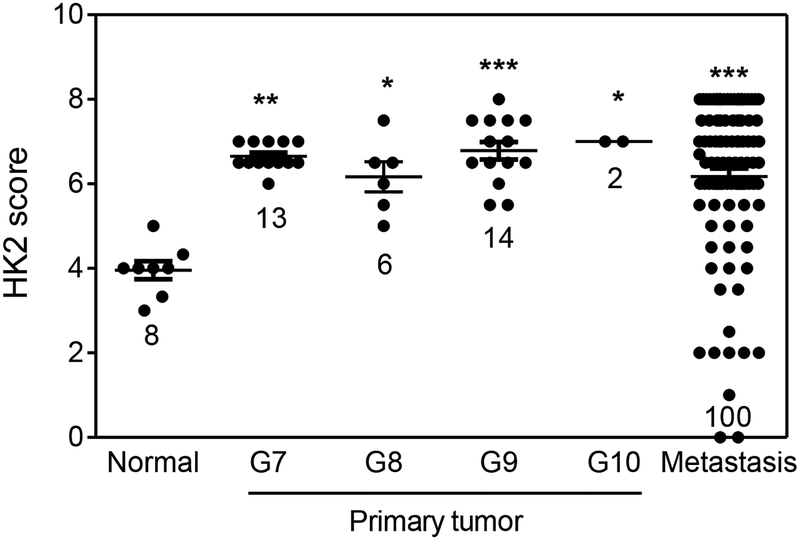
Prostate cancer is characterized by a dependence upon androgen receptor (AR) signaling, and androgen deprivation therapy (ADT) is the accepted treatment for progressive prostate cancer. Although ADT is usually initially effective, acquired resistance termed castrate-resistant prostate cancer (CRPC) develops. PTEN and TP53 are two of the most commonly deleted or mutated genes in prostate cancer, the compound loss of which is enriched in CRPC. To interrogate the metabolic alterations associated with survival following ADT, we used an orthotopic model of Pten/Tp53 null prostate cancer. Metabolite profiles and associated regulators were compared in tumors from androgen-intact mice and in tumors surviving castration. AR inhibition led to changes in the levels of glycolysis and tricarboxylic acid (TCA) cycle pathway intermediates. As anticipated for inhibitory reciprocal feedback between AR and PI3K/AKT signaling pathways, pAKT levels were increased in androgen-deprived tumors. Elevated mitochondrial hexokinase 2 (HK2) levels and enzyme activities also were observed in androgen-deprived tumors, consistent with pAKT-dependent HK2 protein induction and mitochondrial association. Competitive inhibition of HK2-mitochondrial binding in prostate cancer cells led to decreased viability. These data argue for AKT-associated HK2-mediated metabolic reprogramming and mitochondrial association in PI3K-driven prostate cancer as one survival mechanism downstream of AR inhibition.
Conflict of interest statement
Conflict of interest:
The authors declare no conflict of interest.
Figures
References
-
- American Cancer Society (2015). Cancer Facts and Figures 2015. http://www.cancer.org/acs/groups/content/@editorial/documents/document/a....
-
- Arora KK, Pedersen PL. Functional significance of mitochondrial bound hexokinase in tumor cell metabolism. Evidence for preferential phosphorylation of glucose by intramitochondrially generated ATP. The Journal of biological chemistry 1988; 263: 17422–17428. - PubMed
-
- Arzoine L, Zilberberg N, Ben-Romano R, Shoshan-Barmatz V. Voltage-dependent anion channel 1-based peptides interact with hexokinase to prevent its anti-apoptotic activity. The Journal of biological chemistry 2009; 284: 3946–3955. - PubMed
Publication types
MeSH terms
Substances
Grants and funding
LinkOut - more resources
Full Text Sources
Other Literature Sources
Medical
Research Materials
Miscellaneous
