The centenary of the discovery of trench fever, an emerging infectious disease of World War 1
- PMID: 27375211
- PMCID: PMC7106389
- DOI: 10.1016/S1473-3099(16)30003-2
The centenary of the discovery of trench fever, an emerging infectious disease of World War 1
Abstract
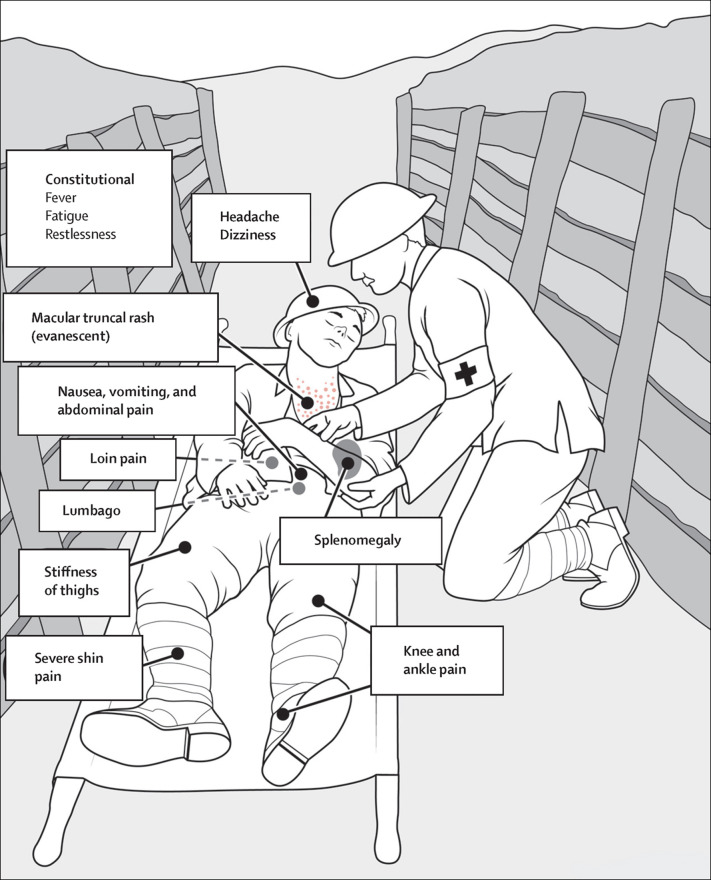
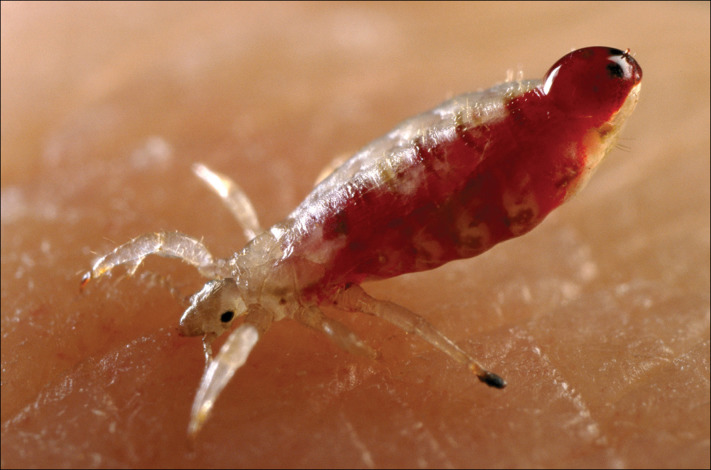
In 1915, a British medical officer on the Western Front reported on a soldier with relapsing fever, headache, dizziness, lumbago, and shin pain. Within months, additional cases were described, mostly in frontline troops, and the new disease was called trench fever. More than 1 million troops were infected with trench fever during World War 1, with each affected soldier unfit for duty for more than 60 days. Diagnosis was challenging, because there were no pathognomonic signs and symptoms and the causative organism could not be cultured. For 3 years, the transmission and cause of trench fever were hotly debated. In 1918, two commissions identified that the disease was louse-borne. The bacterium Rickettsia quintana was consistently found in the gut and faeces of lice that had fed on patients with trench fever and its causative role was accepted in the 1920s. The organism was cultured in the 1960s and reclassified as Bartonella quintana; it was also found to cause endocarditis, peliosis hepatis, and bacillary angiomatosis. Subsequently, B quintana infection has been identified in new populations in the Andes, in homeless people in urban areas, and in individuals with HIV. The story of trench fever shows how war can lead to the recrudescence of an infectious disease and how medicine approached an emerging infection a century ago.
Copyright © 2016 Elsevier Ltd. All rights reserved.
Figures
References
-
- Atenstaedt RL. The medical response to the trench diseases in World War One. Cambridge Scholars Publishing; Newcastle upon Tyne: 2011.
-
- Graham JHP. A note on a relapsing febrile illness of unknown origin. Lancet. 1915;186:703–704.
-
- McNee JW, Renshaw A. “Trench fever”: a relapsing fever occurring with the British forces in France. Br Med J. 1916;1:225–234.
-
- Swift H. Trench fever. Arch Intern Med. 1920;26:76–98.
Publication types
MeSH terms
LinkOut - more resources
Full Text Sources
Other Literature Sources