


Anthropometric measurements may be informative for nursing home-acquired pneumonia
- PMID: 27375716
- PMCID: PMC4928425
- DOI: 10.12669/pjms.323.9635
Anthropometric measurements may be informative for nursing home-acquired pneumonia
Abstract
Objective: To evaluate the relationship between anthropometric measurements and Nursing Home-Acquired Pneumonia (NHAP) risk.
Methods: Consecutive patients of 65 years or elderly who were living in the Balikli Rum Hospital Nursing Homes were included in this prospective study. At the beginning of this study, the patients' anthropometrics values were measured. The patients were followed for one year, and any incidences of pneumonia attacks were recorded. The relationship between the anthropometric measurements and pneumonia occurrences was analyzed.
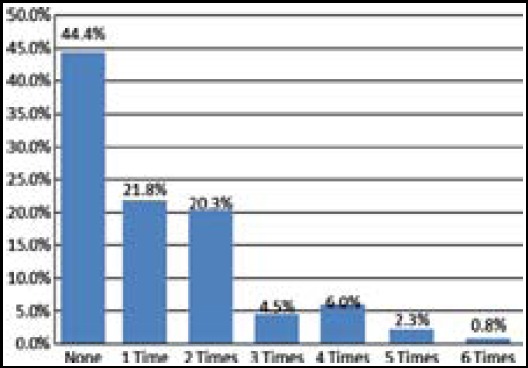
Results: There were 133 inmates at the initial assessments. Of 108 patients who were eligible for the study, 77 (72.2%) were female and 37 (27.8%) were male. The mean age of the group was 79.8±10.5. Patients were assigned to a group according to the presence of pneumonia during the one -year follow-up. There were 74 (55.6%) patients who had suffered from at least one attack of pneumonia during the follow-up period. The mean triceps skinfold was significantly thinner in the pneumonia group, and the mean handgrip measurements in both the dominant and non-dominant hands were significantly weaker in the pneumonia group. Furthermore, the frequency of Chronic Obstructive Pulmonary Diseases (COPD) was significantly higher in this group (p < 0.001).
Conclusions: The risk of pneumonia was high in the elderly population who live in nursing homes. Simple anthropometric values may be predictive of the potential for Nursing Home-Acquired Pneumonia.
Keywords: Anthropometry; BMI: Body Mass Index.; CAP: Community-Acquired Pneumonia.; COPD: Chronic Obstructive Pulmonary Diseases.; NHAP: Nursing Home-Acquired Pneumonia.; Pneumonia; SFT: Skinfold Thickness.; Sarcopenia; WHO: World Health Organization..
Figures
References
-
- http://www.who.int/mediacentre/factsheets/fs310/en/accessed. on 12 May 2015.
-
- Janssens JP, Krause KH. Pneumonia in the very old. Lancet Infect Dis. 2004;4(2):112–124. - PubMed
-
- Hutt E, Radcliff TA, Oman KS, Fink R, Ruscin JM, Linnebur S, et al. Impact of NHAP guideline implementation intervention on staff and resident vaccination rates. J Am Med Dir Assoc. 2010;11(5):365–370. doi:10.1016/j.jamda.2009.09.017. - PubMed
-
- Mills K, Graham AC, Winslow BT, Springer KL. Treatment of nursing home acquired pneumonia. Am Fam Physician. 2009;79(11):976–82. - PubMed
-
- Ewig S, Klapdor B, Pletz MW, Rohde G, Schütte H, Schaberg T, et al. Nursing-home-acquired pneumonia in Germany:an 8-year prospective multicenter study. Thorax. 2012;67(2):132–138. doi:10.1136/thoraxjnl-2011-200630. - PubMed
LinkOut - more resources
Full Text Sources
Other Literature Sources
Miscellaneous