


Antifungal and Zearalenone Inhibitory Activity of Pediococcus pentosaceus Isolated from Dairy Products on Fusarium graminearum
- PMID: 27379035
- PMCID: PMC4904835
- DOI: 10.3389/fmicb.2016.00890
Antifungal and Zearalenone Inhibitory Activity of Pediococcus pentosaceus Isolated from Dairy Products on Fusarium graminearum
Abstract
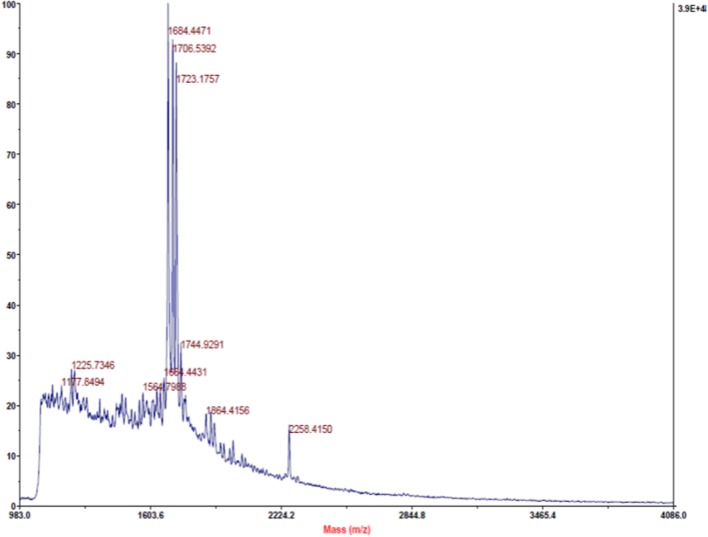
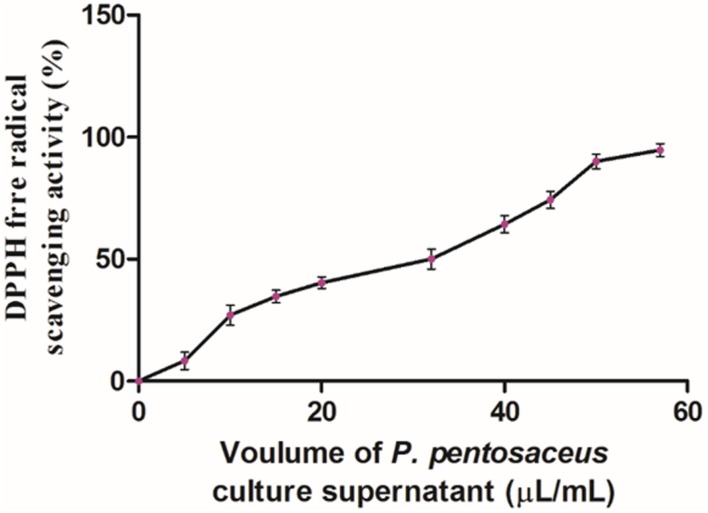
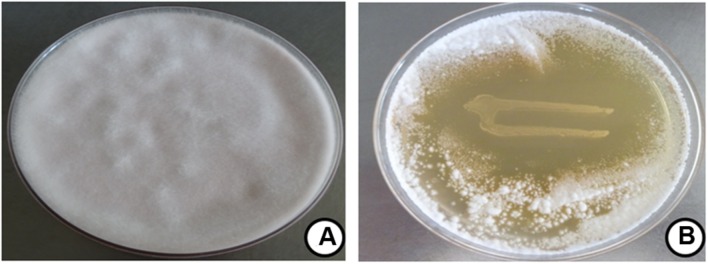
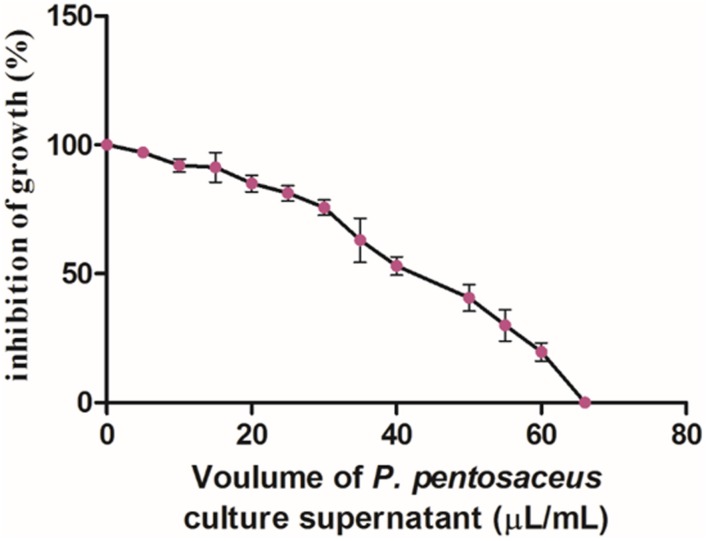
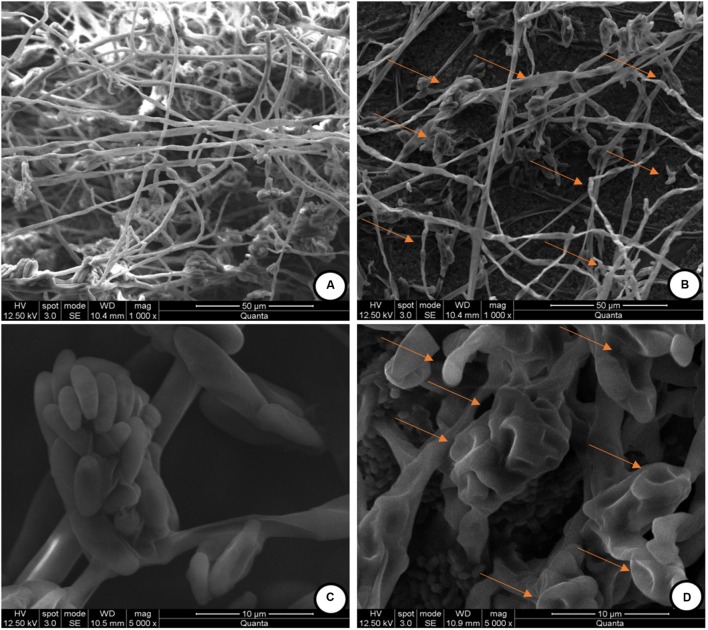
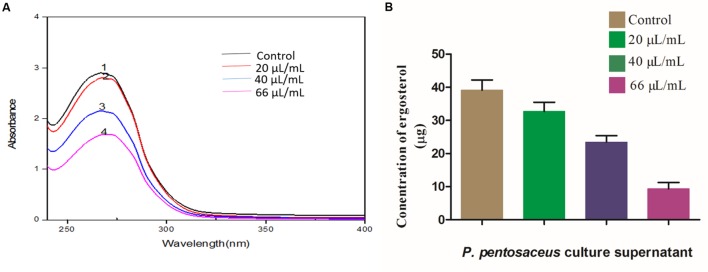
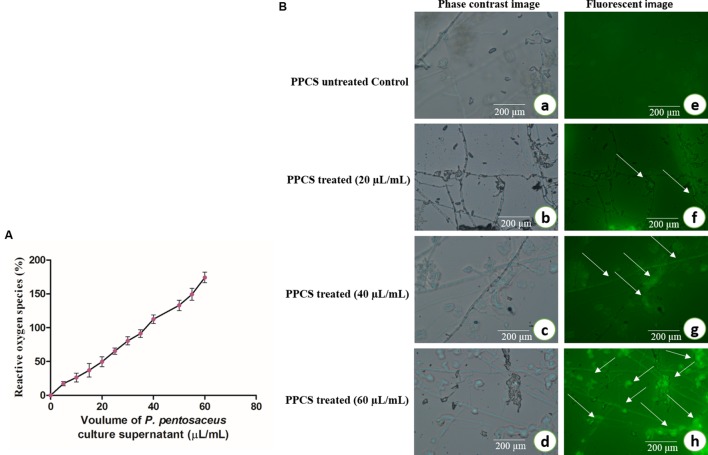
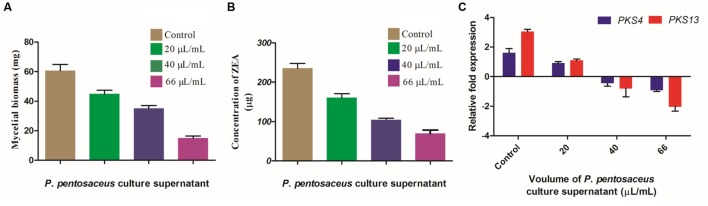
The present study was aimed to evaluate the bio-control efficacy of Pediococcus pentosaceus isolated from traditional fermented dairy products originated from India, against the growth and zearalenone (ZEA) production of Fusarium graminearum. The cell-free supernatants of P. pentosaceus (PPCS) were prepared and chemical profiling was carried out by GC-MS and MALDI-TOF analysis. Chemical profiling of PPCS evidenced that, the presence of phenolic antioxidants, which are responsible for the antifungal activity. Another hand, MALDI-TOF analysis also indicated the presence of antimicrobial peptides. To know the antioxidant potential of PPCS, DPPH free radical scavenging assay was carried out and IC50 value was determined as 32 ± 1.89 μL/mL. The antifungal activity of P. pentosaceus was determined by dual culture overlay technique and zone of inhibition was recorded as 47 ± 2.81%, and antifungal activity of PPCS on F. graminearum was determined by micro-well dilution and scanning electron microscopic techniques. The minimum inhibitory concentration (MIC) of PPCS was determined as 66 ± 2.18 μL/mL in the present study. Also a clear variation in the micromorphology of mycelia treated with MIC value of PPCS compared to untreated control was documented. Further, the mechanism of growth inhibition was revealed by ergosterol analysis and determination of reactive oxygen species (ROS) in PPCS treated samples. The effects of PPCS on mycelial biomass and ZEA production were observed in a dose-dependent manner. The mechanism behind the suppression of ZEA production was studied by reverse transcriptase qPCR analysis of ZEA metabolic pathway genes (PKS4 and PKS13), and results showed that there is a dose dependent down-regulation of target gene expression in PPCS treated samples. The results of the present study were collectively proved that, the antifungal and ZEA inhibitory activity of PPCS against F. graminearum and it may find a potential application in agriculture and food industry as a natural bio-controlling agent.
Keywords: F. graminearum; P. pentosaceus; Zearalenone; dual culture overlay technique; ergosterol; minimum inhibitory concentration; reactive oxygen species; reverse transcriptase qPCR analysis.
Figures
References
-
- Bondet V., Brand-Williams W., Berset C. (1997). Kinetics and mechanisms of antioxidant activity using the DPPH free radical method. LWT Food Sci. Technol. 30 609–615. 10.1006/fstl.1997.0240 - DOI
-
- Dalie D. K. D., Deschamps A. M., Atanasova-Penichon V., Richard-Forget F. (2010). Potential of Pediococcus pentosaceus (L006) isolated from maize leaf to suppress fumonisin-producing fungal growth. J. Food Prot. 73 1129–1137. - PubMed
-
- European Commission (2007). Commission regulation (EC) No 1126/2007 of 28 September 2007 amending regulation (EC) No 1881/2006 setting maximum levels for certain contaminants in foodstuffs as regards Fusarium toxins in maize and maize products. Official J. Euro Union L255 14–17.
LinkOut - more resources
Full Text Sources
Other Literature Sources
Miscellaneous
