Review
. 2016 Aug;22(8):701-712.
doi: 10.1016/j.molmed.2016.06.003. Epub 2016 Jul 2.

Aging, Clonality, and Rejuvenation of Hematopoietic Stem Cells

Affiliations
Review

Aging, Clonality, and Rejuvenation of Hematopoietic Stem Cells

Shailaja Akunuru et al. Trends Mol Med. 2016 Aug.

Abstract

Aging is associated with reduced organ function and increased disease incidence. Hematopoietic stem cell (HSC) aging driven by both cell intrinsic and extrinsic factors is linked to impaired HSC self-renewal and regeneration, aging-associated immune remodeling, and increased leukemia incidence. Compromised DNA damage responses and the increased production of reactive oxygen species (ROS) have been previously causatively attributed to HSC aging. However, recent paradigm-shifting concepts, such as global epigenetic and cytoskeletal polarity shifts, cellular senescence, as well as the clonal selection of HSCs upon aging, provide new insights into HSC aging mechanisms. Rejuvenating agents that can reprogram the epigenetic status of aged HSCs or senolytic drugs that selectively deplete senescent cells provide promising translational avenues for attenuating hematopoietic aging and, potentially, alleviating aging-associated immune remodeling and myeloid malignancies.


Figures

Figure 1, Key Figure
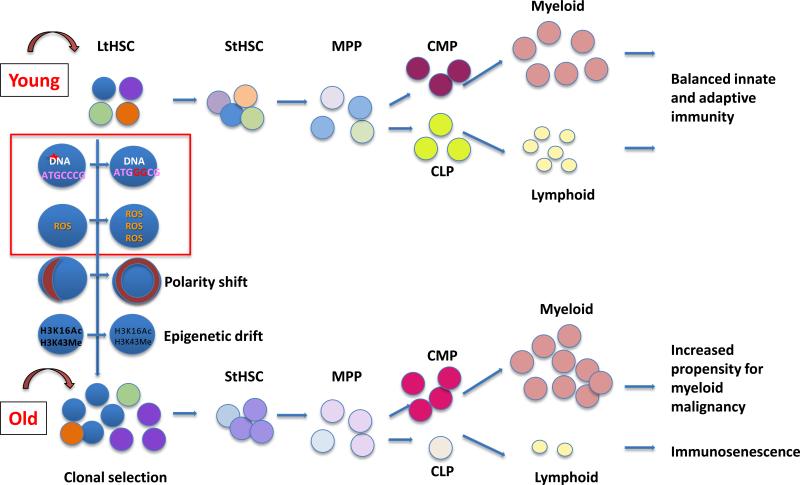
Figure 1, Key Figure. Molecular Mechanisms driving the Clinical Consequences of Aging HSCs
A compromised DNA damage response of aged HSCs resulting in translocations and fusion genes and increased accumulation of ROS, as well as ROS-associated DNA damage have been previously associated with hematopoietic aging and aging-associated disease. More recently, changes in the spatial distribution of cytoskeletal proteins and epigenetic markers termed as polarity shifts and global changes in the epigenetic landscape of aged HSCs (epigenetic drift) have been shown to drive hematopoietic aging. In addition, drifts towards clonality in hematopoiesis upon aging (clonality denoted by cells with similar color) have been described as a major contribution to the expansion of the number of phenotypic HSCs upon aging and to the aging-associated myeloid bias in HSC differentiation. Old StHSCs and MPP with altered differentiation fates (denoted by a different color from young cells) lead to lesser differentiation towards CLP than towards CMPs upon aging. [A1]Thus, aged HSCs drive, at least in part, the clinical outcomes of aging of the hematopoietic system such as aging-associated immune remodeling and increased propensity towards initiation of myeloid malignancies.
Figure 2
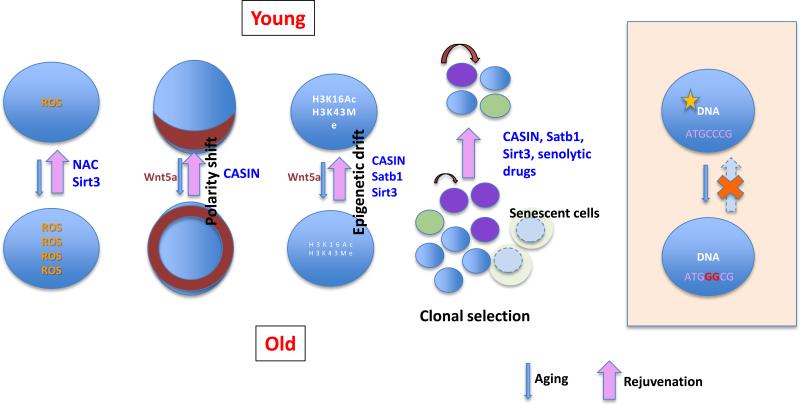
Figure 2. Rejuvenation of HSCs and Potential Pitfalls
NAC treatment and Sirt3 overexpression rejuvenates old HSCs by reducing ROS levels. Wnt5a treatment results in aging of HSCs both by altering cytoskeletal protein polarity and global epigenetic changes. The Cdc42 inhibitor CASIN can rejuvenate old HSCs by both reverting the cytoskeletal polarity shift as well as the epigenetic landscape to a young state in HSCs. Other HSC rejuvenating agents/approaches such as CASIN treatment, Satb1, Sirt3 overexpression, and senolytic drug treatment might be partially able to revert aging-associated clonality to a level seen in a young hematopoietic system. However, in general, rejuvenating agents might not be able to revert DNA mutations in HSCs associated with clonality upon aging (the rejuvenating agent potential limitation is depicted by an orange box; the blue arrow indicates aging and the pink arrow indicates rejuvenation).

References

    1. Smith BD, et al. Future of cancer incidence in the United States: burdens upon an aging, changing nation. J Clin Oncol. 2009;27(17):2758–65. - PubMed
    1. Yancik R. Population aging and cancer: a cross-national concern. Cancer J. 2005;11(6):437–41. - PubMed
    1. Dykstra B, et al. Clonal analysis reveals multiple functional defects of aged murine hematopoietic stem cells. J Exp Med. 2011;208(13):2691–703. - PMC - PubMed
    1. Bernet JD, et al. p38 MAPK signaling underlies a cell-autonomous loss of stem cell self-renewal in skeletal muscle of aged mice. Nat Med. 2014;20(3):265–71. - PMC - PubMed
    1. Collins CA, et al. A population of myogenic stem cells that survives skeletal muscle aging. Stem Cells. 2007;25(4):885–94. - PubMed

Publication types

Substances