


A Genetic Response Score for Hydrochlorothiazide Use: Insights From Genomics and Metabolomics Integration
- PMID: 27381900
- PMCID: PMC4982802
- DOI: 10.1161/HYPERTENSIONAHA.116.07328
A Genetic Response Score for Hydrochlorothiazide Use: Insights From Genomics and Metabolomics Integration
Abstract
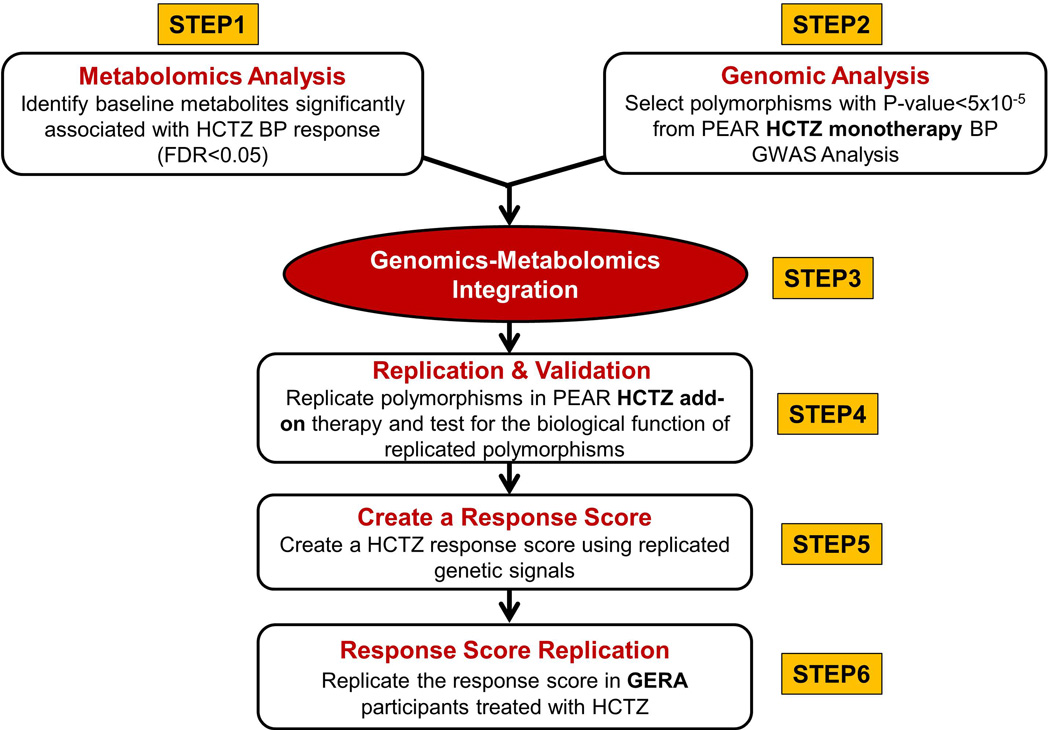
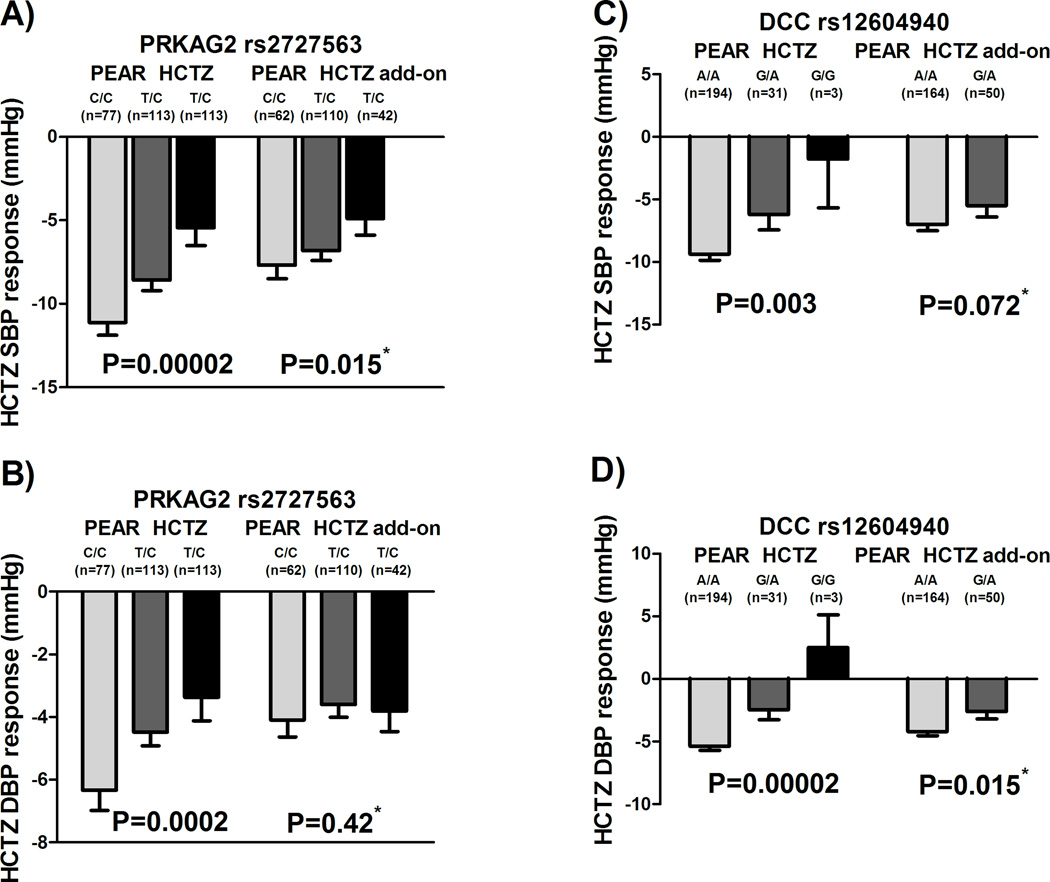
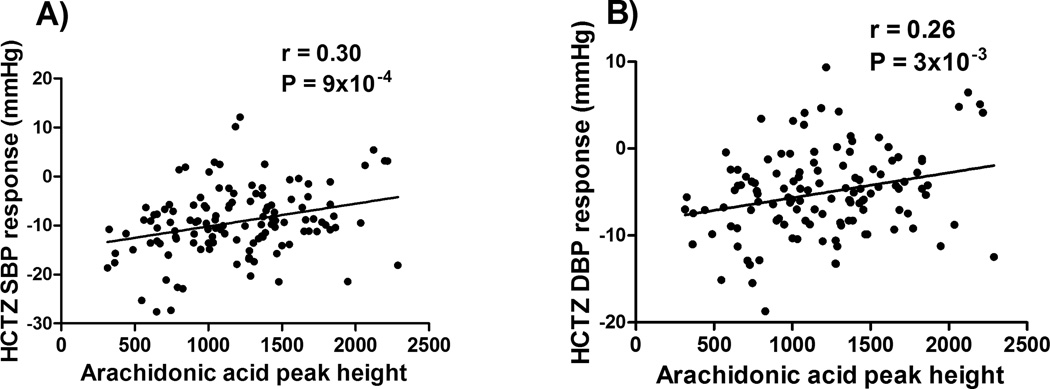
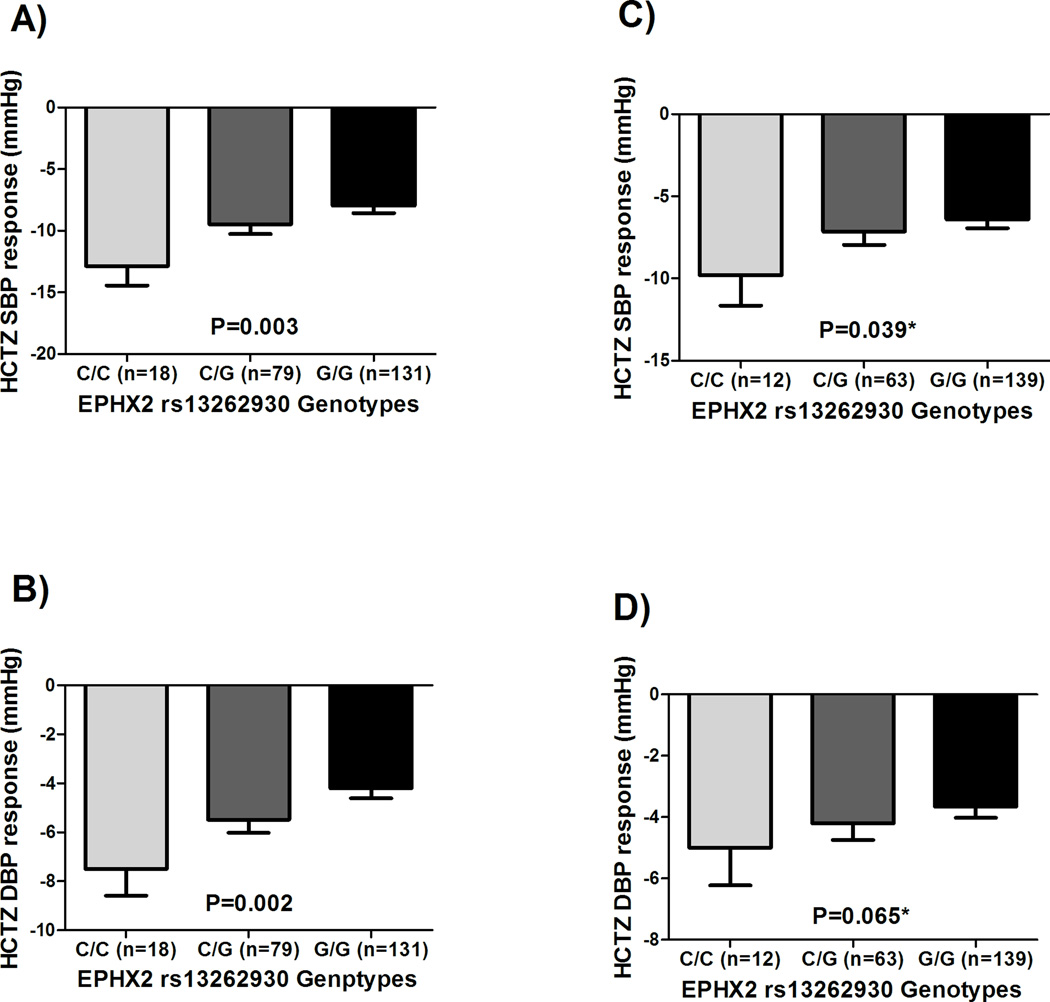
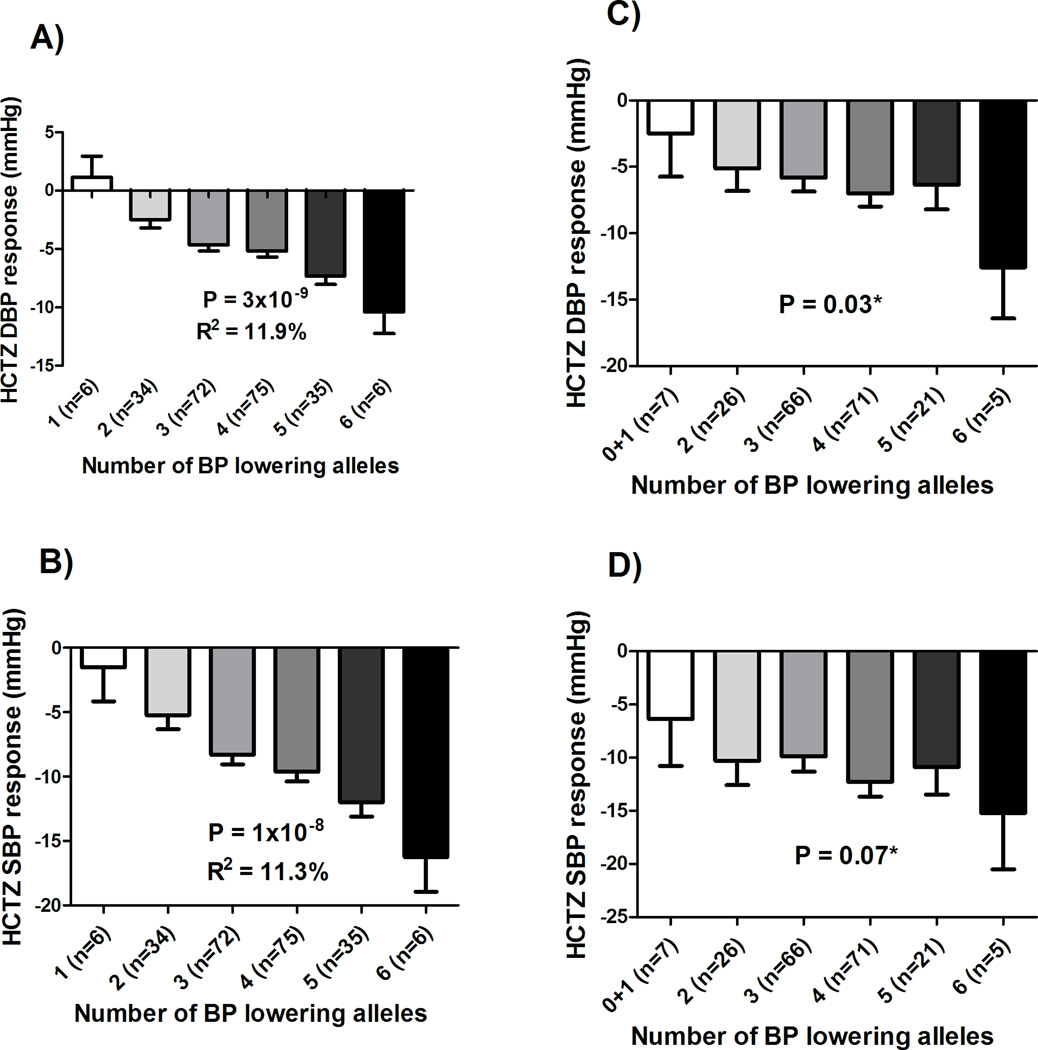
Hydrochlorothiazide is among the most commonly prescribed antihypertensives; yet, <50% of hydrochlorothiazide-treated patients achieve blood pressure (BP) control. Herein, we integrated metabolomic and genomic profiles of hydrochlorothiazide-treated patients to identify novel genetic markers associated with hydrochlorothiazide BP response. The primary analysis included 228 white hypertensives treated with hydrochlorothiazide from the Pharmacogenomic Evaluation of Antihypertensive Responses (PEAR) study. Genome-wide analysis was conducted using Illumina Omni 1 mol/L-Quad Chip, and untargeted metabolomics was performed on baseline fasting plasma samples using a gas chromatography-time-of-flight mass spectrometry platform. We found 13 metabolites significantly associated with hydrochlorothiazide systolic BP (SBP) and diastolic BP (DBP) responses (false discovery rate, <0.05). In addition, integrating genomic and metabolomic data revealed 3 polymorphisms (rs2727563 PRKAG2, rs12604940 DCC, and rs13262930 EPHX2) along with arachidonic acid, converging in the netrin signaling pathway (P=1×10(-5)), as potential markers, significantly influencing hydrochlorothiazide BP response. We successfully replicated the 3 genetic signals in 212 white hypertensives treated with hydrochlorothiazide and created a response score by summing their BP-lowering alleles. We found patients carrying 1 response allele had a significantly lower response than carriers of 6 alleles (∆SBP/∆DBP: -1.5/1.2 versus -16.3/-10.4 mm Hg, respectively, SBP score, P=1×10(-8) and DBP score, P=3×10(-9)). This score explained 11.3% and 11.9% of the variability in hydrochlorothiazide SBP and DBP responses, respectively, and was further validated in another independent study of 196 whites treated with hydrochlorothiazide (DBP score, P=0.03; SBP score, P=0.07). This study suggests that PRKAG2, DCC, and EPHX2 might be important determinants of hydrochlorothiazide BP response.
Keywords: genome-wide association study; hydrochlorothiazide; hypertension; metabolomics; pharmacogenetics.
© 2016 American Heart Association, Inc.
Conflict of interest statement
None
Figures
References
-
- Ims institute. [Accessed June 1, 2016];Medicines use and spending shifts: A review of the use of medicines in the U.S. In 2014. 2014 https://www.Imshealth.Com/en/thought-leadership/ims-institute/reports/me....
-
- James PA, Oparil S, Carter BL, et al. 2014 evidence-based guideline for the management of high blood pressure in adults: Report from the panel members appointed to the eighth joint national committee (jnc 8) JAMA. 2014;311:507–520. - PubMed
-
- Materson BJ. Variability in response to antihypertensive drugs. Am J Med. 2007;120:S10–S20. - PubMed
-
- Materson BJ, Reda DJ, Cushman WC, Massie BM, Freis ED, Kochar MS, Hamburger RJ, Fye C, Lakshman R, Gottdiener J. Single-drug therapy for hypertension in men. A comparison of six antihypertensive agents with placebo. The department of veterans affairs cooperative study group on antihypertensive agents. N Engl J Med. 1993;328:914–921. - PubMed
MeSH terms
Substances
Grants and funding
LinkOut - more resources
Full Text Sources
Other Literature Sources
Medical
