Molecular and Serological Evidence of Leishmania Infection in Stray Dogs from Visceral Leishmaniasis-Endemic Areas of Bangladesh
- PMID: 27382083
- PMCID: PMC5062775
- DOI: 10.4269/ajtmh.16-0151
Molecular and Serological Evidence of Leishmania Infection in Stray Dogs from Visceral Leishmaniasis-Endemic Areas of Bangladesh
Abstract
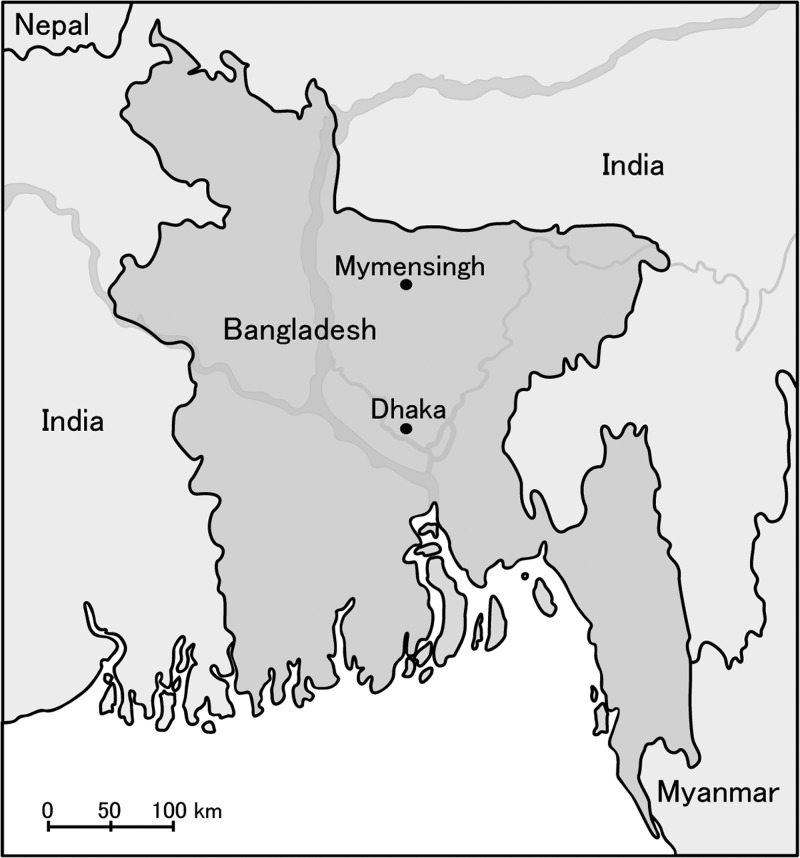
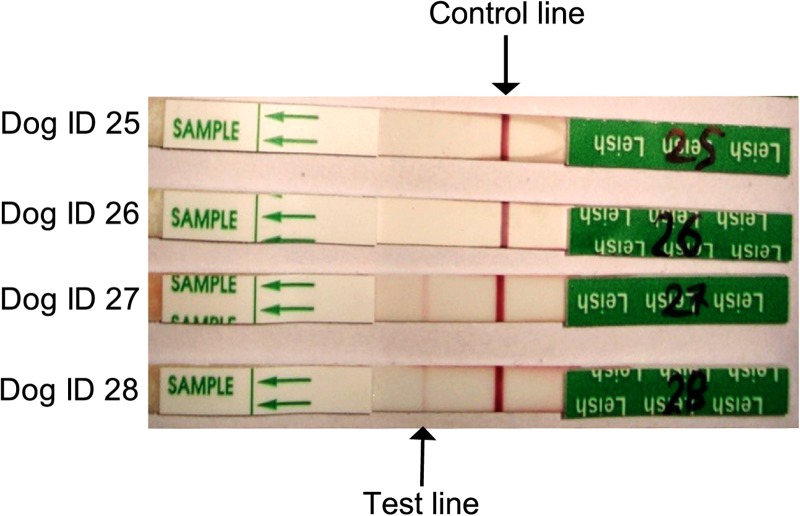
Visceral leishmaniasis (VL), or kala-azar, is mainly caused by two closely related Leishmania species, Leishmania infantum and Leishmania donovani Leishmania infantum is responsible for zoonotic VL, with dogs as the main reservoir host in the Mediterranean, the Middle East, Asia, and South America. In the Indian subcontinent, VL is caused by L. donovani and is considered anthroponotic, although the only known vector, the sand fly, is zoophilic in nature. The role of domestic and stray dogs in VL transmission is still unclear in this area. We screened 50 stray dogs from VL-endemic areas of Bangladesh for serological and molecular evidence of Leishmania infection. We detected anti-Leishmania antibodies in six (12%) dog serum samples using rK39 immunochromatographic tests. We observed Leishmania kinetoplast DNA in 10 (20%) buffy coat DNA samples by real-time polymerase chain reaction (PCR), five of which were positive based on internal transcribed spacer 1-PCR. A sequencing analysis of the amplified products confirmed that the parasitic DNA was derived from L. donovani Our findings support the hypothesis that stray dogs are an animal reservoir for L. donovani in this endemic region. Further studies are required to determine the precise role of dogs in the epidemiology of VL in Bangladesh.
© The American Society of Tropical Medicine and Hygiene.
Figures
References
-
- Joshi A, Narain JP, Prasittisuk C, Bhatia R, Hashim G, Jorge A, Banjara M, Kroeger A. Can visceral leishmaniasis be eliminated from Asia? J Vector Borne Dis. 2008;45:105–111. - PubMed
-
- Sundar S, Mondal D, Rijal S, Bhattacharya S, Ghalib H, Kroeger A, Boelaert M, Desjeux P, Richter-Airijoki H, Harms G. Implementation research to support the initiative on the elimination of kala azar from Bangladesh, India and Nepal—the challenges for diagnosis and treatment. Trop Med Int Health. 2008;13:2–5. - PubMed
-
- Bern C, Chowdhury R. The epidemiology of visceral leishmaniasis in Bangladesh: prospects for improved control. Indian J Med Res. 2006;123:275–288. - PubMed
-
- Dantas-Torres F, de Brito ME, Brandão-Filho SP. Seroepidemiological survey on canine leishmaniasis among dogs from an urban area of Brazil. Vet Parasitol. 2006;140:54–60. - PubMed
MeSH terms
Substances
LinkOut - more resources
Full Text Sources
Other Literature Sources
Medical