


Cytosine deamination and the precipitous decline of spontaneous mutation during Earth's history
- PMID: 27382162
- PMCID: PMC4961170
- DOI: 10.1073/pnas.1607580113
Cytosine deamination and the precipitous decline of spontaneous mutation during Earth's history
Abstract
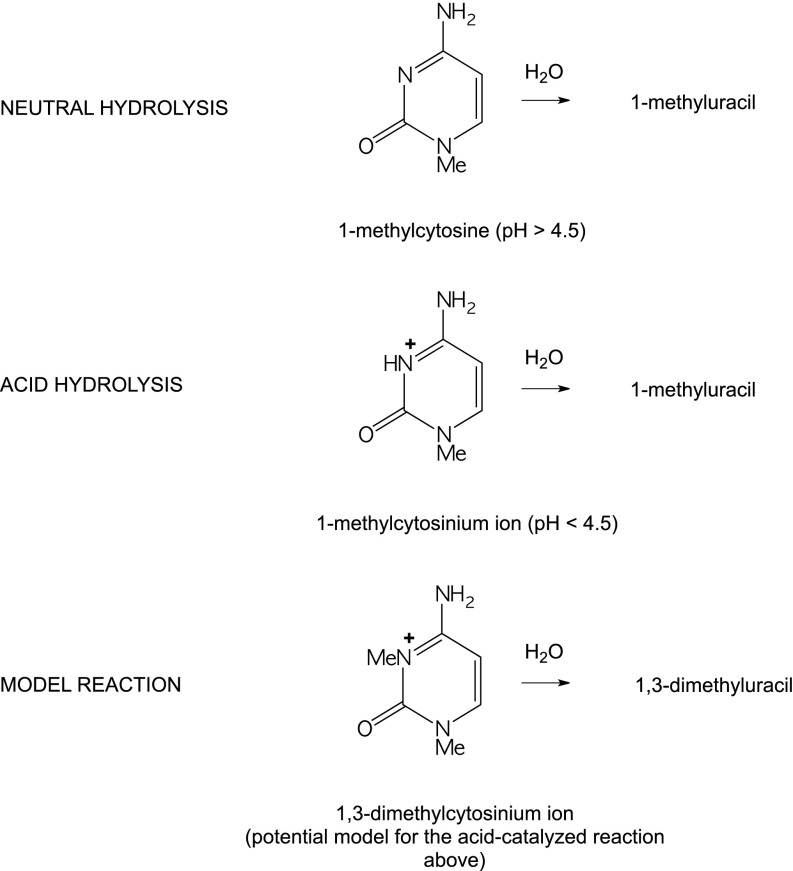
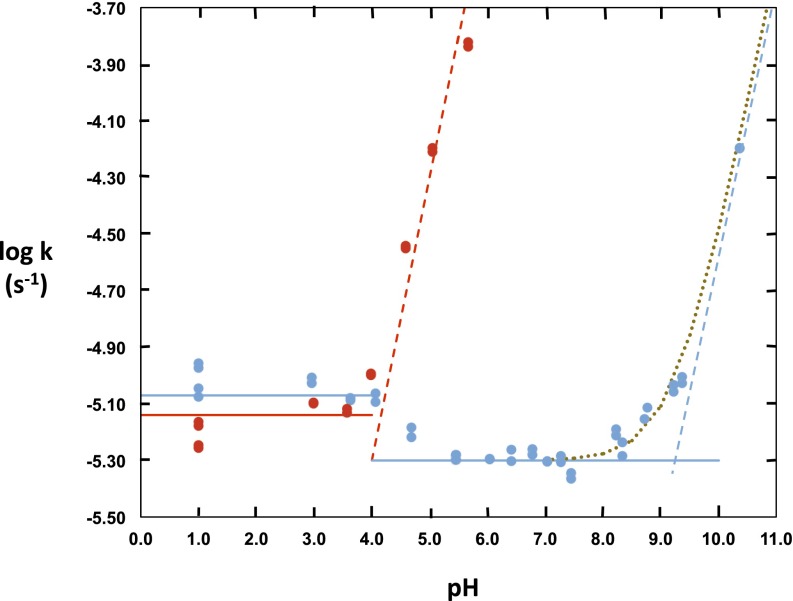
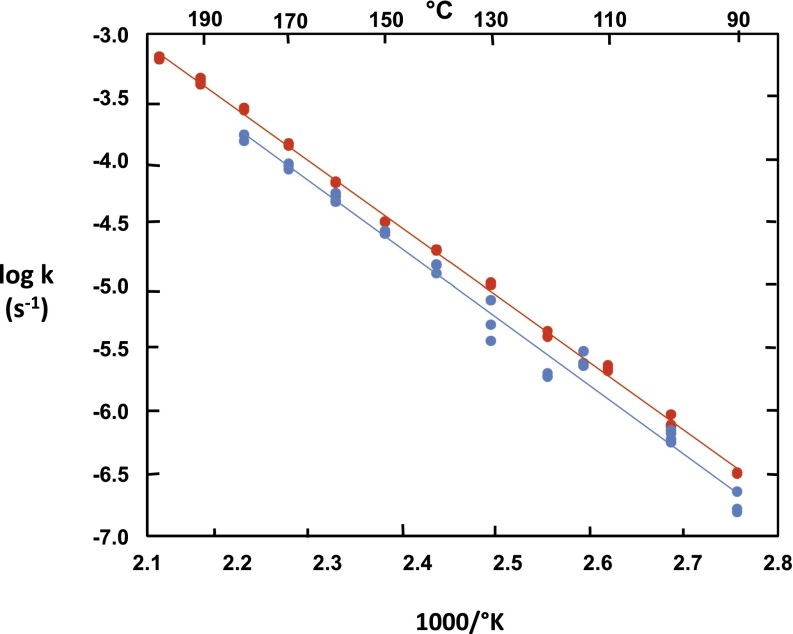
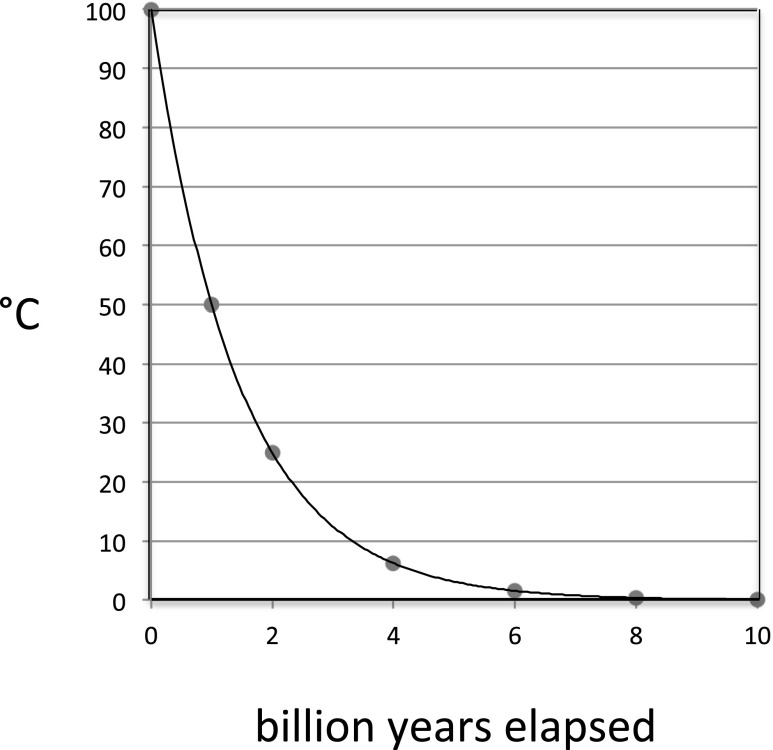
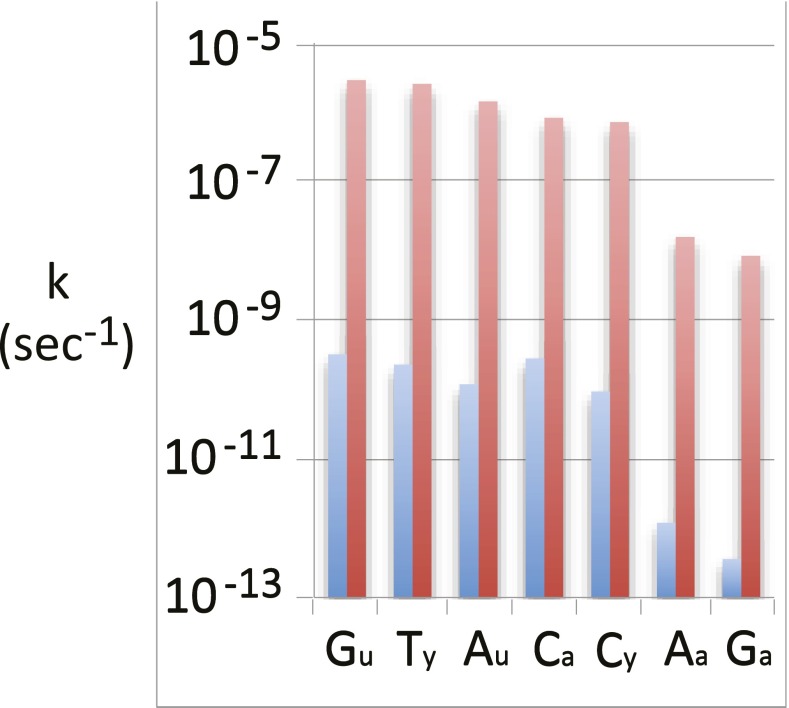
The hydrolytic deamination of cytosine and 5-methylcytosine residues in DNA appears to contribute significantly to the appearance of spontaneous mutations in microorganisms and in human disease. In the present work, we examined the mechanism of cytosine deamination and the response of the uncatalyzed reaction to changing temperature. The positively charged 1,3-dimethylcytosinium ion was hydrolyzed at a rate similar to the rate of acid-catalyzed hydrolysis of 1-methylcytosine, for which it furnishes a satisfactory kinetic model and a probable mechanism. In agreement with earlier reports, uncatalyzed deamination was found to proceed at very similar rates for cytosine, 1-methylcytosine, cytidine, and cytidine 5'-phosphate, and also for cytosine residues in single-stranded DNA generated from a phagemid, in which we sequenced an insert representing the gene of the HIV-1 protease. Arrhenius plots for the uncatalyzed deamination of cytosine were linear over the temperature range from 90 °C to 200 °C and indicated a heat of activation (ΔH(‡)) of 23.4 ± 0.5 kcal/mol at pH 7. Recent evidence indicates that the surface of the earth has been cool enough to support life for more than 4 billion years and that life has been present for almost as long. If the temperature at Earth's surface is assumed to have followed Newton's law of cooling, declining exponentially from 100 °C to 25 °C during that period, then half of the cytosine-deaminating events per unit biomass would have taken place during the first 0.2 billion years, and <99.4% would have occurred during the first 2 billion years.
Keywords: HIV-1 protease; cytosine deamination; heat mutagenesis; spontaneous mutation.
Conflict of interest statement
Conflict of interest statement: University of North Carolina is pursuing intellectual property protection for primer ID, and R.S. is listed as a coinventor. Other authors declare no conflict interest.
Figures


References
-
- Wolfenden R, Snider MJ. The depth of chemical time and the power of enzymes as catalysts. Acc Chem Res. 2001;34(12):938–945. - PubMed
-
- Lindahl T. Instability and decay of the primary structure of DNA. Nature. 1993;362(6422):709–715. - PubMed
-
- Drake JW, Baltz RH. The biochemistry of mutagenesis. Annu Rev Biochem. 1976;45:11–37. - PubMed
Publication types
MeSH terms
Substances
Grants and funding
LinkOut - more resources
Full Text Sources
Other Literature Sources
