Review
. 2016 Sep;13(9):513-32.
doi: 10.1038/nrcardio.2016.103. Epub 2016 Jul 7.

Nutraceutical therapies for atherosclerosis

Affiliations
Review

Nutraceutical therapies for atherosclerosis

Joe W E Moss et al. Nat Rev Cardiol. 2016 Sep.

Abstract

Atherosclerosis is a chronic inflammatory disease affecting large and medium arteries and is considered to be a major underlying cause of cardiovascular disease (CVD). Although the development of pharmacotherapies to treat CVD has contributed to a decline in cardiac mortality in the past few decades, CVD is estimated to be the cause of one-third of deaths globally. Nutraceuticals are natural nutritional compounds that are beneficial for the prevention or treatment of disease and, therefore, are a possible therapeutic avenue for the treatment of atherosclerosis. The purpose of this Review is to highlight potential nutraceuticals for use as antiatherogenic therapies with evidence from in vitro and in vivo studies. Furthermore, the current evidence from observational and randomized clinical studies into the role of nutraceuticals in preventing atherosclerosis in humans will also be discussed.


Conflict of interest statement

None

Figures
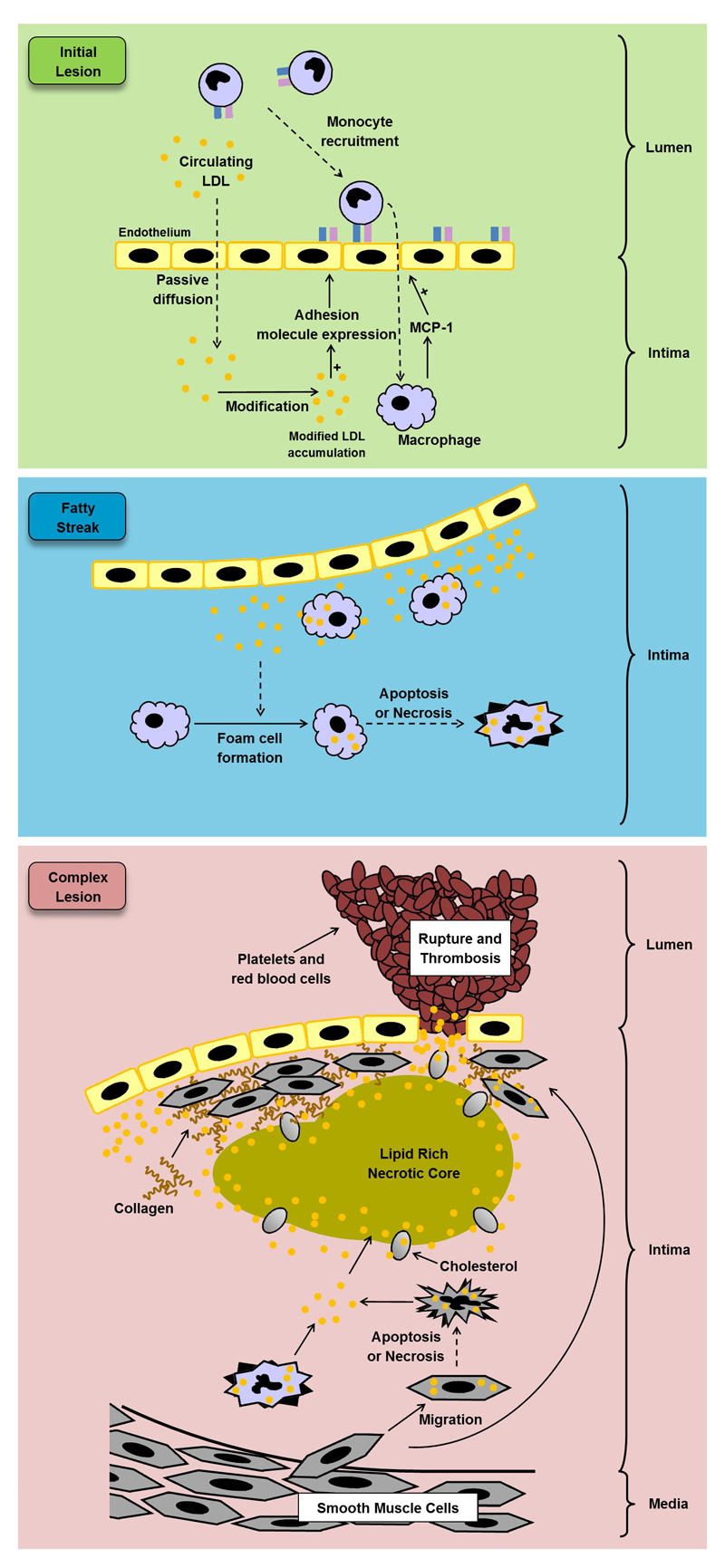
Figure 1
Figure 1. Formation of an atherosclerotic plaque.
The expression of pro-inflammatory genes, including ICAM-1 and MCP-1, is triggered by the build-up of modified LDL in the neighbouring endothelial cells during the development of the initial lesion. Circulating monocytes are then recruited to the modified LDL accumulation and migrate into the intima and differentiate into macrophages. Once in the walls of the artery, the macrophages are able to take up the modified LDL and become lipid-laden foam cells, which can accumulate and form a fatty streak. During complex lesion formation, foam cell lysis by apoptosis and necrosis leads to the formation of a necrotic core, and together with defective efferocytosis, leads to the amplification of the inflammatory response. SMCs begin to migrate from the media to the intima and the ECM produced by them forms fibrous cap and stabilises the plaque. SMCs also transform to foam cells. During later stages of the complex lesion the plaque can become unstable owing to the inflammatory response, resulting in an inhibition of ECM formation, particularly collagen production by SMCs. The remaining ECM can then start to be degraded by proteases released by macrophages, resulting in an unstable lesion that can rupture and lead to thrombosis. These events can cause a myocardial infarction or stroke, depending on the location of plaque formation. ECM, Extracelular matrix; ICAM-1, Intercellular adhesion molecule-1; LDL, Low density lipoprotein; MCP-1, Macrophage chemoattractant protein-1; SMCs, Smooth muscle cells.
Figure 2
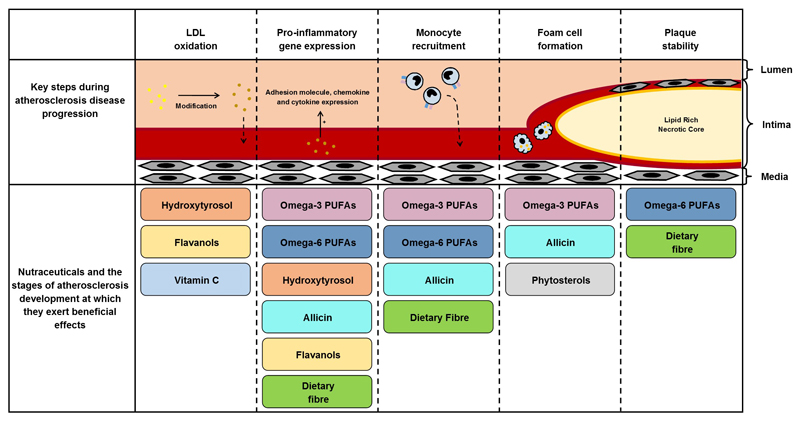
Figure 2. The stages of atherosclerosis development at which different nutraceuticals exert their potential beneficial effects.
There are several major steps involved in the development of atherosclerosis including LDL oxidation, pro-inflammatory gene expression, monocyte migration, foam cell formation, and plaque stability. This figure highlights the stages at which the major nutraceuticals discussed in this review could aid in reducing atherosclerosis disease progression. LDL, Low density lipoprotein; PUFAs, Polyunsaturated fatty acids.

References

    1. WHO. World Health Organisation Fact Sheet 317. 2015 http://www.who.int/mediacentre/factsheets/fs317/en/
    1. McLaren JE, Michael DR, Ashlin TG, Ramji DP. Cytokines, macrophage lipid metabolism and foam cells: implications for cardiovascular disease therapy. Prog Lipid Res. 2011;50:331–347. doi: 10.1016/j.plipres.2011.04.002. - DOI - PubMed
    1. Vogel RA. Coronary risk factors, endothelial function, and atherosclerosis: a review. Clin Cardiol. 1997;20:426–432. doi: 10.1002/clc.4960200505. - DOI - PMC - PubMed
    1. Ramji DP, Davies TS. Cytokines in atherosclerosis: Key players in all stages of disease and promising therapeutic targets. Cytokine Growth Factor Rev. 2015;26:673–685. doi: 10.1016/j.cytogfr.2015.04.003. - DOI - PMC - PubMed
    1. Buckley ML, Ramji DP. The influence of dysfunctional signaling and lipid homeostasis in mediating the inflammatory responses during atherosclerosis. Biochim Biophys Acta. 2015;1852:1498–1510. doi: 10.1016/j.bbadis.2015.04.011. - DOI - PubMed

Publication types

MeSH terms