


Multiphase CT angiography increases detection of anterior circulation intracranial occlusion
- PMID: 27385749
- PMCID: PMC4977373
- DOI: 10.1212/WNL.0000000000002951
Multiphase CT angiography increases detection of anterior circulation intracranial occlusion
Abstract
Objective: To evaluate whether the use of multiphase CT angiography (CTA) improves interrater agreement for intracranial occlusion detection between stroke neurology trainees and an expert neuroradiologist.
Methods: A neuroradiologist and 2 stroke neurology fellows independently reviewed 100 prospectively collected single-phase and multiphase CTA scans from acute ischemic stroke patients with mild symptoms (NIH Stroke Scale score ≤5). The presence and location of a vascular occlusion(s) were documented. Interrater agreement single- and multiphase CTA was quantified using unweighted κ statistics. We assessed for any occlusions, anterior vs posterior occlusions, and pial vessel asymmetry.
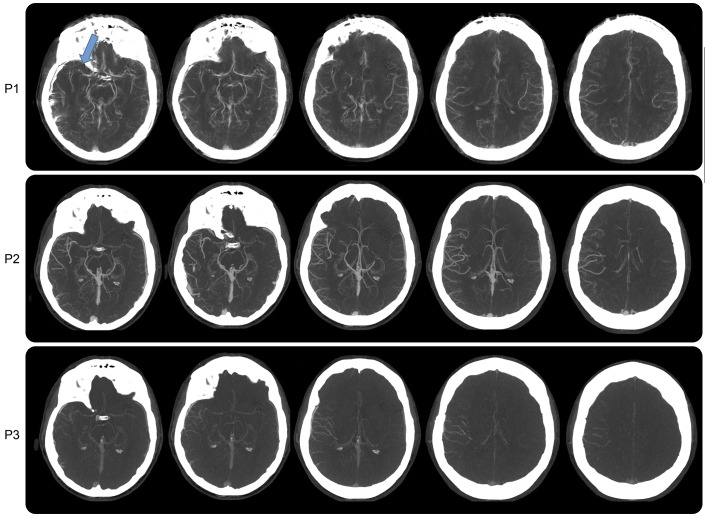
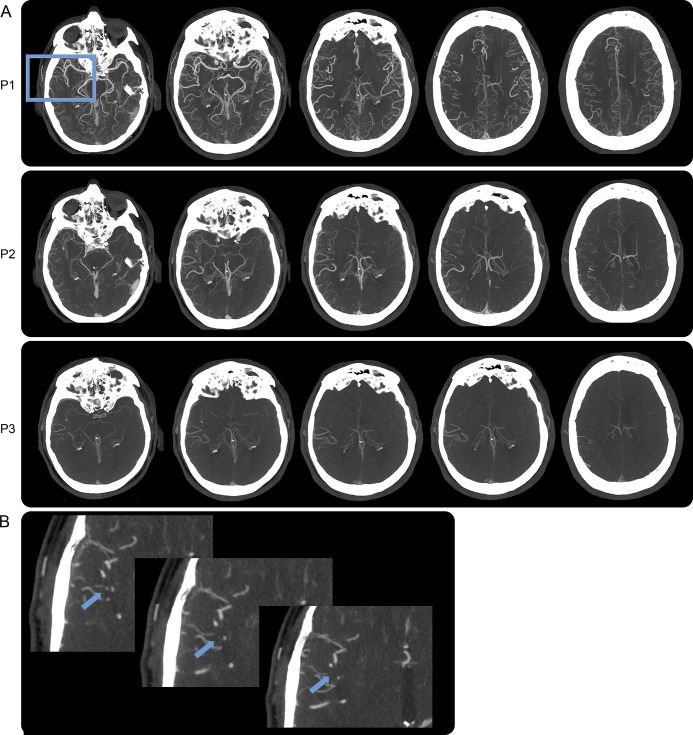
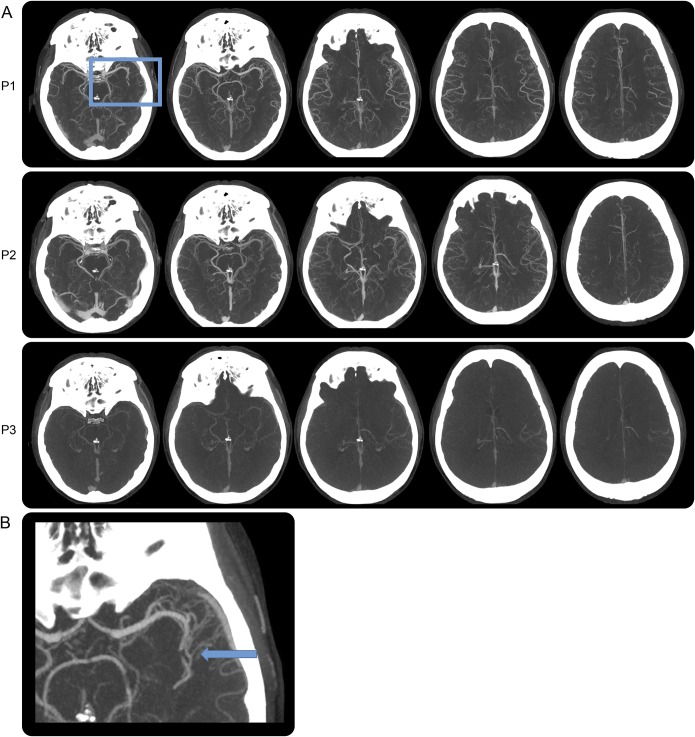
Results: Using multiphase CTA, the neuroradiologist detected 50 scans with anterior circulation occlusions and 15 scans with posterior circulation occlusions. Median reading time was 2 minutes per scan. Median reading time for the neurologists was 3 minutes per multiphase CTA scan. Interrater agreement was fair between the 2 neurologists and neuroradiologist when using single-phase CTA (κ = 0.45 and 0.32). Agreement improved minimally when stratified by anterior vs posterior circulation. When using multiphase CTA, agreement was high for detection of occlusion or asymmetry of pial vessels in the anterior circulation (κ = 0.80 and 0.84).
Conclusions: Multiphase CTA improves diagnostic accuracy in minor ischemic stroke for detection of anterior circulation intracranial occlusion.
Classification of evidence: This study provides Class II evidence that multiphase CTA, compared to single-phase CTA, improves the interrater agreement between stroke neurology trainees and an expert neuroradiologist for detecting anterior circulation intracranial vascular occlusion in patients with minor acute ischemic strokes.
© 2016 American Academy of Neurology.
Figures
References
-
- Berkhemer OA, Fransen PS, Beumer D, et al. A randomized trial of intraarterial treatment for acute ischemic stroke. N Engl J Med 2015;372:11–20. - PubMed
-
- Goyal M, Demchuk AM, Menon BK, et al. Randomized assessment of rapid endovascular treatment of ischemic stroke. N Engl J Med 2015;372:1019–1030. - PubMed
-
- Campbell BC, Mitchell PJ, Kleinig TJ, et al. Endovascular therapy for ischemic stroke with perfusion-imaging selection. N Engl J Med 2015;372:1009–1018. - PubMed
-
- Jovin TG, Chamorro A, Cobo E, et al. Thrombectomy within 8 hours after symptom onset in ischemic stroke. N Engl J Med 2015;372:2296–2306. - PubMed
-
- Saver JL, Goyal M, Bonafe A, et al. Stent-retriever thrombectomy after intravenous t-PA vs. t-PA alone in stroke. N Engl J Med 2015;372:2285–2295. - PubMed
MeSH terms
LinkOut - more resources
Full Text Sources
Other Literature Sources
