


Effect of visual stimulus using central and peripheral visual field on postural control of normal subjects
- PMID: 27390412
- PMCID: PMC4932053
- DOI: 10.1589/jpts.28.1769
Effect of visual stimulus using central and peripheral visual field on postural control of normal subjects
Abstract
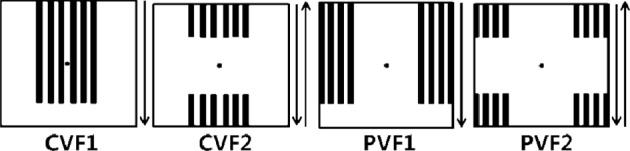
[Purpose] This study investigated the effects of visual stimulus using central and peripheral vision fields on postural control. [Subjects and Methods] The subjects consisted of 40 young adult volunteers (15 males, 25 females) who had been informed of the study purpose and procedure. The subjects were randomly divided into four groups of differing visual stimulus. Each group was given visual intervention in a standing position for 3 minutes. Postural control was evaluated before and after visual intervention. [Results] The results of the functional reach test and body sway test showed significant differences among the four groups. [Conclusion] The two-way peripheral vision-field group showed significantly more body sway after visual intervention than the other three groups. This finding may suggest two-way peripheral vision field is a more effective visual stimulus for training postural control and balance.
Keywords: Central vision field; Peripheral vision field; Postural control.
Figures
References
-
- Isaacs B: Clinical and laboratory studies of falls in old people. Prospects for prevention. Clin Geriatr Med, 1985, 1: 513–524. - PubMed
-
- Turano K, Rubin GS, Herdman SJ, et al. : Visual stabilization of posture in the elderly: fallers vs. nonfallers. Optom Vis Sci, 1994, 71: 761–769. - PubMed
-
- Rougier P, Farenc I, Berger L: Modifying the gain of the visual feedback affects undisturbed upright stance control. Clin Biomech (Bristol, Avon), 2004, 19: 858–867. - PubMed
-
- Lee HS, Choi HS, Kwon OY: A literature review on balance control factors. KAUTPT, 1996, 3: 82–91.
-
- Edwards AS: Body sway and vision. J Exp Psychol, 1946, 36: 526–535. - PubMed
LinkOut - more resources
Full Text Sources
Other Literature Sources