


Prognostic impact of circulating tumor cell apoptosis and clusters in serial blood samples from patients with metastatic breast cancer in a prospective observational cohort
- PMID: 27390845
- PMCID: PMC4938919
- DOI: 10.1186/s12885-016-2406-y
Prognostic impact of circulating tumor cell apoptosis and clusters in serial blood samples from patients with metastatic breast cancer in a prospective observational cohort
Abstract
Background: Presence of circulating tumor cells (CTCs) is a validated prognostic marker in metastatic breast cancer. Additional prognostic information may be obtained by morphologic characterization of CTCs. We explored whether apoptotic CTCs, CTC clusters and leukocytes attached to CTCs are associated with breast cancer subtype and prognosis at base-line (BL) and in follow-up (FU) blood samples in patients with metastatic breast cancer scheduled for first-line systemic treatment.
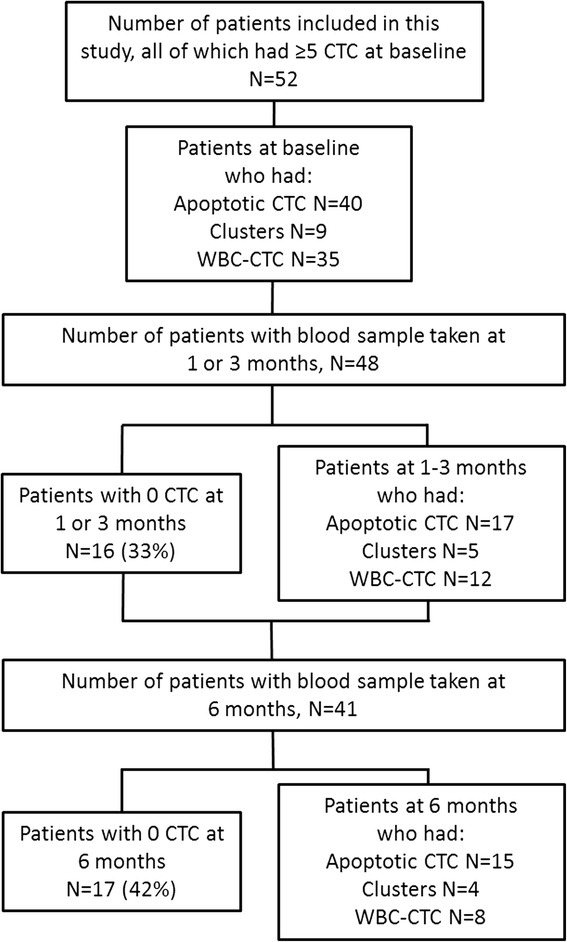
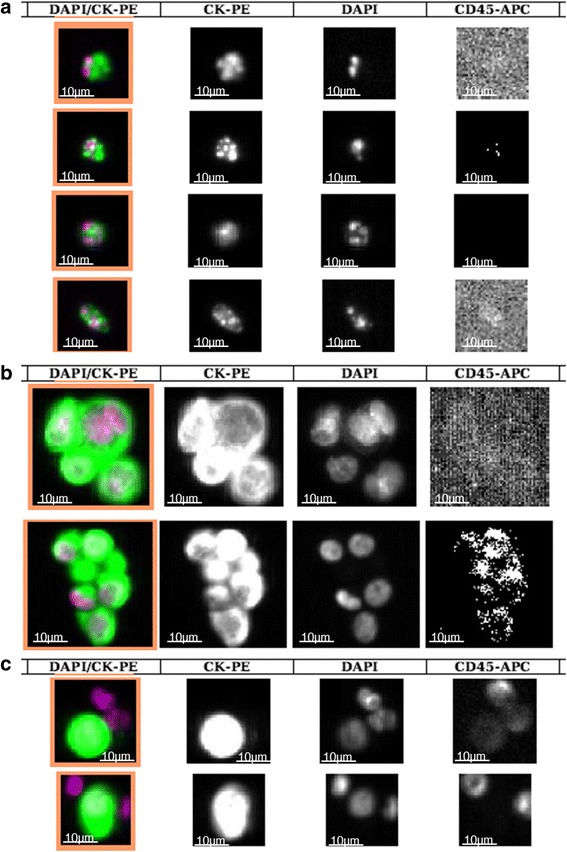
Methods: Patients with a first metastatic breast cancer event were enrolled in a prospective observational study prior to therapy initiation and the CellSearch system (Janssen Diagnostics) was used for CTC enumeration and characterization. We enrolled patients (N = 52) with ≥5 CTC/7.5 ml blood at BL (median 45, range 5-668) and followed them with blood sampling for 6 months during therapy. CTCs were evaluated for apoptotic changes, CTC clusters (≥3 nuclei), and leukocytes associated with CTC (WBC-CTC, ≥1 CTC + ≥1 leukocytes) at all time-points by visual examination of the galleries generated by the CellTracks Analyzer.
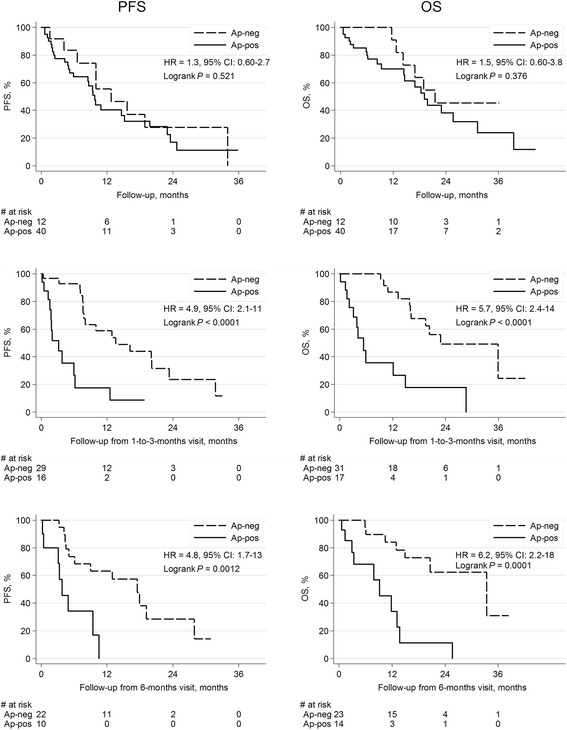
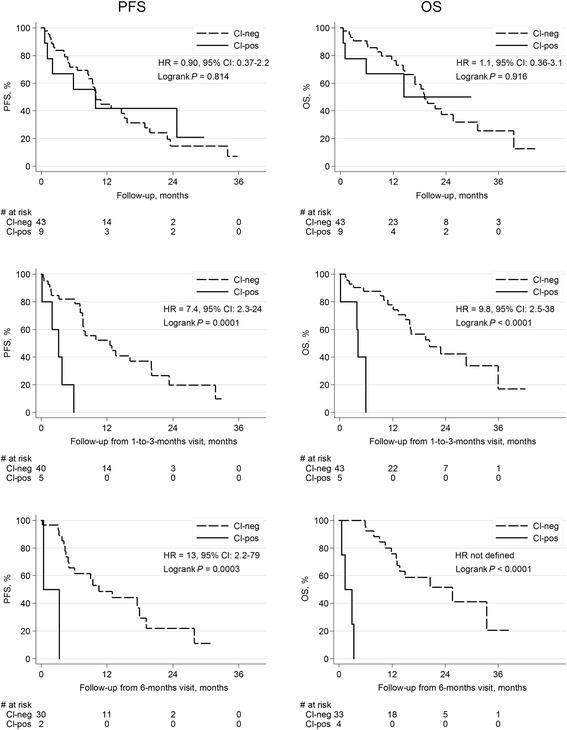
Results: At BL, patients with triple-negative and HER2-positive breast cancer had blood CTC clusters present more frequently than patients with hormone receptor-positive cancer (P = 0.010). No morphologic characteristics were associated with prognosis at BL, whereas patients with apoptotic CTCs or clusters in FU samples had worse prognosis compared to patients without these characteristics with respect to progression-free (PFS) and overall survival (OS) (log-rank test: P = 0.0012 or lower). Patients with apoptotic or clustered CTCs at any time-point had impaired prognosis in multivariable analyses adjusting for number of CTCs and other prognostic factors (apoptosis: HROS = 25, P < 0.001; cluster: HROS = 7.0, P = 0.006). The presence of WBC-CTCs was significantly associated with an inferior prognosis in terms of OS at 6 months in multivariable analysis.
Conclusions: Patients with a continuous presence of apoptotic or clustered CTCs in FU samples after systemic therapy initiation had worse prognosis than patients without these CTC characteristics. In patients with ≥5 CTC/7.5 ml blood at BL, morphologic characterization of persistent CTCs could be an important prognostic marker during treatment, in addition to CTC enumeration alone. Clinical Trials (NCT01322893), registration date 21 March 2011.
Keywords: Apoptosis; Circulating tumor cells; Clusters; Metastatic breast cancer; Morphology.
Figures
References
-
- Bidard FC, Peeters DJ, Fehm T, Nole F, Gisbert-Criado R, Mavroudis D, Grisanti S, Generali D, Garcia-Saenz JA, Stebbing J, et al. Clinical validity of circulating tumour cells in patients with metastatic breast cancer: a pooled analysis of individual patient data. Lancet Oncol. 2014;15(4):406–414. doi: 10.1016/S1470-2045(14)70069-5. - DOI - PubMed
-
- de Bono JS, Scher HI, Montgomery RB, Parker C, Miller MC, Tissing H, Doyle GV, Terstappen LW, Pienta KJ, Raghavan D. Circulating tumor cells predict survival benefit from treatment in metastatic castration-resistant prostate cancer. Clin Cancer Res. 2008;14(19):6302–6309. doi: 10.1158/1078-0432.CCR-08-0872. - DOI - PubMed
-
- Hou JM, Krebs MG, Lancashire L, Sloane R, Backen A, Swain RK, Priest LJ, Greystoke A, Zhou C, Morris K, et al. Clinical significance and molecular characteristics of circulating tumor cells and circulating tumor microemboli in patients with small-cell lung cancer. J Clin Oncol. 2012;30(5):525–532. doi: 10.1200/JCO.2010.33.3716. - DOI - PubMed
-
- Krebs MG, Sloane R, Priest L, Lancashire L, Hou JM, Greystoke A, Ward TH, Ferraldeschi R, Hughes A, Clack G, et al. Evaluation and prognostic significance of circulating tumor cells in patients with non-small-cell lung cancer. J Clin Oncol. 2011;29(12):1556–1563. doi: 10.1200/JCO.2010.28.7045. - DOI - PubMed
Publication types
MeSH terms
Associated data
LinkOut - more resources
Full Text Sources
Other Literature Sources
Medical
Research Materials
Miscellaneous
