


Physiologic Doses of Bilirubin Contribute to Tolerance of Islet Transplants by Suppressing the Innate Immune Response
- PMID: 27393133
- PMCID: PMC5657680
- DOI: 10.3727/096368916X692096
Physiologic Doses of Bilirubin Contribute to Tolerance of Islet Transplants by Suppressing the Innate Immune Response
Abstract
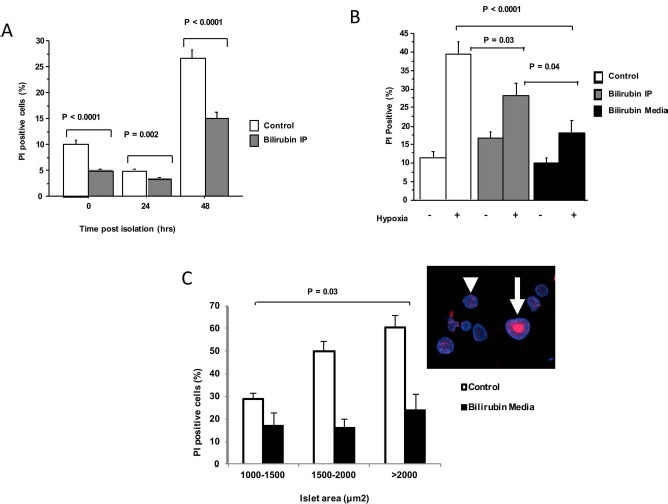
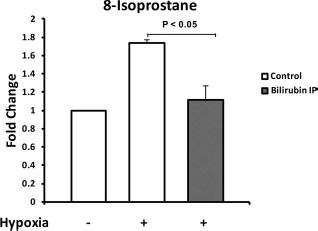
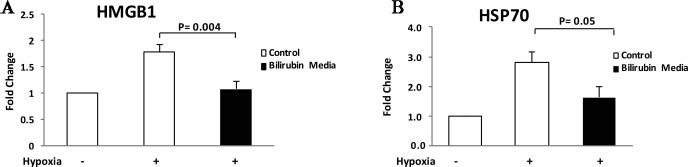
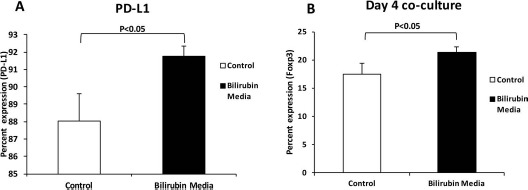
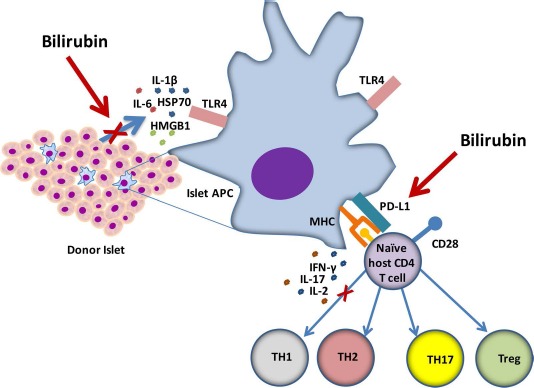
Bilirubin has been recognized as a powerful cytoprotectant when used at physiologic doses and was recently shown to have immunomodulatory effects in islet allograft transplantation, conveying donor-specific tolerance in a murine model. We hypothesized that bilirubin, an antioxidant, acts to suppress the innate immune response to islet allografts through two mechanisms: 1) by suppressing graft release of damage-associated molecular patterns (DAMPs) and inflammatory cytokines, and 2) by producing a tolerogenic phenotype in antigen-presenting cells. Bilirubin was administered intraperitoneally before pancreatic procurement or was added to culture media after islet isolation in AJ mice. Islets were exposed to transplant-associated nutrient deprivation and hypoxia. Bilirubin significantly decreased islet cell death after isolation and hypoxic stress. Bilirubin supplementation of islet media also decreased the release of DAMPs (HMGB1), inflammatory cytokines (IL-1β and IL-6), and chemokines (MCP-1). Cytoprotection was mediated by the antioxidant effects of bilirubin. Treatment of macrophages with bilirubin induced a regulatory phenotype, with increased expression of PD-L1. Coculture of these macrophages with splenocytes led to expansion of Foxp3+ Tregs. In conclusion, exogenous bilirubin supplementation showed cytoprotective and antioxidant effects in a relevant model of islet isolation and hypoxic stress. Suppression of DAMP release, alterations in cytokine profiles, and tolerogenic effects on macrophages suggest that the use of this natural antioxidant may provide a method of preconditioning to improve outcomes after allograft transplantation.
Figures

References
-
- Feng G., Wood K.J., Bushell A.. Interferon-gamma conditioning ex vivo generates CD25+CD62L+Foxp3+ regulatory T cells that prevent allograft rejection: Potential avenues for cellular therapy. Transplantation 2008; 86: 578–89. - PubMed
-
- Davalli A.M., Ogawa Y., Ricordi C., Scharp D.W., Bonner-Weir S., Weir G.C.. A selective decrease in the beta cell mass of human islets transplanted into diabetic nude mice. Transplantation 1995; 59: 817–20. - PubMed
-
- Davalli A.M., Ogawa Y., Scaglia L., Wu Y.J., Hollister J., Bonner-Weir S., Weir G.C.. Function, mass, and replication of porcine and rat islets transplanted into diabetic nude mice. Diabetes 1995; 44: 104–11. - PubMed
-
- Korsgren O., Nilsson B., Berne C., Felldin M., Foss A., Kallen R., Lundgren T., Salmela K., Tibell A., Tufveson G.. Current status of clinical islet transplantation. Transplantation 2005; 79: 1289–93. - PubMed
Publication types
MeSH terms
Substances
Grants and funding
LinkOut - more resources
Full Text Sources
Other Literature Sources
Medical
Research Materials
Miscellaneous
