


Simulation in coagulation testing using rotational thromboelastometry: A fast emerging, reliable point of care technique
- PMID: 27397458
- PMCID: PMC4971982
- DOI: 10.4103/0971-9784.185546
Simulation in coagulation testing using rotational thromboelastometry: A fast emerging, reliable point of care technique
Abstract
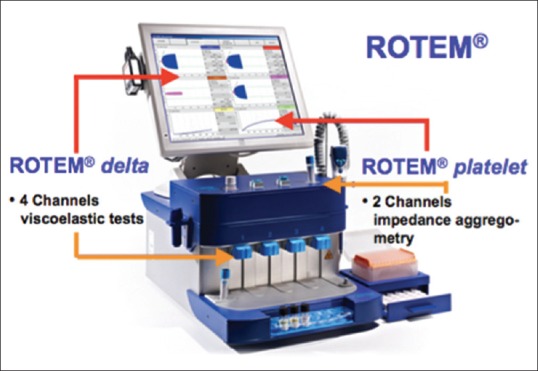
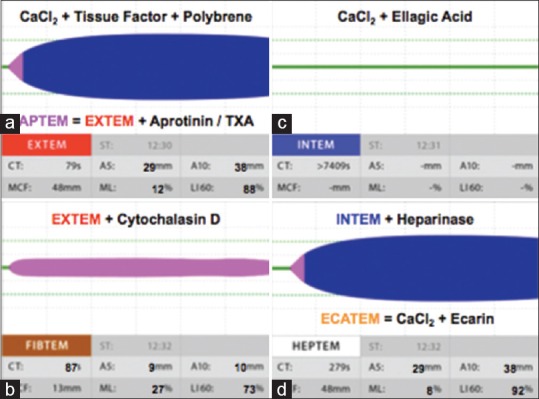
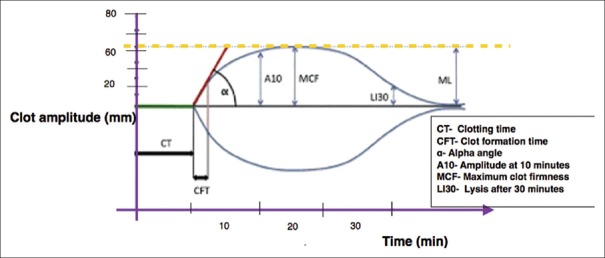
Computer simulations can come in handy to train medical personnel with necessary skills to face the clinical scenarios involving various coagulopathies. Now a days, point of care (POC) devices such as thromboelastography, Sonoclot analyzer and newly approved rotational thromboelastometry (ROTEM) with faster results to assess coagulopathies are available on bedside of patients. ROTEM is emerging as a quick, portable, and well-validated device to evaluate coagulopathy in critical care and perioperative setup. A novel platelet-aggregometry integrated module enables simultaneous analysis of platelets as well as coagulation tests on the same screen. The entire gamut of POC signature curves obtained with different coagulation defects can be learned with graphical simulations. These simulations can be a valuable strategy to elucidate latent conditions, for which simulation interventions can then be designed to mimic different clinical scenarios.
Figures
References
-
- Murphy GJ, Reeves BC, Rogers CA, Rizvi SI, Culliford L, Angelini GD. Increased mortality, postoperative morbidity, and cost after red blood cell transfusion in patients having cardiac surgery. Circulation. 2007;116:2544–52. - PubMed
-
- Avidan MS, Alcock EL, Da Fonseca J, Ponte J, Desai JB, Despotis GJ, et al. Comparison of structured use of routine laboratory tests or near-patient assessment with clinical judgement in the management of bleeding after cardiac surgery. Br J Anaesth. 2004;92:178–86. - PubMed
Publication types
MeSH terms
LinkOut - more resources
Full Text Sources
Other Literature Sources
Medical