. 2016 Jun 28:8:17-39.
doi: 10.4137/PMC.S32171. eCollection 2016.

The Structure-Function Relationships of Classical Cannabinoids: CB1/CB2 Modulation

Affiliations

The Structure-Function Relationships of Classical Cannabinoids: CB1/CB2 Modulation

Eric W Bow et al. Perspect Medicin Chem. .

Abstract

The cannabinoids are members of a deceptively simple class of terpenophenolic secondary metabolites isolated from Cannabis sativa highlighted by (-)-Δ(9)-tetrahydrocannabinol (THC), eliciting distinct pharmacological effects mediated largely by cannabinoid receptor (CB1 or CB2) signaling. Since the initial discovery of THC and related cannabinoids, synthetic and semisynthetic classical cannabinoid analogs have been evaluated to help define receptor binding modes and structure-CB1/CB2 functional activity relationships. This perspective will examine the classical cannabinoids, with particular emphasis on the structure-activity relationship of five regions: C3 side chain, phenolic hydroxyl, aromatic A-ring, pyran B-ring, and cyclohexenyl C-ring. Cumulative structure-activity relationship studies to date have helped define the critical structural elements required for potency and selectivity toward CB1 and CB2 and, more importantly, ushered the discovery and development of contemporary nonclassical cannabinoid modulators with enhanced physicochemical and pharmacological profiles.

Keywords: Cannabis sativa; cannabidiol; classical cannabinoids; phytocannabinoids; tetrahydrocannabinol.


Figures
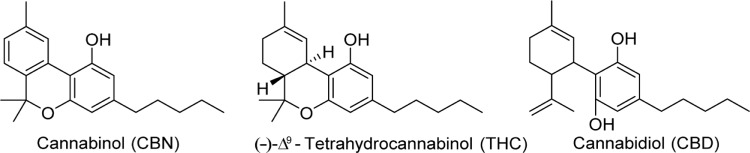
Figure 1
Figure 1
Structures of cannabinol, Δ9-THC, and cannabidiol.
Figure 2
Figure 2
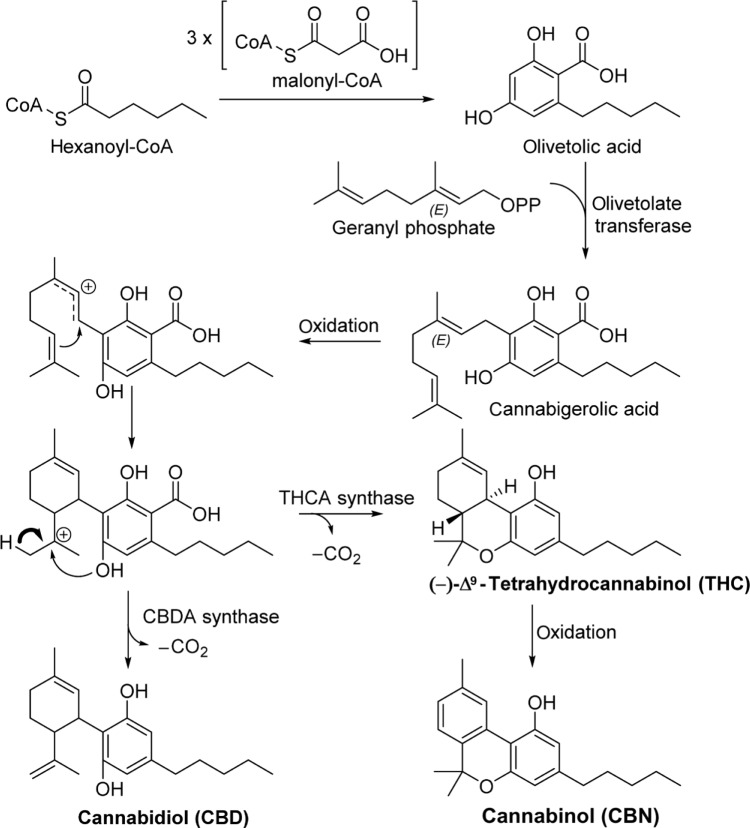
Phytocannabinoid biosynthesis.
Figure 3
Figure 3
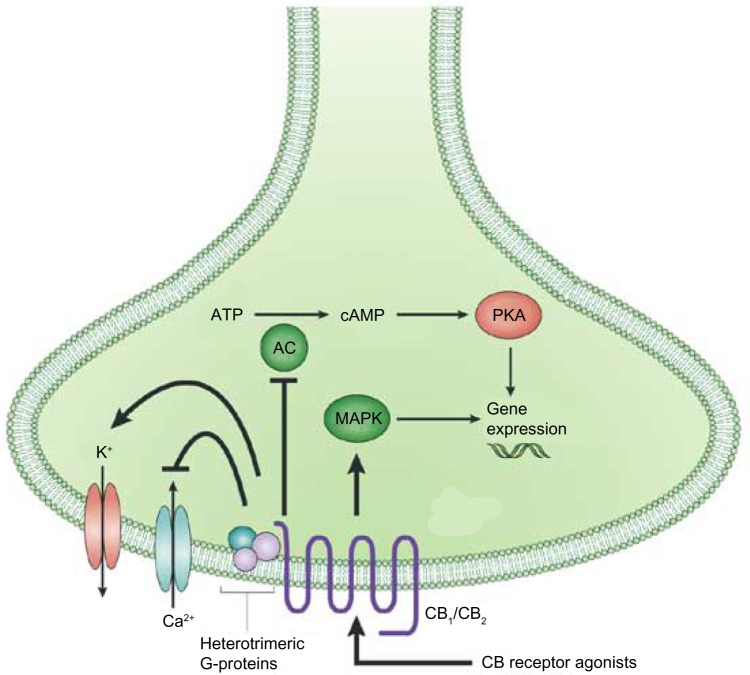
Neuronal CB signaling. Activation of a CB receptor with an agonist causes several downstream effects: inhibition of adenylcyclase and inwardly rectifying calcium channels, and activation of potassium channels as well as the mitogen-activated protein kinase pathway. Activation of MAPK modulates gene expression, depending on downstream signaling, cell types, etc. Gene expression can also be modulate as a downstream effect of adenylyl cyclase inhibition through the activation of protein kinase A. Abbreviations: MAPK, mitogen-activated protein kinases; AC, adenylyl cyclase; cAMP, cyclic adenosine monophosphate; PKA, protein kinase A. Note: Reprinted by permission from Macmillan Publishers Ltd: Nature Reviews Drug Discovery, copyright 2004.
Figure 4
Figure 4
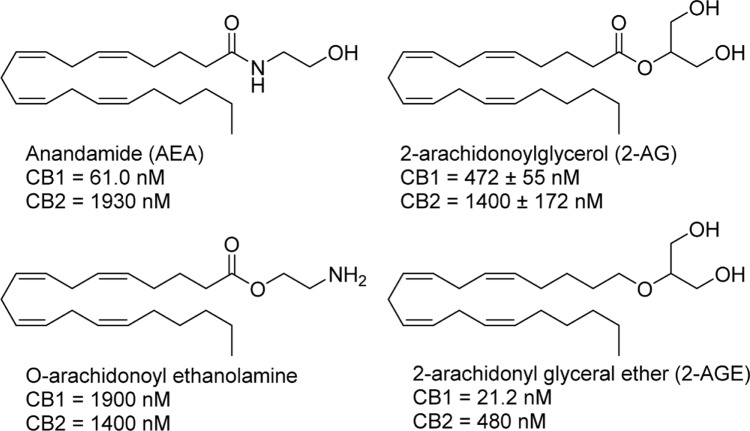
Structures and CB receptor affinities of major endocannabinoids.
Figure 5
Figure 5
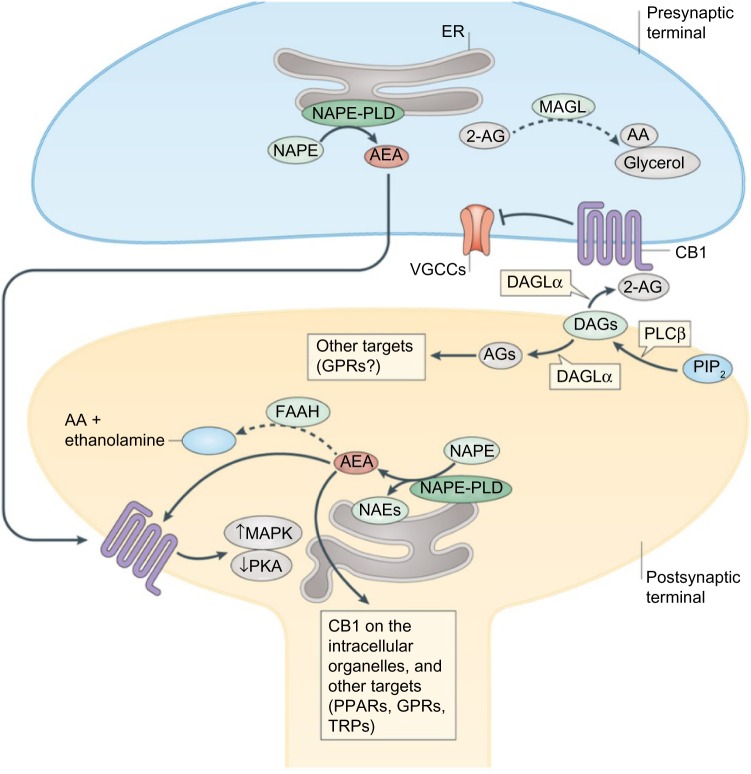
Synaptic endocannabinoid signaling. Dashed arrows indicate inactivation of endocannabinoid. Abbreviations: AA, arachidonic acid; DAGs, diacylglycerols; ER, endoplasmic reticulum; MAPK, mitogen-activated protein kinases; PIP2, phosphoinositide bisphosphate; PKA, protein kinase A; PLCβ, phospholipase Cβ; PPARs, peroxisome proliferator-activated receptors; TRPs, transient receptor potential channels; VGCCs, voltage-gated calcium channels. Note: Reprinted by permission from Macmillan Publishers Ltd: Nature Reviews Neuroscience, copyright 2015.
Figure 6
Figure 6
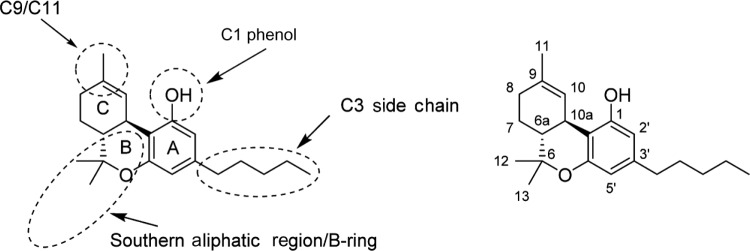
SAR of classical cannabinoids (left) major pharmacophores of classical cannabinoids, and common regions of functionalization and analog synthesis; (right) dibenzopyran numbering of Δ9-THC.
Figure 7
Figure 7
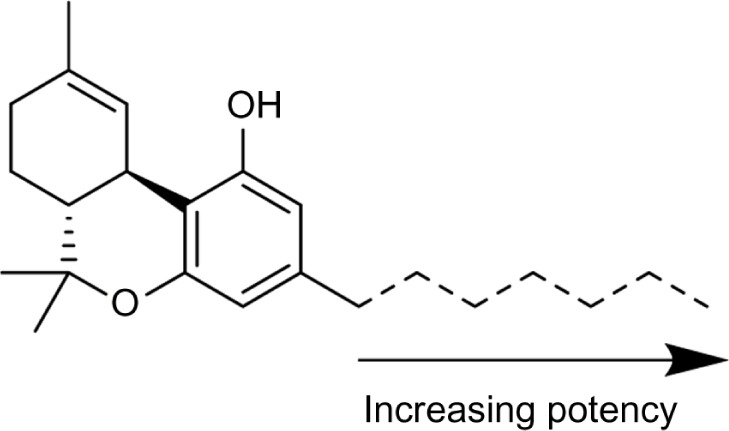
Relationship between alkyl chain length and CB receptor binding affinity.
Figure 8
Figure 8
Rotational conformers of 3-heptyl-Δ8-THC. Studies of rotationally restricted alkyl chains determined that the optimal conformation of the chain is oriented downward away from the phenol, rather than linearly away from the phenyl ring.
Figure 9
Figure 9
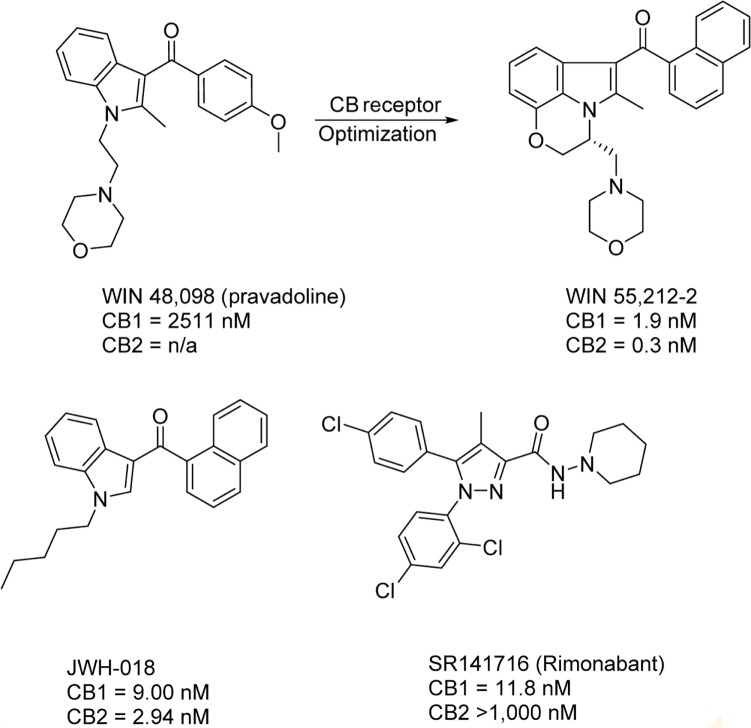
Representative nonclassical CB1 ligands. The first nonclassical CB scaffold discoveries were the n-alkyl indoles, exemplified by WIN 55,212-2 and JWH-018, both non-selective CB1 and CB2 agonists. SR141716, a member of the diarylpyrazole class, was the first CB1 inverse agonist discovered.
Figure 10
Figure 10
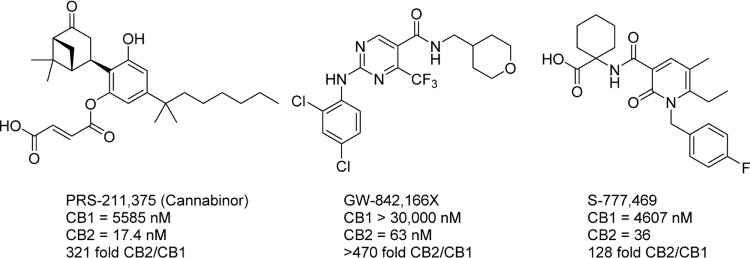
CB2-selective agonists. PRS-211,375 and GW-842,166X were both investigated in clinical trials for the treatment of pain; both failed for lack of efficacy and presence of adverse side effects. S-777,469 completed Phase II trials, but no results have been reported and development has presumably halted.
Figure 11
Figure 11
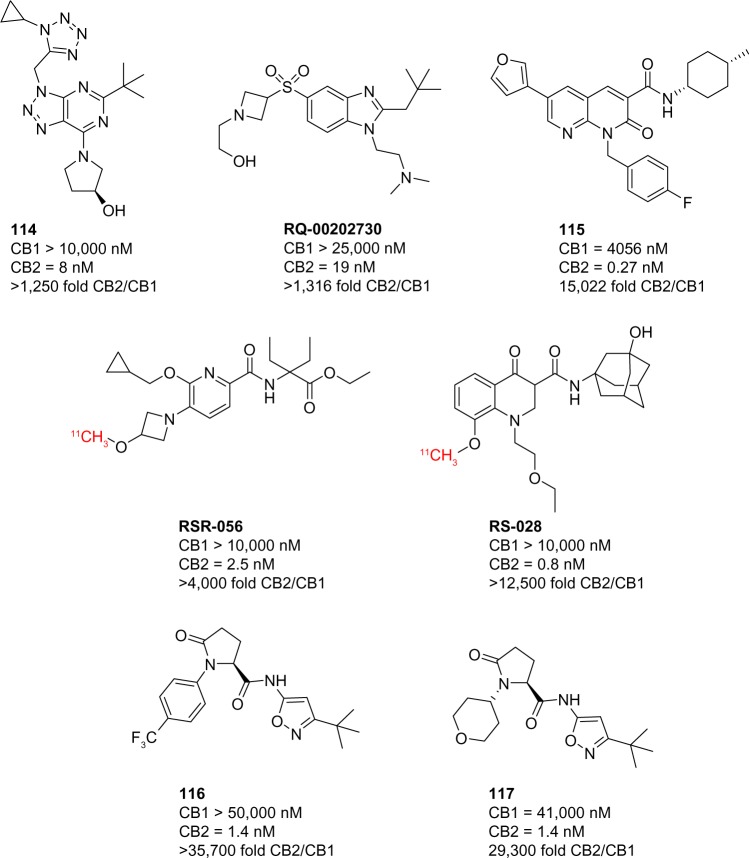
CB2-selective ligands reported in 2014 and 2015.

References

    1. O’Shaughnessy WB. On the preparations of the Indian Hemp, or Gunjah: Cannabis indica their effects on the animal system in health, and their utility in the treatment of tetanus and other convulsive diseases. Prov Med J Retrosp Med Sci. 1843;5(123):363–9. - PMC - PubMed
    1. Blatt AH. A critical survey of the literature dealing with chemical constituents of Cannabis sativa. J Wash Acad Sci. 1938;28(11):465–77.
    1. Adams R. Marihuana: Harvey Lecture, February 19, 1942. Bull N Y Acad Med. 1942;18(11):705–30. - PMC - PubMed
    1. Wood TB, Spivey WTN, Easterfield TH. XL.-Charas. The resin of Indian hemp. J Chem Soc Trans. 1896;69(0):539–46.
    1. Cahn RS. 326. Cannabis indica resin. Part IV. The synthesis of some 2: 2-dimethyldibenzopyrans, and confirmation of the structure of cannabinol. J Chem Soc. 1933;(0):1400–5. doi: 10.1039/JR9330001400. - DOI