


Effect of bevel direction on the success rate of ultrasound-guided radial arterial catheterization
- PMID: 27401352
- PMCID: PMC4939735
- DOI: 10.1186/s12871-016-0202-5
Effect of bevel direction on the success rate of ultrasound-guided radial arterial catheterization
Abstract
Background: This study assessed the effect of bevel direction on the success rate of ultrasound guided radial artery catheterization.
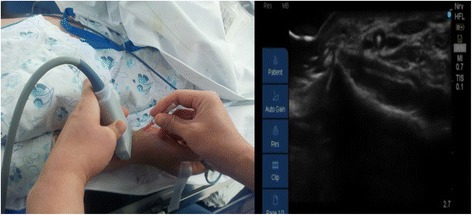
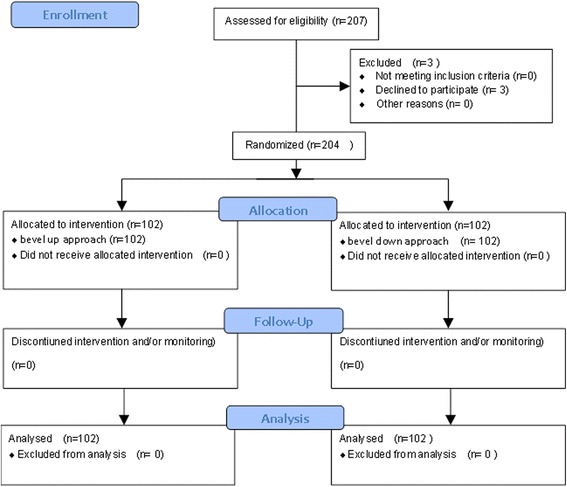
Methods: A total of 204 patients requiring radial artery catheterization were randomly divided into bevel-up (n = 102) and bevel-down (n = 102) groups. Success rate, cannulation time, and number of attempts were compared groups.
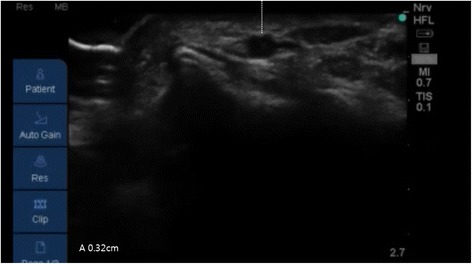
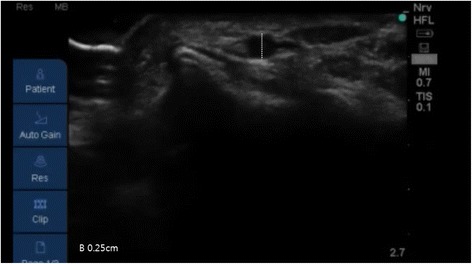
Results: In the bevel-down group, an arterial line was placed on the first attempt in 86 of 102 (84.3 %; 95 % confidence interval [CI] = 76 % to 90 %) patients versus 73 of 102 (71.6 %; 95 % CI = 62.1 % to 79.4 %) in the bevel-up group (p = 0.028). In the bevel-down group, the mean time to a successful radial arterial cannulation was 33.3 ± 6.3 seconds (95 % CI = 32.1-34.6) versus 35.9 ± 7.6 seconds (95 % CI = 34.4-37.2) in the bevel-up group (p = 0.011). The median score was 33.2 and interquartile range [IQR] was 10.9 (30.3-41.2) for the mean cannulation time in the bevel-up group. In the bevel-down group, the mean score was 32.3 (IQR 3.90, 30-33.9) for mean cannulation time. In the bevel-down group, 11 of 102 (7 %; 95 % CI = 0 to 16 %) patients developed a posterior wall puncture versus 22 of 102 ((21.6 %; 95 % CI = 14.7 to 17.2 %) in the bevel-up group.
Conclusion: The bevel-down approach during ultrasound-guided radial artery catheterization exhibited a higher success with fewer complications compared to the bevel-up approach.
Trial registration: Clinical Research Information Service is Korean Clinical Trials Registry ( KCT0001836 ). It was registered retrospectively 30th Nov 2015.
Figures
References
Publication types
MeSH terms
LinkOut - more resources
Full Text Sources
Other Literature Sources
