. 2016 Sep 2;4(9):789-98.
doi: 10.1158/2326-6066.CIR-15-0233. Epub 2016 Jul 11.

Mutation Drivers of Immunological Responses to Cancer

Affiliations

Mutation Drivers of Immunological Responses to Cancer

Eduard Porta-Pardo et al. Cancer Immunol Res. .

Abstract

In cancer immunology, somatic missense mutations have been mostly studied with regard to their role in the generation of neoantigens. However, growing evidence suggests that mutations in certain genes, such as CASP8 or TP53, influence the immune response against a tumor by other mechanisms. Identifying these genes and mechanisms is important because, just as the identification of cancer driver genes led to the development of personalized cancer therapies, a comprehensive catalog of such cancer immunity drivers will aid in the development of therapies aimed at restoring antitumor immunity. Here, we present an algorithm, domainXplorer, that can be used to identify potential cancer immunity drivers. To demonstrate its potential, we used it to analyze a dataset of 5,164 tumor samples from The Cancer Genome Atlas (TCGA) and to identify protein domains in which mutation status correlates with the presence of immune cells in cancer tissue (immune infiltrate). We identified 122 such protein regions, including several that belong to proteins with known roles in immune response, such as C2, CD163L1, or FCγR2A. In several cases, we show that mutations within the same protein can be associated with more or less immune cell infiltration, depending on the specific domain mutated. These results expand the catalog of potential cancer immunity drivers and highlight the importance of taking into account the structural context of somatic mutations when analyzing their potential association with immune phenotypes. Cancer Immunol Res; 4(9); 789-98. ©2016 AACR.


Figures

Figure 1
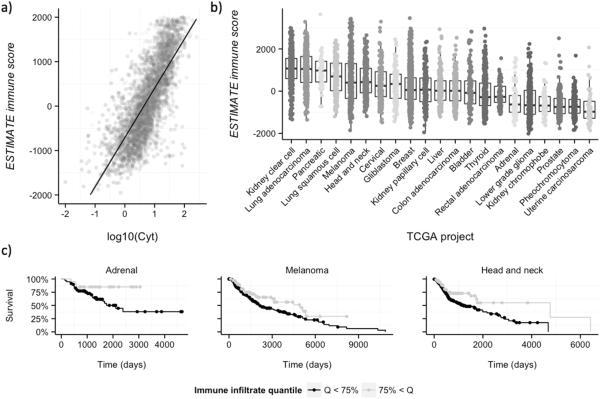
Figure 1. ESTIMATE immune scores of TCGA samples
A, The ESTIMATE immune score correlates with cytolytic activity (see the main text for details). B, Distribution of immune scores across the different TCGA samples. Each dot corresponds to an individual cancer sample. The immune score obtained with ESTIMATE is shown in the y-axis, and samples are grouped according to the TCGA project (tissue origin). Projects are sorted according to their average immune score, from higher (left) to lower (right). C, Immune scores correlate with survival in some cancer types. There is a correlation between higher ESTIMATE immune scores and better outcomes in the Pancancer dataset (Cox P < 0.01, adjusted by tissue of origin). This correlation can also be identified in some individual cancer types, such as adrenocortical carcinoma, melanoma or head and neck cancer.
Figure 2
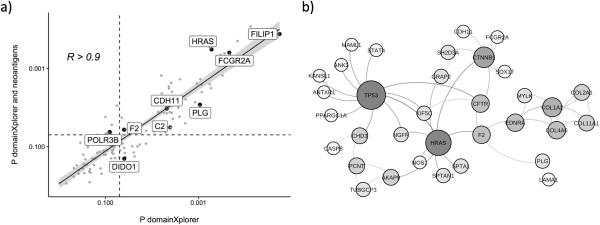
Figure 2. domainXplorer reveals novel players in cancer immunology
A, Re-analysis with domainXplorer of a subset of TCGA data with data regarding the number of neo-antigens. The P values obtained with (y-axis), and without (x-axis), neoantigens in the model were highly correlated. In this smaller subset, 64 of the original 122 domains still show a statistically significant correlation using the standard domainXplorer (P < 0.05, vertical black dashed line). A total of 52 of these domains, are also statistically significant when adding the number of neoantigens in the model (P < 0.05, horizontal black dashed line). B, Many proteins containing the regions identified by domainXplorer interact with each other or with proteins known to influence the immune response, such as TP53 or CTNNB1.
Figure 3
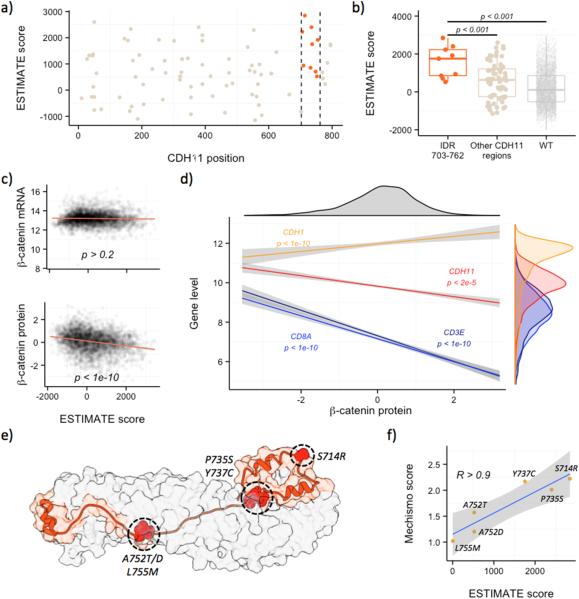
Figure 3. Exploring the influence of CTNNB1 and CDH11 in cancer immune infiltrate
A, domainXplorer identified the C-terminal disordered region of CDH11 (aminoacids 703-762, between vertical dashed lines) as correlating with higher ESTIMATE immune scores. B, Immune infiltration by mutated CDH11 region C, Although ESTIMATE immune scores and the expression of CTNNB1 measured with RNAseq did not correlate (top), CTNNB1 protein measured by RPPA (reverse phase protein array) had a negative correlation (bottom). D, CTNNB1 protein (x-axis) also negatively correlated with CDH11, CD8A, and CD3E. E, Structural model (based on PDB 1I7W) of the interaction between the CDH11 disordered region (in orange) and CTNNB1 (in grey). The residues highlighted in red are those with mutations scored by MECHISMO. F, MECHISMO interaction scores (y-axis) predicted for each mutation and the ESTIMATE immune score of the samples (x-axis) were highly correlated (R > 0.9). Higher MECHISMO scores indicate stronger interactions. .
Figure 4
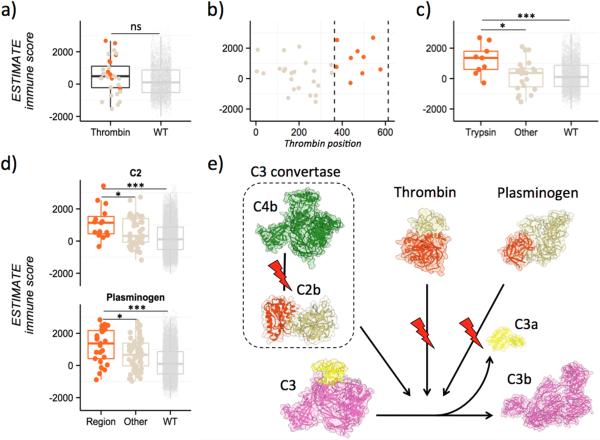
Figure 4. Several domains identified by domainXplorer can be linked to the complement pathway
A, Thrombin analysis. Standard analysis ESTIMATE data of thrombin, comparing samples with mutations over the whole thrombin gene to samples without mutations. B, Analysis of ESTIMATE data by location of mutation in the thrombin amino acid sequence. Highlighted in orange between dashed vertical lines is the region coding for the trypsin domain (between positions 364 and 613).. C, Immune infiltration segmented by location of thrombin mutations in the sample. Trypsin domain, orange (left); mutations in other regions, brown (center), and no mutations in this protein, light brown (right). D, Immune infiltration and mutation data assessed by domainXplorer identified the Von Willebrand domain of C2 (top) and the catalytic domain of plasminogen (bottom). E, A plausible hypothesis that emerges from these results is that mutations altering the complement cascade at C3 influence antitumor immunity by blocking cleavage of C3 to C3b. For thrombin and plasminogen, mutations in their catalytic domains (orange) could be lowering the rate of conversion from C3 to C3a (yellow) and C3b (pink). Similarly, mutations identified in the C2 region (shown in orange), mediating the interaction with C4b, also influence the same step (C3 to C3b conversion).
Figure 5
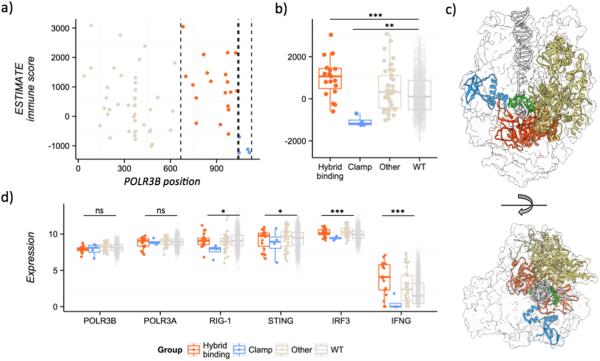
Figure 5. Mutations in POLR3B can have opposite effects on the host immune response depending on which domain they alter
A, Scatterplot showing the ESTIMATE immune scores (y-axis) in different samples depending on the position of the POLR3B mutation (x-axis). Mutations in the hybrid-binding domain (red), samples with mutations in the clamp region (blue). B, Boxplot comparing the immune scores in different TCGA samples depending on their POLR3B mutation status. Hybrid-binding domain (orange), clamp region (blue), other POLR3B mutations (light brown), or no POLR3B mutations (gray). C, Structure model of the RNA polymerase III, highlighting the different POLR3B regions. A ribbon diagram is shown for the clamp region (blue), the hybrid-binding domain (orange) and the rest of POLR3B (light brown), transcribed DNA (gray), and the nascent RNA molecule (green). Only the surface is shown for the rest of the RNA polymerase III complex. Model based on PDB coordinates file 4Y52. D, Expression of different genes involved in the STING pathway. Samples with mutations in the clamp region show consistently lower expression of many genes downstream in the pathway (RIG-I, STING, IRF3) and the type II interferon gene IFNG.

References

    1. Dunn GP, Bruce AT, Ikeda H, Old LJ, Schreiber RD. Cancer immunoediting: from immunosurveillance to tumor escape. Nature immunology. 2002;3(11):991–8. - PubMed
    1. Spranger S, Spaapen RM, Zha Y, Williams J, Meng Y, Ha TT, et al. Upregulation of PD-L1, IDO, and T(regs) in the melanoma tumor microenvironment is driven by CD8(+) T cells. Science translational medicine. 2013;5(200):200ra116. - PMC - PubMed
    1. Duan F, Duitama J, Al Seesi S, Ayres CM, Corcelli SA, Pawashe AP, et al. Genomic and bioinformatic profiling of mutational neoepitopes reveals new rules to predict anticancer immunogenicity. The Journal of experimental medicine. 2014;211(11):2231–48. - PMC - PubMed
    1. Fritsch EF, Rajasagi M, Ott PA, Brusic V, Hacohen N, Wu CJ. HLA-binding properties of tumor neoepitopes in humans. Cancer immunology research. 2014;2(6):522–9. - PMC - PubMed
    1. Hacohen N, Fritsch EF, Carter TA, Lander ES, Wu CJ. Getting personal with neoantigen-based therapeutic cancer vaccines. Cancer immunology research. 2013;1(1):11–5. - PMC - PubMed

Publication types

MeSH terms