


A Comprehensive Evaluation of a Novel Color Range Indicator in Multiple Blood Glucose Meters Demonstrates Improved Glucose Range Interpretation and Awareness in Subjects With Type 1 and Type 2 Diabetes
- PMID: 27402241
- PMCID: PMC5094336
- DOI: 10.1177/1932296816659307
A Comprehensive Evaluation of a Novel Color Range Indicator in Multiple Blood Glucose Meters Demonstrates Improved Glucose Range Interpretation and Awareness in Subjects With Type 1 and Type 2 Diabetes
Abstract
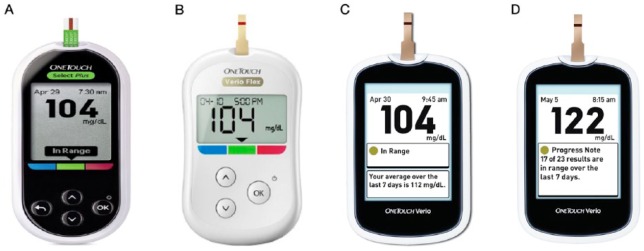
Aims: We previously demonstrated that people with type 2 diabetes (T2DM) can improve their ability to categorize blood glucose (BG) results into low, in range, or high glycemic ranges after experiencing a color range indicator (CRI or ColorSure™ Technology) in a single meter. This study examined whether a CRI was effective in people with type 1 (T1) or T2DM when used in 3 glucose meters.
Methods: A total of 179 subjects (139 T2DM and 40 T1DM) classified BG values as low, in range, or high based on individual current knowledge. Subjects then experienced the CRI which showed whether different BG values were low, in range, or high. After CRI interaction, subjects repeated the classification.
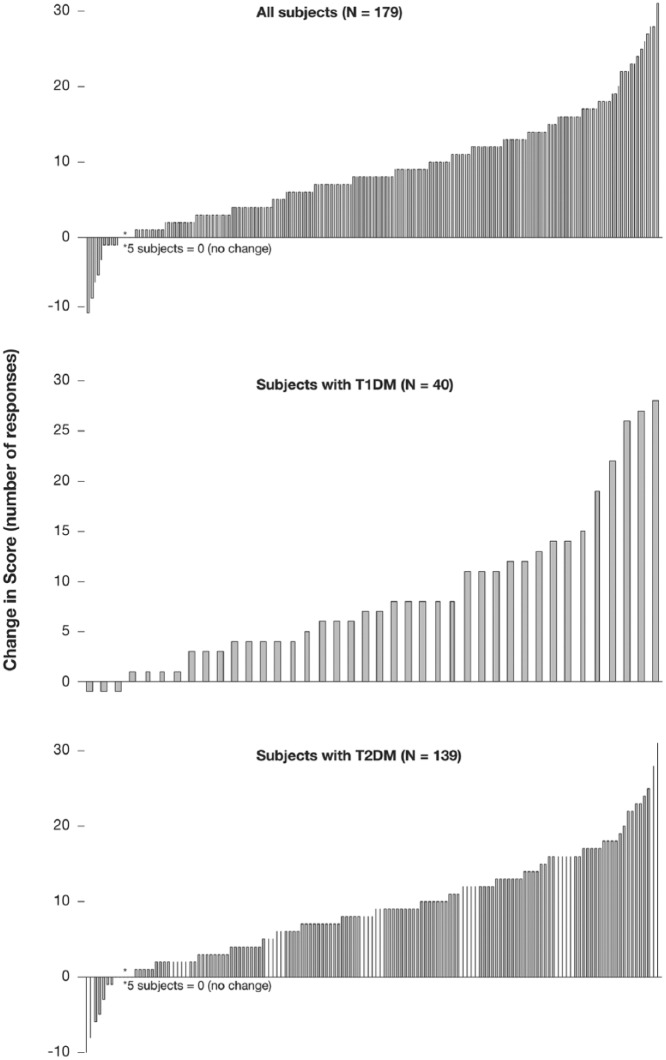
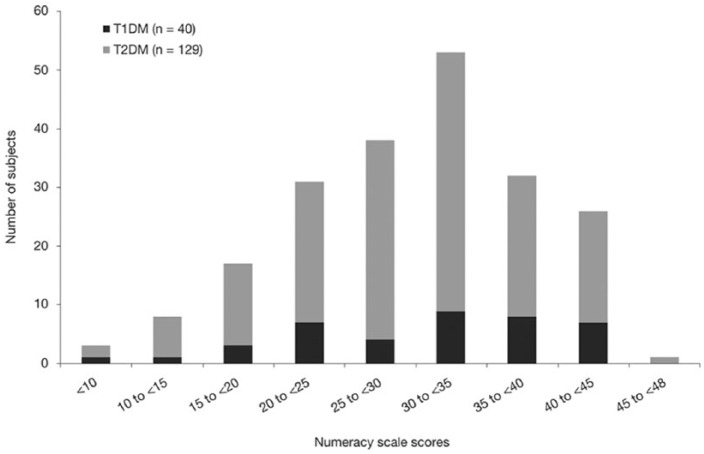
Results: Following interaction with the CRI, subjects significantly improved their ability to categorize BG results into low, in range, and high glycemic ranges by 27.9% (T2DM) and 27.2% (T1DM) (each P < .001). Improvement was not accompanied by an increase in time spent categorizing results. There was no difference in classification ability between subjects with T1 or T2DM. There was also no correlation between HbA1c, numeracy level, test frequency, or duration of diabetes and the ability to correctly classify results. Subjects agreed the CRI feature helped them easily interpret glucose values and improved their awareness of glucose ranges.
Conclusion: Interaction with a CRI improved the ability of subjects with T1 and T2DM to interpret and categorize BG values into recommended glycemic ranges, irrespective of the glucose meter providing the CRI insights.
Keywords: blood glucose monitor; color range indicator (ColorSure™ Technology); glucose ranges; numeracy; progress notes; self-monitoring of blood glucose.
© 2016 Diabetes Technology Society.
Conflict of interest statement
The author(s) declared the following potential conflicts of interest with respect to the research, authorship, and/or publication of this article: MG and HC are employees of LifeScan Scotland, Ltd. LBK and BLL are employees of LifeScan, Inc.
Figures
Comment in
-
Use of Color Range Indicator Technology on Point-of-Care Meters May Ease Self-Management of Blood Glucose.J Diabetes Sci Technol. 2016 Nov 1;10(6):1333-1334. doi: 10.1177/1932296816667748. Print 2016 Nov. J Diabetes Sci Technol. 2016. PMID: 27605594 Free PMC article.
References
-
- Standards of medical care in diabetes. Glycemic targets. Diabetes Care. 2016;39(suppl 1):S39-S47. - PubMed
-
- AACE/ACE consensus statement on the comprehensive type 2 diabetes management algorithm. Endocr Pract. 2016;22(1):84-113. - PubMed
-
- Moreland EC, Volkening LK, Laffel LM. Use of a BGM manual to enhance monitoring adherence in adults with diabetes. Arch Intern Med. 2006;166(6):689-695. - PubMed
-
- Clar C, Barnard K, Cummins E. Self-monitoring of blood glucose in type 2 diabetes: systematic review. Health Technol Assess. 2010;14(12),. - PubMed
-
- Evans JMM, Mackison D, Vivien Swanson V. Self-monitoring of blood glucose in type 2 diabetes: patients’ perceptions of “high” readings. Diabetes Res Clin Pract. 2013;102:e5-e7. http://dx.doi.org/10.1016/j.diabres.2013.07.011. - DOI - PubMed
Publication types
MeSH terms
Substances
LinkOut - more resources
Full Text Sources
Other Literature Sources
Medical
