


Regulation of MAPKs Signaling Contributes to the Growth Inhibition of 1,7-Dihydroxy-3,4-dimethoxyxanthone on Multidrug Resistance A549/Taxol Cells
- PMID: 27403196
- PMCID: PMC4925979
- DOI: 10.1155/2016/2018704
Regulation of MAPKs Signaling Contributes to the Growth Inhibition of 1,7-Dihydroxy-3,4-dimethoxyxanthone on Multidrug Resistance A549/Taxol Cells
Abstract
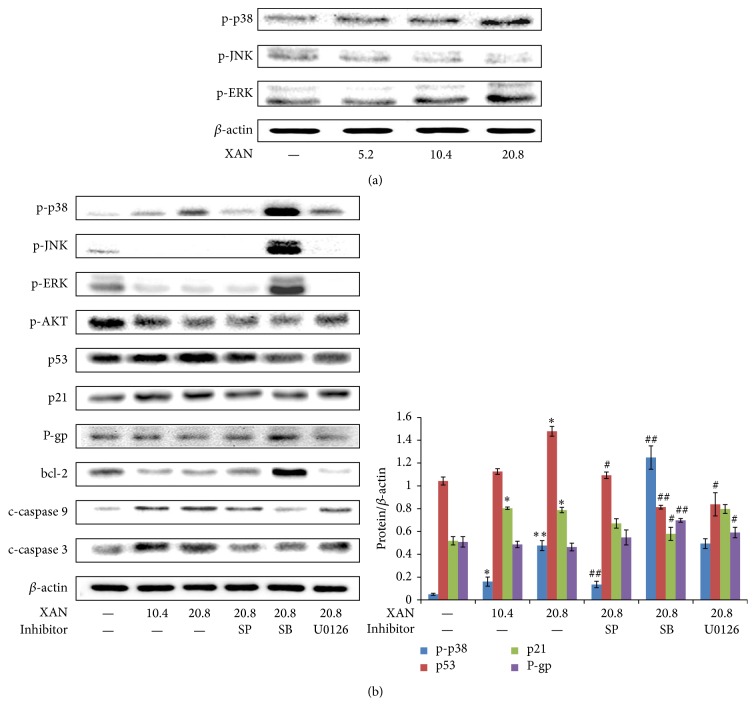
1,7-Dihydroxy-3,4-dimethoxyxanthone (XAN) is a bioactive compound isolated from Securidaca inappendiculata Hassk. and validated with antiproliferative activities on a panel of cancer cell lines. This study was designed to investigate its growth inhibitory effects on multidrug resistance (MDR) non-small cell lung carcinoma (NSCLC) cell line A549/Taxol and explore the possible linkage between modulation of MAPKs and the bioactivities. Its growth inhibitory potency on the cells was estimated by MTT assay, and flow cytometric analysis was employed to investigate its potential cell cycle arrest and proapoptosis effects. Expressions of hallmark proteins were assessed by Western-Blot method. The results showed A549/Taxol cells were sensitive to XAN. XAN inhibited the proliferation of A549/Taxol cells in the time and concentration dependent manners. It acted as a potent inducer of apoptosis and cell cycle arrest in the cells. Western-Blot investigation validated the proapoptosis and cell cycle arrest activities of XAN and the potential of MDR reversion. Upregulation of p38 by XAN, which accounted for the cell cycle arrest at G2 phase, and the downregulation of ERK associated with the proapoptosis activity were also revealed. Further analysis found p53 may be the central role mediated the bioactivities of MAPKs in A549/Taxol cells. Based on these evidences, a conclusion has been deduced that XAN could be a potential agent for MDR NSCLC therapy targeting specifically MAPKs.
Figures



References
-
- Li Y. W. Studies on the anti-inflammatory, immune and analgesic effects and their mechanisms of WWT [M.S. thesis] Guangxi University of Medicine; 2005.
-
- Zuo J., Xia Y., Li X., Zhen O. Y., Chen J.-W. Selective modulation of MAPKs contribute to the anti-proliferative and anti-inflammatory activities of 1,7-dihydroxy-3,4-dimethoxyxanthone in rheumatoid arthritis-derived fibroblast-like synoviocyte MH7A cells. Journal of Ethnopharmacology. 2015;168:248–254. doi: 10.1016/j.jep.2015.03.069. - DOI - PubMed
-
- Zuo J., Mao K.-J., Yuan F., Li X., Chen J.-W. Xanthones with anti-tumor activity isolated from Securidaca inappendiculata . Medicinal Chemistry Research. 2014;23(11):4865–4871. doi: 10.1007/s00044-014-1051-8. - DOI
LinkOut - more resources
Full Text Sources
Other Literature Sources
Research Materials
Miscellaneous
