


High flow nasal cannula in children: a literature review
- PMID: 27405336
- PMCID: PMC4942966
- DOI: 10.1186/s13049-016-0278-4
High flow nasal cannula in children: a literature review
Abstract
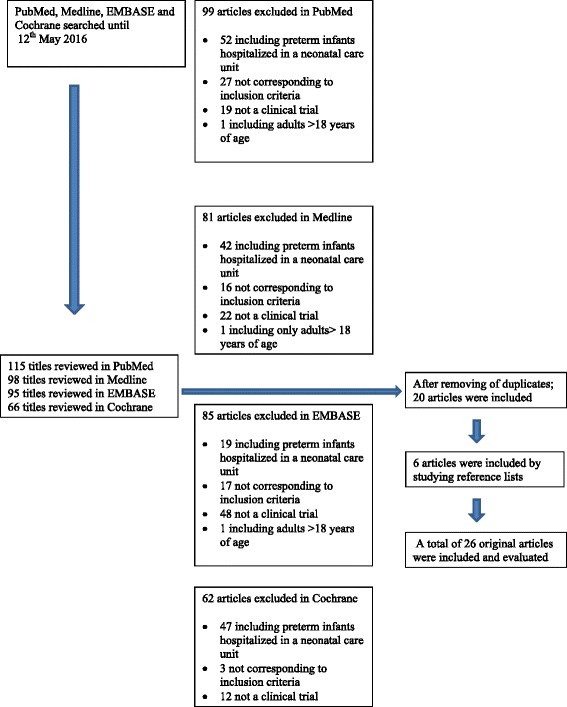
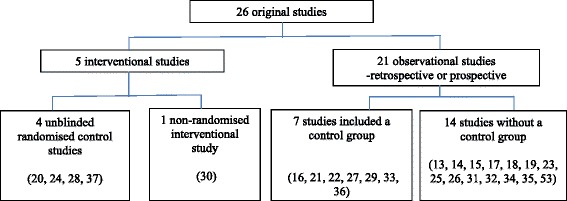
High flow nasal cannula (HFNC) is a relatively new non-invasive ventilation therapy that seems to be well tolerated in children. Recently a marked increase in the use of HFNC has been seen both in paediatric and adult care settings. The aim of this study was to review the current knowledge of HFNC regarding mechanisms of action, safety, clinical effects and tolerance in children beyond the newborn period.We performed a systematic search of the databases PubMed, Medline, EMBASE and Cochrane up to 12th of May 2016. Twenty-six clinical studies including children on HFNC beyond the newborn period with various respiratory diseases hospitalised in an emergency department, paediatric intensive care unit or general ward were included. Five of these studies were interventional studies and 21 were observational studies. Thirteen studies included only children with bronchiolitis, while the other studies included children with various respiratory conditions. Studies including infants hospitalised in a neonatal ward, or adults over 18 years of age, as well as expert reviews, were not systematically evaluated, but discussed if appropriate.The available studies suggest that HFNC is a relatively safe, well-tolerated and feasible method for delivering oxygen to children with few adverse events having been reported. Different mechanisms including washout of nasopharyngeal dead space, increased pulmonary compliance and some degree of distending airway pressure may be responsible for the effect. A positive clinical effect on various respiratory parameters has been observed and studies suggest that HFNC may reduce the work of breathing. Studies including children beyond the newborn period have found that HFNC may reduce the need of continuous positive airway pressure (CPAP) and invasive ventilation, but these studies are observational and have a low level of evidence. There are no international guidelines regarding flow rates and the optimal maximal flow for HFNC is not known, but few studies have used a flow rate higher than 10 L/min for infants.Until more evidence from randomized studies is available, HFNC may be used as a supplementary form of respiratory support in children, but with a critical approach regarding effect and safety, particularly when operated outside of a paediatric intensive care unit.
Keywords: Child; Effect; Flow; High flow nasal cannula; Mechanisms; Pressure; Side effect; Tolerance; Ventilation.
Figures
References
-
- Klingenberg C, Pettersen M, Hansen EA, Gustavsen LJ, Dahl IA, Leknessund A, et al. Patient comfort during treatment with heated humidified high flow nasal cannulae versus nasal continuous positive airway pressure: a randomised cross-over trial. Arch Dis Child Fetal Neonatal Ed. 2014;99:F134–F137. doi: 10.1136/archdischild-2013-304525. - DOI - PubMed
-
- Roca O, Riera J, Torres F, Masclans JR. High-flow oxygen therapy in acute respiratory failure. Respir Care. 2010;55:408–413. - PubMed
-
- Wilkinson D, Wilkinson D, Andersen C, O’Donnell CP, De Paoli AG. High flow nasal cannula for respiratory support in preterm infants. Cochrane Database Syst Rev. 2011;11(5):CD006405. - PubMed
Publication types
MeSH terms
LinkOut - more resources
Full Text Sources
Other Literature Sources
Medical
