


Combination of the non-invasive tests for the diagnosis of endometriosis
- PMID: 27405583
- PMCID: PMC6953325
- DOI: 10.1002/14651858.CD012281
Combination of the non-invasive tests for the diagnosis of endometriosis
Abstract
Background: About 10% of women of reproductive age suffer from endometriosis, a costly chronic disease causing pelvic pain and subfertility. Laparoscopy is the gold standard diagnostic test for endometriosis, but is expensive and carries surgical risks. Currently, there are no non-invasive tests available in clinical practice to accurately diagnose endometriosis. This review assessed the diagnostic accuracy of combinations of different non-invasive testing modalities for endometriosis and provided a summary of all the reviews in the non-invasive tests for endometriosis series.
Objectives: To estimate the diagnostic accuracy of any combination of non-invasive tests for the diagnosis of pelvic endometriosis (peritoneal and/or ovarian or deep infiltrating) compared to surgical diagnosis as a reference standard. The combined tests were evaluated as replacement tests for diagnostic surgery and triage tests to assist decision-making to undertake diagnostic surgery for endometriosis.
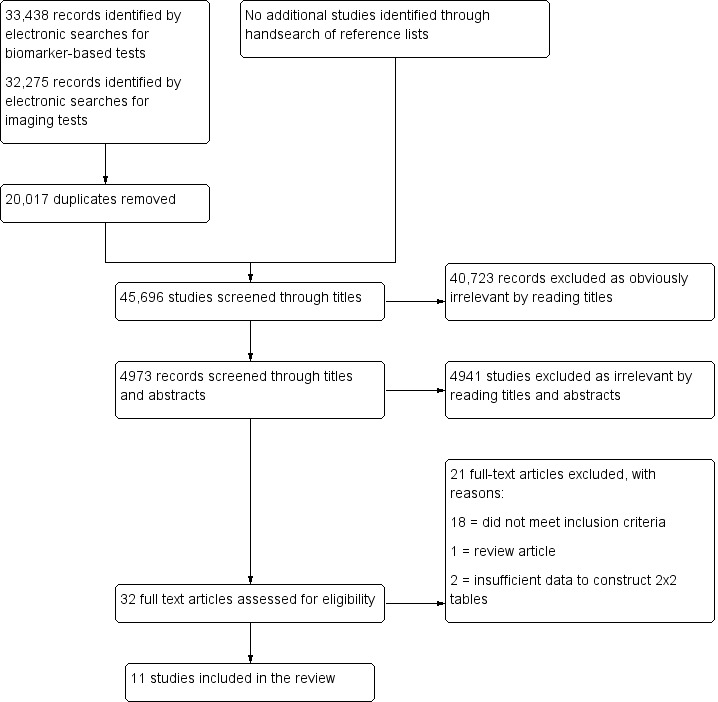
Search methods: We did not restrict the searches to particular study designs, language or publication dates. We searched CENTRAL to July 2015, MEDLINE and EMBASE to May 2015, as well as the following databases to April 2015: CINAHL, PsycINFO, Web of Science, LILACS, OAIster, TRIP, ClinicalTrials.gov, DARE and PubMed.
Selection criteria: We considered published, peer-reviewed, randomised controlled or cross-sectional studies of any size, including prospectively collected samples from any population of women of reproductive age suspected of having one or more of the following target conditions: ovarian, peritoneal or deep infiltrating endometriosis (DIE). We included studies comparing the diagnostic test accuracy of a combination of several testing modalities with the findings of surgical visualisation of endometriotic lesions.
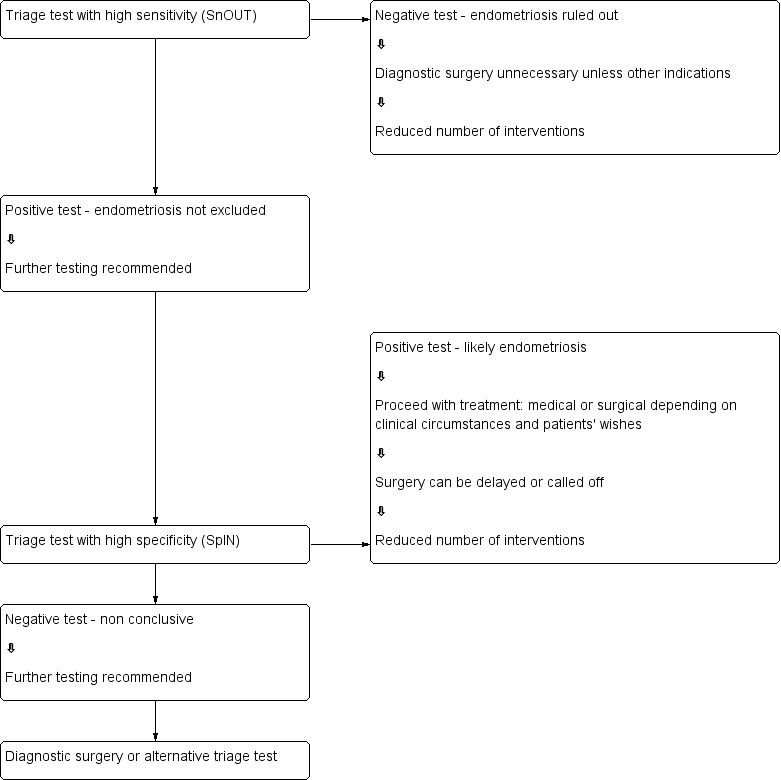
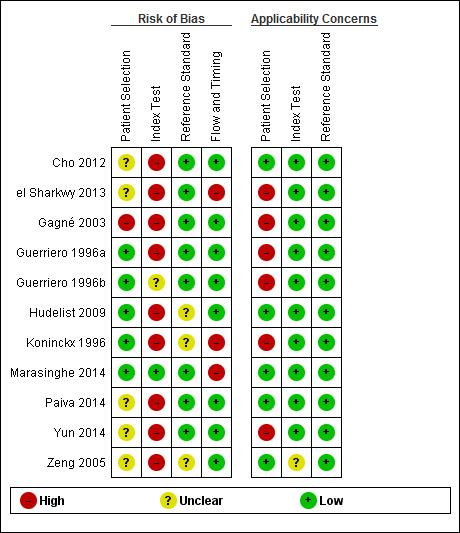
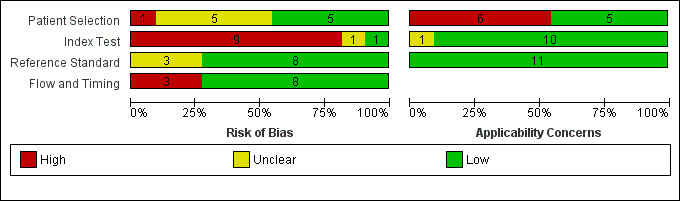
Data collection and analysis: Three review authors independently collected and performed a quality assessment of the data from each study by using the QUADAS-2 tool. For each test, the data were classified as positive or negative for the surgical detection of endometriosis and sensitivity and specificity estimates were calculated. The bivariate model was planned to obtain pooled estimates of sensitivity and specificity whenever sufficient data were available. The predetermined criteria for a clinically useful test to replace diagnostic surgery were a sensitivity of 0.94 and a specificity of 0.79 to detect endometriosis. We set the criteria for triage tests at a sensitivity of 0.95 and above and a specificity of 0.50 and above, which 'rules out' the diagnosis with high accuracy if there is a negative test result (SnOUT test), or a sensitivity of 0.50 and above and a specificity of 0.95 and above, which 'rules in' the diagnosis with high accuracy if there is a positive result (SpIN test).
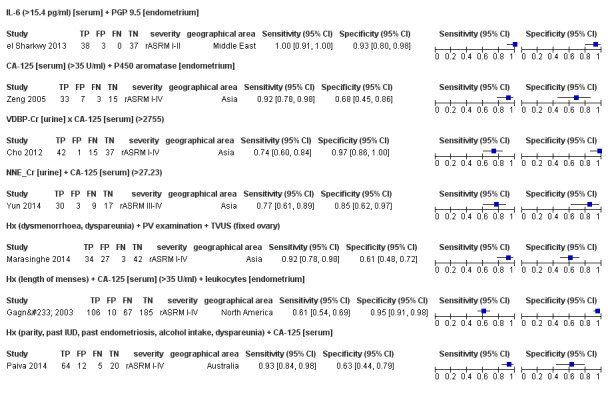
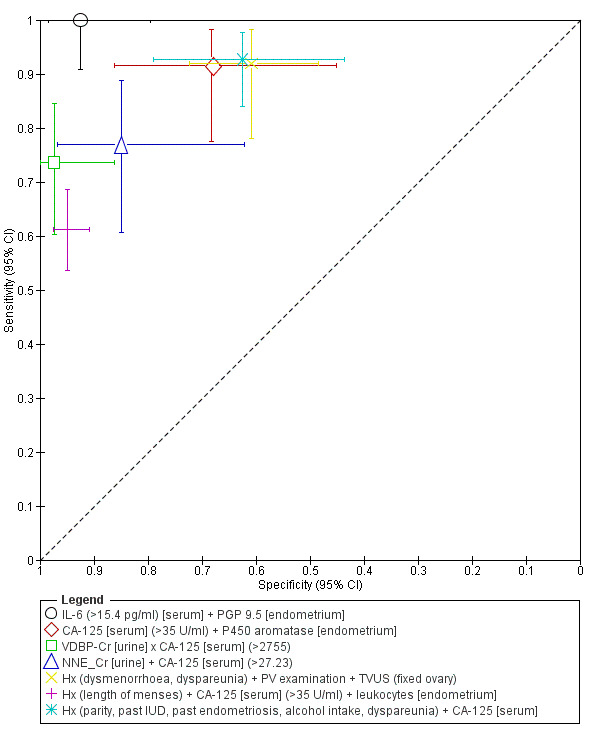
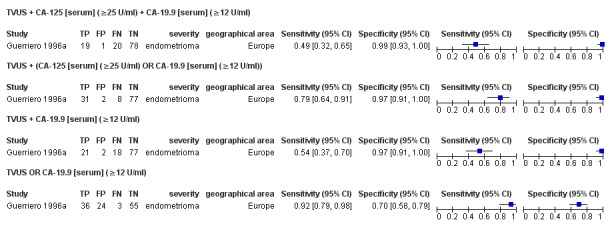
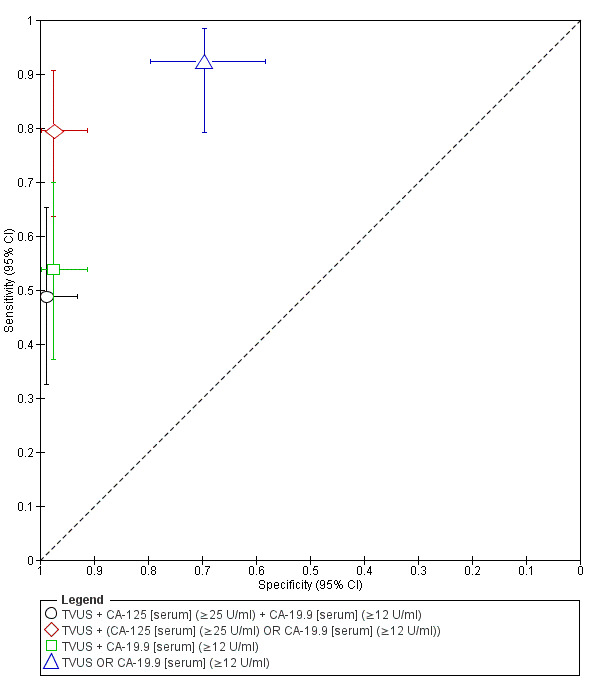
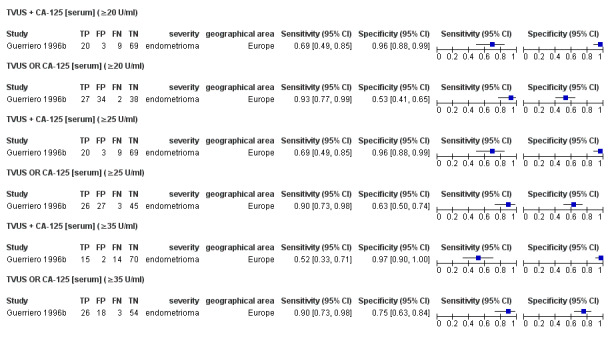
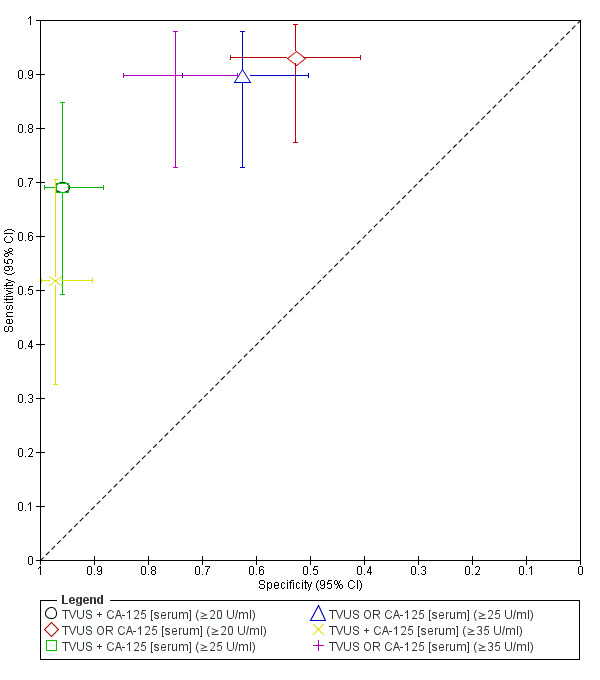
Main results: Eleven eligible studies included 1339 participants. All the studies were of poor methodological quality. Seven studies evaluated pelvic endometriosis, one study considered DIE and/or ovarian endometrioma, two studies differentiated endometrioma from other ovarian cysts and one study addressed mapping DIE at specific anatomical sites. Fifteen different diagnostic combinations were assessed, including blood, urinary or endometrial biomarkers, transvaginal ultrasound (TVUS) and clinical history or examination. We did not pool estimates of sensitivity and specificity, as each study analysed independent combinations of the non-invasive tests.Tests that met the criteria for a replacement test were: a combination of serum IL-6 (cut-off >15.4 pg/ml) and endometrial PGP 9.5 for pelvic endometriosis (sensitivity 1.00 (95% confidence interval (CI) 0.91 to 1.00), specificity 0.93 (95% CI, 0.80, 0.98) and the combination of vaginal examination and transvaginal ultrasound (TVUS) for rectal endometriosis (sensitivity 0.96 (95% CI 0.86 to 0.99), specificity 0.98 (95% CI 0.94 to 1.00)). Tests that met the criteria for SpIN triage tests for pelvic endometriosis were: 1. a multiplication of urine vitamin-D-binding protein (VDBP) and serum CA-125 (cut-off >2755) (sensitivity 0.74 (95% CI 0.60 to 0.84), specificity 0.97 (95% CI 0.86 to 1.00)) and 2. a combination of history (length of menses), serum CA-125 (cut-off >35 U/ml) and endometrial leukocytes (sensitivity 0.61 (95% CI 0.54 to 0.69), specificity 0.95 (95% CI 0.91 to 0.98)). For endometrioma, the following combinations qualified as SpIN test: 1. TVUS and either serum CA-125 (cut-off ≥25 U/ml) or CA 19.9 (cut-off ≥12 U/ml) (sensitivity 0.79 (95% CI 0.64 to 0.91), specificity 0.97 (95% CI 0.91 to 1.00)); 2. TVUS and serum CA 19.9 (cut-off ≥12 U/ml) (sensitivity 0.54 (95% CI 0.37 to 0.70), specificity 0.97 (95% CI 0.91 to 1.0)); 3-4. TVUS and serum CA-125 (cut-off ≥20 U/ml or cut-off ≥25 U/ml) (sensitivity 0.69 (95% CI 0.49 to 0.85), specificity 0.96 (95% CI 0.88 to 0.99)); 5. TVUS and serum CA-125 (cut-off ≥35 U/ml) (sensitivity 0.52 (95% CI 0.33 to 0.71), specificity 0.97 (95% CI 0.90 to 1.00)). A combination of vaginal examination and TVUS reached the threshold for a SpIN test for obliterated pouch of Douglas (sensitivity 0.87 (95% CI 0.69 to 0.96), specificity 0.98 (95% CI 0.95 to 1.00)), vaginal wall endometriosis (sensitivity 0.82 (95% CI 0.60 to 0.95), specificity 0.99 (95% CI 0.97 to 1.0)) and rectovaginal septum endometriosis (sensitivity 0.88 (95% CI 0.47 to 1.00), specificity 0.99 (95% CI 0.96 to 1.00)).All the tests were evaluated in individual studies and displayed wide CIs. Due to the heterogeneity and high risk of bias of the included studies, the clinical utility of the studied combination diagnostic tests for endometriosis remains unclear.
Authors' conclusions: None of the biomarkers evaluated in this review could be evaluated in a meaningful way and there was insufficient or poor-quality evidence. Laparoscopy remains the gold standard for the diagnosis of endometriosis and using any non-invasive tests should only be undertaken in a research setting.
Conflict of interest statement
Cindy Farquhar is a director/shareholder of a fertility/gynaecology clinic and undertakes private practice within those premises.
Neil Johnson is involved in research funded by Abb‐Vie. He has received support to attend conferences from MSD, Merck‐Serono and Bayer. He has been on an advisory board for Vifor Pharma.
No other authors have any conflict of interest to declare.
Figures



























References
References to studies included in this review
Cho 2012 {published data only}
-
- Cho S, Choi YS, Yim SY, Yang HI, Jeon YE, Lee KE, et al. Urinary vitamin D‐binding protein is elevated in patients with endometriosis. Human Reproduction 2012;27(2):515‐22. - PubMed
el Sharkwy 2013 {published data only}
-
- Sharkwy IAE, Evers JLH, Dunselman GAJ, Vanderlinden PJQ. Combination of non‐invasive and semi‐invasive tests for diagnosis of minimal to mild endometriosis. Archives of Gynecology & Obstetrics 2013;288(4):793‐7. - PubMed
Gagné 2003 {published data only}
-
- Gagné D, Rivard M, Pagé M, Lépine M, Platon C, Shazand K, et al. Development of a non surgical diagnostic tool for endometriosis based on the detection of endometrial leukocyte subsets and serum CA‐125 levels. Fertility & Sterility 2003;80(4):876‐85. - PubMed
Guerriero 1996a {published data only}
-
- Guerriero S, Ajossa S, Paoletti AM, Mais V, Angiolucci M, Melis GB. Tumour marker and transvaginal ultrasonography in the diagnosis of endometrioma. Obstetrics & Gynaecology 1996;88(3):403‐7. - PubMed
Guerriero 1996b {published data only}
-
- Guerriero S, Mais V, Ajossa S, Paoletti AM, Angiolucci M, Melis GB. Transvaginal ultrasonography combined with CA‐125 plasma levels in the diagnosis of endometrioma. Fertility & Sterility 1996;65(2):293‐8. - PubMed
Hudelist 2009 {published data only}
-
- Hudelist G, Oberwinkler KH, Singer CF, Tuttlies F, Rauter G, Ritter O, et al. Combination of transvaginal sonography and clinical examination for preoperative diagnosis of pelvic endometriosis. Human Reproduction 2009;24(5):1018‐24. - PubMed
Koninckx 1996 {published data only}
-
- Koninckx P, Meuleman C, Oosterlynck D, Cornillie F. Diagnosis of deep endometriosis by clinical examination during menstruation and plasma CA‐125 concentration. Fertility & Sterility 1996;65(2):280‐7. - PubMed
Marasinghe 2014 {published data only}
-
- Marasinghe J, Senanayake H, Saravanabhava N, Arambepola C, Condous G, Greenwood P. History, pelvic examination findings and mobility of ovaries as a sonographic marker to detect pelvic adhesions with fixed ovaries. Journal of Obstetrics and Gynaecology Research 2014;40(3):785‐90. - PubMed
Paiva 2014 {published data only}
-
- Paiva P, Lappas M, Barker G, Healey M. Using symptom scores, lifestyle measures and biochemical markers to create a test for endometriosis. Journal of Endometriosis 2014;6(3):135‐43.
Yun 2014 {published data only}
-
- Yun BH, Lee YS, Chon SJ, Jung YS, Yim SY, Kim HY, et al. Evaluation of elevated urinary enolase I levels in patients with endometriosis. Biomarkers 2014;19(1):16‐21. - PubMed
Zeng 2005 {published data only}
-
- Zeng F, Xue M, Zevallos HBV, Lai D, Arthur J, Ng C, et al. Diagnostic value of the detection of aromatase cytochrome P450 and CA125 for endometriosis [芳香化酶细胞色素P450及CA125 联合检测对子宫内膜异位症的诊断价值]. Journal of Central South University (Medical Sciences) 2005;30(6):682‐5. - PubMed
References to studies excluded from this review
Abrao 2007 {published data only}
-
- Abrao MS, Goncalves MODC, Dias JA Jr, Podgaec S, Chamie LP, Blasbalg R. Comparison between clinical examination, transvaginal sonography and magnetic resonance imaging for the diagnosis of deep endometriosis. Human Reproduction 2007;22(12):3092‐7. - PubMed
Adamyan 1993 {published data only}
-
- Adamyan L, Fanchenko N, Alexeyeva M, Andreyeva Y, Novikov Y, Jahan I. Hormonal and immunologic methods in the diagnosis and treatment of patients with benign ovarian tumors and endometriotic cysts. International Journal of Fertility 1993;38(2):92‐8. - PubMed
Alcazar 2011 {published data only}
-
- Alcazar J, Guerriero S, Minguez J, Ajossa S, Paoletti A, Ruiz‐Zambrana A, et al. Adding cancer antigen 125 screening to gray scale sonography for predicting specific diagnosis of benignadnexal masses in premenopausal women: is it worthwhile?. Journal of Ultrasound in Medicine 2011;30(10):1381‐6. - PubMed
Badawy 1984 {published data only}
-
- Badawy SZ, Cuenca V, Stitzel A, Jacobs RD, Tomar RH. Autoimmune phenomena in infertile patients with endometriosis. Obstetrics & Gynecology 1984;63(3):271‐5. - PubMed
Bazot 2009 {published data only}
-
- Bazot M, Lafont C, Rouzier R, Roseau G, Thomassin‐Naggara I, Daraii E. Diagnostic accuracy of physical examination, transvaginal sonography, rectal endoscopic sonography, and magnetic resonance imaging to diagnose deep infiltrating endometriosis. Fertility & Sterility 2009;92(6):1825‐33. - PubMed
Borboletto 1995 {published data only}
-
- Borboletto C, Goncalves W, Giusa M, Freitas V, Baracat E, Lima G. Transvaginal ultrasound, color Doppler velocimetry and CA ‐125 in the diagnosis and follow‐up of pelvic endometriosis [Ultra‐sonografia transvaginal, doplervelocimetria colorida e dosagem de CA‐125 no diagnóstico e no seguimento da endometriose pélvica]. Femina 1995;23(8):723‐6.
Cho 2007 {published data only}
-
- Cho S, Oh Y, Nam A, Kim H, Park J, Kim J, et al. Evaluation of serum and urinary angiogenic factors in patients with endometriosis. American Journal of Reproductive Immunology 2007;58(6):497‐504. - PubMed
da Silva 2014 {published data only}
-
- Silva C, Belo A, Andrade S, Campos P, Ferreira M, Silva‐Filho A, et al. Identification of local angiogenic and inflammatory markers in the menstrual blood of women with endometriosis. Biomedicine and Pharmacotherapy 2014;68(7):899‐904. - PubMed
Dias 2012 {published data only}
-
- Dias J, Podgaec S, Oliveira R, Marin M, Baracat E, Abrao M. Patients with endometriosis of the rectosigmoid have a higher percentage of natural killer cells in peripheralblood. Journal of Minimally Invasive Gynecology 2012;19(3):317‐24. - PubMed
Eskenazi 2001 {published data only}
-
- Eskenazi B, Warner M, Bonsignore L, Olive D, Samuels S, Vercellini P. Validation study of nonsurgical diagnosis of endometriosis. Fertility & Sterility 2001;76(5):929‐35. - PubMed
Fedele 1988 {published data only}
-
- Fedele L, Vercellini P, Arcaini L, Grazia da Dalt M, Candiani G. CA 125 in serum, peritoneal fluid, active lesions, and endometrium of patients with endometriosis. American Journal of Obstetrics & Gynecology 1988;158(1):166‐70. - PubMed
Guerriero 1997 {published data only}
-
- Guerriero S, Mallarini G, Ajossa S, Risalvato A, Satta R, Mais V, et al. Transvaginal ultrasound and computed tomography combined with clinical parameters and CA‐125 determinations in the differential diagnosis of persistent ovarian cysts in premenopausal women. Ultrasound in Obstetrics & Gynecology 1997;9(5):339‐43. - PubMed
Hudelist 2011b {published data only}
-
- Hudelist G, Ballard K, English J, Wright J, Banerjee S, Mastoroudes H, et al. Transvaginal sonography vs. clinical examination in the preoperative diagnosis of deep infiltrating endometriosis. Ultrasound in Obstetrics & Gynecology 2011;37(4):480‐7. - PubMed
Kocbek 2014 {published data only}
-
- Kocbek V, Bersinger N, Brglez V, Mueller M, Petan T, Rizner T. Phospholipase A2 group IIA is elevated in endometriomas but not in peritoneal fluid and serum of ovarian endometriosis patients. Gynecological Endocrinology 2015;31(3):214‐8. - PubMed
Kuessel 2014 {published data only}
-
- Kuessel L, Jaeger‐Lansky A, Pateisky P, Rossberg N, Schulz A, Schmitz A, et al. Cytokeratin‐19 as a biomarker in urine and in serum for the diagnosis ofendometriosis – a prospective study. Gynecological Endocrinology 2014;30(1):38‐41. - PubMed
Lee 2014 {published data only}
Nezhat 1994 {published data only}
-
- Nezhat C, Santolaya J, Nezhat F, Nezhat C. Comparison of transvaginal sonography and bimanual pelvic examination in patients with laparoscopicallyconfirmed endometriosis. Journal of the American Association of Gynecologic Laparoscopists 1994;1(2):127‐30. - PubMed
Szubert 2014 {published data only}
-
- Szubert M, Suzin J, Duechler M, Szuławska A, Czyż M, Kowalczyk‐Amico K. Evaluation of selected angiogenic and inflammatory markers in endometriosis before and after danazol treatment. Reproduction, Fertility and Development 2014;26(3):414‐20. - PubMed
Weerakiet 2000 {published data only}
-
- Weerakiet S, Wongkularb A, Rochanawutanon M, Rojanasakul A. Transvaginal ultrasonography combined with pelvic examination in the diagnosis of ovarian endometrioma. Journal of the Medical Association of Thailand 2000;83(5):523‐8. - PubMed
Wolfler 2005 {published data only}
-
- Wolfler M, Nagele F, Kolbus A, Seidl S, Schneider B, Huber J. A predictive model for endometriosis. Human Reproduction 2005;20(6):1702‐8. - PubMed
Yong 2013 {published data only}
-
- Yong P, Sutton C, Suen M, Williams C. Endovaginal ultrasound‐assisted pain mapping in endometriosis and chronic pelvic pain. Journal of Obstetrics & Gynaecology 2013;33:715‐9. - PubMed
Additional references
ACOG 2010
-
- The American College of Obstetricians and Gynecologists. Practice Bulletin No. 114: Management of Endometriosis. Obstetrics and Gynecology 2010;116(1):223‐36. - PubMed
Adamson 2008
-
- Adamson GD, Pasta DJ. Endometriosis Fertility Index (EFI): the new validated endometriosis staging system. Fertility and Sterility 2010;94(5):1609‐15. - PubMed
Almeida Filho 2008
American Society for Reproductive Medicine 1997
-
- American Society for Reproductive Medicine. Revised American Society for Reproductive Medicine classification of endometriosis: 1996. Fertility and Sterility 1997;67(5):817‐21. - PubMed
Ballard 2008
-
- Ballard KD, Seaman HE, Vries CS, Wright JT. Can symptomatology help in the diagnosis of endometriosis? Findings from a national case‐control study ‐ Part 1. British Journal of Obstetrics and Gynaecology 2008;115(11):1382‐91. - PubMed
Batt 2003
-
- Batt R, Mitwally MF. Endometriosis from thelarche to midteens: pathogenesis and prognosis, prevention and pedagogy. Journal of Pediatric and Adolescent Gynecology 2003;16:333‐47. - PubMed
Becker 2014
-
- Becker CM, Laufer MR, Stratton P, Hummelshoj l, Missmer SA, Zondervan KT, et al. World Endometriosis Research Foundation Endometriosis Phenome and biobanking harmonization project: I. Surgical phenotype data collection in endometriosis research. Fertility and Sterility 2014;102(5):1213‐22. - PMC - PubMed
Bossuyt 2003
Bossuyt 2008
-
- Bossuyt PM, Leeflang MM. Chapter 6: Developing Criteria for Including Studies. Cochrane Handbook for Systematic Reviews of Diagnostic Test Accuracy Version 0.4 [updated September 2008]. The Cochrane Collaboration, 2008.
Chapron 2003a
-
- Chapron C, Fauconnier A, Vieira M, Barakat H, Dousset B, Pansini V, et al. Anatomical distribution of deeply infiltrating endometriosis: surgical implications and proposition for a classification. Human Reproduction 2003;18(1):157‐61. - PubMed
Chapron 2003b
-
- Chapron C, Fauconnier A, Dubuisson JB, Barakat H, Vieira M, Bréart G. Deep infiltrating endometriosis: relation between severity of dysmenorrhea and extent of disease. Human Reproduction 2003;18:760‐6. - PubMed
Chapron 2003c
-
- Chapron C, Cravello L, Chopin N, Kreiker G, Blanc B, Dubuisson JB. Complications during set‐up procedures for laparoscopy in gynecology: open laparoscopy does not reduce the risk of major complications. Acta Obstetrica Gynecologica Scandinavica 2003;82:1125‐9. - PubMed
D'Hooghe 2001
-
- D'Hooghe TM, Bambra CS, Xiao L, Peixe K, Hill JA. Effect of menstruation and intrapelvic injection of endometrium on inflammatory parameters of peritoneal fluid in the baboon (Papio anubis and Papio cynocephalus). American Journal of Obstetrics and Gynecology 2001;184(5):917‐25. - PubMed
D'Hooghe 2006
-
- D’Hooghe TM, Mihalyi AM, Simsa P, Kyama CK, Peeraer K, Loecker P, et al. Why we need a non‐invasive diagnostic test for minimal to mild endometriosis with a high sensitivity. Gynecologic and Obstetric Investigation 2006;62(3):136‐8. - PubMed
de Vet 2008
-
- Vet HCW, Eisinga A, Riphagen II, Aertgeerts B, Pewsner D. Chapter 7: Searching for studies. Cochrane Handbook for Systematic Reviews of Diagnostic Test Accuracy Version 0.4 [updated September 2008]. The Cochrane Collaboration, 2008.
Dmowski 1997
-
- Dmowski WP, Lesniewicz R, Rana N, Pepping P, Noursalehi M. Changing trends in the diagnosis of endometriosis: a comparative study of women with pelvic endometriosis presenting with chronic pelvic pain or infertility. Fertility and Sterility 1997;67:238‐43. - PubMed
Dunselman 2014
-
- Dunselman GA, Vermeulen N, Becker C, Calhaz‐Jorge C, D'Hooghe T, Bie B, et al. ESHRE guideline: management of women with endometriosis. Human Reproduction 2014;29(3):400‐12. - PubMed
Fassbender 2015
Fauconnier 2005
-
- Fauconnier A, Chapron C. Endometriosis and pelvic pain: epidemiological evidence of the relationship and implications. Human Reproduction Update 2005;11:595‐606. - PubMed
Frishman 2006
-
- Frishman GN, Salak JR. Conservative surgical management of endometriosis in women with pelvic pain. Journal of Minimally Invasive Gynecology 2006;13:546‐58. - PubMed
Gao 2006
-
- Gao X, Yeh YC, Outley J, Simon J, Botteman M, Spalding J. Health‐related quality of life burden of women with endometriosis: a literature review. Current Medical Research and Opinion 2006;22:1787‐97. - PubMed
Giudice 2004
-
- Giudice LC, Kao LC. Endometriosis. Lancet 2004;364:1789‐99. - PubMed
Guerriero 2015
-
- Guerriero S, Ajossa S, Orozco R, Perniciano M, Jurado M, Melis GB, et al. Diagnostic accuracy of transvaginal ultrasound for diagnosis of deep endometriosis in the recto‐sigmoid: a meta‐analysis. Ultrasound in Obstetrics and Gynecology 2015;Epub ahead of print:1. - PubMed
Guo 2009
-
- Guo SW. Recurrence of endometriosis and its control. Human Reproduction Update 2009;15(4):441‐61. - PubMed
Gupta 2016
Guzick 1997
-
- Guzick DS, Silliman NP, Adamson GD, Buttram VC Jr, Canis M, Malinak LR, et al. Prediction of pregnancy in infertile women based on the American Society for Reproductive Medicines revised classification of endometriosis. Fertility and Sterility 1997;67(5):822‐9. - PubMed
Hudelist 2011a
-
- Hudelist G, English J, Thomas AE, Tinelli A, Singer CF, Keckstein J. Diagnostic accuracy of transvaginal ultrasound for non‐invasive diagnosis of bowel endometriosis: systematic review and meta‐analysis. Ultrasound in Obstetrics and Gynecology 2011;37(3):257‐63. - PubMed
Hull 2008
Johnson 2013
-
- Johnson NP, Hummelshoj L. Consensus on current management of endometriosis. Human Reproduction 2013;28(6):1552‐68. - PubMed
Johnson 2015
-
- Johnson NP, Hummelshoj L, Adamson GD, Kecstein J, Taylor H, Abrao MS, et al. Consensus on the classification of endometriosis. Human Reproduction 2016 in press;in preparation/press:1.
Kao 2003
-
- Kao LC, Germeyer A, Tulac S, Lobo S, Yang JP, Taylor RN, et al. Expression profiling of endometrium from women with endometriosis reveals candidate genes for disease‐based implantation failure and infertility. Endocrinology 2003;144:2870‐81. - PubMed
Kennedy 2005
-
- Kennedy S, Bergqvist A, Chapron C, D'Hooghe T, Dunselman G, Greb R, et al. ESHRE guideline for the diagnosis and treatment of endometriosis. Human Reproduction 2005;20:2698‐704. - PubMed
Koninckx 1991
-
- Koninckx PR, Meuleman C, Demeyere S, Lesaffre E, Cornillie FJ. Suggestive evidence that pelvic endometriosis is a progressive disease, whereas deeply infiltrating endometriosis is associated with pelvic pain. Fertility and Sterility 1991;55(4):759‐65. - PubMed
Ling 1999
-
- Ling F. Randomized controlled trial of depot leuprolide in patients with chronic pelvic pain and clinically suspected endometriosis. Obstetrics and Gynecology 1999;93:51‐8. - PubMed
Liu 2005
-
- Liu A, Schisterman EF, Mazumdar M, Hu J. Power and sample size calculation of comparative diagnostic accuracy studies with multiple correlated test results. Biometrical Journal 2005;47(2):140‐50. - PubMed
Liu 2015
Marchino 2005
-
- Marchino GL, Gennarelli G, Enria R, Bongioanni F, Lipari G, Massobrio M. Diagnosis of pelvic endometriosis with use of macroscopic versus histologic findings. Fertility and Sterility 2005;84:12‐5. - PubMed
Martin 2006
-
- Martin DC. Applying STARD criteria to the laparoscopic identification of endometriosis (abstract) . Fertility and Sterility. 2006; Vol. 86 Suppl 2:270.
Matsuzaki 2006
-
- Matsuzaki S, Canis M, Pouly JL, Rabischong B, Botchorishvili R, Mage G. Relationship between delay of surgical diagnosis and severity of disease in patients with symptomatic deep infiltrating endometriosis. Fertility and Sterility 2006;86:1314‐6. - PubMed
May 2010
May 2011
-
- May KE, Villar J, Kirtley S, Kennedy SH, Becker CM. Endometrial alterations in endometriosis: a systematic review of putative biomarkers. Human Reproduction Update 2011;17(5):637‐53. - PubMed
McGraw‐Hill Dictionary of Medicine 2006
-
- Segen JC (author). McGraw‐Hill Concise Dictionary of Modern Medicine. The McGraw‐Hill Companies, Inc, 2006.
Medeiros 2009
Medeiros 2015
-
- Medeiros LR, Rosa MI, Silva BR, Reis ME, Simon CS, Dondossola ER, et al. Accuracy of magnetic resonance in deeply infiltrating endometriosis: a systematic review and meta‐analysis. Archives of Gynecology and Obstetrics 2015;291(3):611‐21. - PubMed
Moore 2002
-
- Moore J, Copley S, Morris J, LIndsell D, Golding S, Kennedy S. A systematic review of the accuracy of ultrasound in the diagnosis of endometriosis. Ultrasound in Obstetrics & Gynecology 2002;20:630‐4. - PubMed
Nisenblat 2016a
Nisenblat 2016b
Nyholt 2012
Rahimoglu 2014
-
- Rahmioglu N, Fassbender A, Vitonis AF, Tworoger SS, Hummelshoj L, D’Hooghe TM, et al. World Endometriosis Research Foundation Endometriosis Phenome and biobanking harmonization project: III. Fluid biospecimen collection, processing, and storage in endometriosis research. Fertility and Sterility 2014;102(5):1233‐43. - PMC - PubMed
Redwine 2003
-
- Redwine DB. Invisible' microscopic endometriosis: a review. Gynecologic and Obstetric Investigation 2003;55:63‐7. - PubMed
Rogers 2009
Rutjes 2005
-
- Rutjes AWS, Reitsma JB, Vandenbroucke JP, Glas AS, Bossuyt PMM. Case–control and two‐gate designs in diagnostic accuracy studies. Clinical Chemistry 2005;51(8):1335‐41. - PubMed
Sampson 1927
-
- Sampson JA. Peritoneal endometriosis due to menstrual dissemination of endometrial tissue into the peritoneal cavity. American Journal of Obstetrics and Gynecology 1927;14:442‐69.
Simoens 2012
-
- Simoens S, Dunselman G, Dirksen C, Hummelshoj L, Bokor A, Brandes I, et al. The burden of endometriosis: costs and quality of life of women with endometriosis and treated in referral centres. Human Reproduction 2012;27(5):1292‐9. - PubMed
Sinaii 2002
-
- Sinaii N, Cleary SD, Ballweg ML, Nieman LK, Stratton P. High rates of autoimmune and endocrine disorders, fibromyalgia, chronic fatigue syndrome and atopic diseases among women with endometriosis: A survey analysis. Human Reproduction 2002;17(10):2715‐24. - PubMed
SOGC 2010
-
- Society of Obstetricians Gynaecologists of Canada. Endometriosis: diagnosis and management. SOGC clinical practice guideline no. 244. Journal of Obstetrics and Gynaecology Canada 2010;32:S1‐S28. - PubMed
Somigliana 2006
-
- Somigliana E, Vigano P, Parazzini F, Stoppelli S, Giambattista E, Vercellini P. Association between endometriosis and cancer: A comprehensive review and a critical analysis of clinical and epidemiological evidence. Gynecologic Oncology 2006;101(2):331‐41. - PubMed
Spaczynski 2003
-
- Spaczynski RZ, Duleba AJ. Diagnosis of endometriosis. Seminars in Reproductive Medicine 2003;21:193‐208. - PubMed
Stegmann 2008
The Gale Encyclopedia of Medicine 2008
-
- Donna Olendorf (Editor), Christine Jeryan (Editor), Karen Boyden (Editor), Gale Group (Corporate Author). The Gale Encyclopedia of Medicine (5 volume set). The Gale Group, Inc, 2008.
Vercellini 1996
-
- Vercellini P, Trespidi L, Giorgi O, Cortesi I, Parazzini F, Crosignani GP. Endometriosis and pelvic pain: relation to disease stage and localization. Fertility and Sterility 1996;65:299‐304. - PubMed
Vigano 2004
-
- Vigano P, Parazzini F, Somigliana E, Vercellini P. Endometriosis: epidemiology and aetiological factors. Best Practice & Research. Clinical Obstetrics and Gynaecology 2004;18:177‐200. - PubMed
Vitonis 2014
-
- Vitonis AF, Vincent K, Rahmioglu N, Fassbender A, Buck Louis GM, Hummelshoj L, et al. WERF EPHect Working Group. World Endometriosis Research Foundation Endometriosis Phenome and biobanking harmonization project: II. Clinical and covariate phenotype data collection in endometriosis research. Fertility and Sterility 2014;102(5):1223‐32. - PMC - PubMed
Whiting 2005
Whiting 2011
-
- Whiting PF, Rutjes AW, Westwood ME, Mallett S, Deeks JJ, Reitsma JB, et al. the QUADAS‐2 Group. QUADAS‐2: A Revised Tool for the Quality Assessment of Diagnostic Accuracy Studies. Annals of Internal Medicine 2011;155(8):529‐36. - PubMed
Wykes 2004
-
- Wykes CB, Clark TJ, Khan KS. Accuracy of laparoscopy in the diagnosis of endometriosis: a systematic quantitative review. BJOG ‐ an International Journal of Obstetrics and Gynaecology 2004;111:1204‐12. - PubMed
Yeung 2009
-
- Yeung PP Jr, Shwayder J, Pasic RP. Laparoscopic management of endometriosis: comprehensive review of best evidence. Journal of Minimally Invasive Gynecology 2009;16:269‐81. - PubMed
Publication types
MeSH terms
Substances
LinkOut - more resources
Full Text Sources
Other Literature Sources
Medical
Research Materials
Miscellaneous
