


Dicarbonyls and glyoxalase in disease mechanisms and clinical therapeutics
- PMID: 27406712
- PMCID: PMC4975768
- DOI: 10.1007/s10719-016-9705-z
Dicarbonyls and glyoxalase in disease mechanisms and clinical therapeutics
Abstract
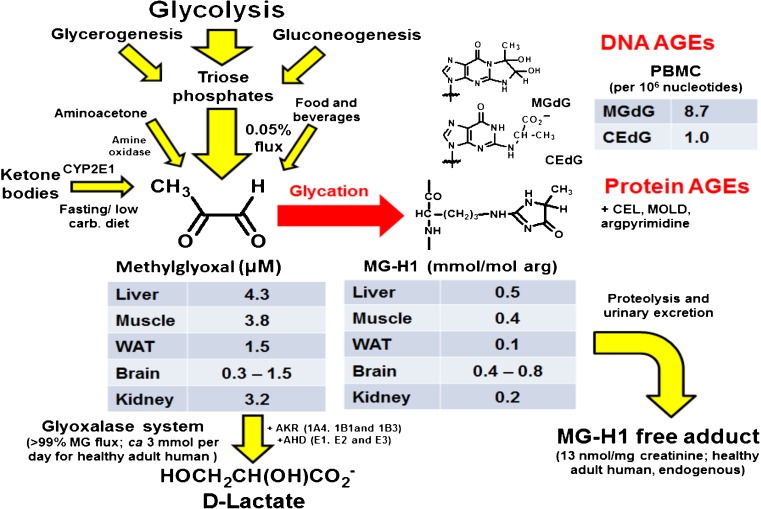
The reactive dicarbonyl metabolite methylglyoxal (MG) is the precursor of the major quantitative advanced glycation endproducts (AGEs) in physiological systems - arginine-derived hydroimidazolones and deoxyguanosine-derived imidazopurinones. The glyoxalase system in the cytoplasm of cells provides the primary defence against dicarbonyl glycation by catalysing the metabolism of MG and related reactive dicarbonyls. Dicarbonyl stress is the abnormal accumulation of dicarbonyl metabolites leading to increased protein and DNA modification contributing to cell and tissue dysfunction in ageing and disease. It is produced endogenously by increased formation and/or decreased metabolism of dicarbonyl metabolites. Dicarbonyl stress contributes to ageing, disease and activity of cytotoxic chemotherapeutic agents. It contributes to ageing through age-related decline in glyoxalase 1 (Glo-1) activity. Glo-1 has a dual role in cancer as a tumour suppressor protein prior to tumour development and mediator of multi-drug resistance in cancer treatment, implicating dicarbonyl glycation of DNA in carcinogenesis and dicarbonyl-driven cytotoxicity in mechanism of action of anticancer drugs. Glo-1 is a driver of cardiovascular disease, likely through dicarbonyl stress-driven dyslipidemia and vascular cell dysfunction. Dicarbonyl stress is also a contributing mediator of obesity and vascular complications of diabetes. There are also emerging roles in neurological disorders. Glo-1 responds to dicarbonyl stress to enhance cytoprotection at the transcriptional level through stress-responsive increase of Glo-1 expression. Small molecule Glo-1 inducers are in clinical development for improved metabolic, vascular and renal health and Glo-1 inhibitors in preclinical development for multidrug resistant cancer chemotherapy.
Keywords: Cardiovascular disease; Diabetes, cancer; Glycation; Glyoxalase; Methylglyoxal; Obesity; Renal failure; Therapeutics.
Figures

References
-
- Thornalley PJ, Rabbani N. Assay of methylglyoxal and glyoxal and control of peroxidase interference Biochem. Soc. Transit. 2014;42(2):504–510. - PubMed
-
- Rabbani, N., Thornalley, P.J.: Dicarbonyls (Glyoxal, Methylglyoxal, and 3-Deoxyglucosone). In: Uremic Toxins. pp. pp. 177–192. John Wiley & Sons, Inc., (2012)
Publication types
MeSH terms
Substances
LinkOut - more resources
Full Text Sources
Other Literature Sources
Medical
Research Materials
Miscellaneous
