Intermittent hypoxia training as non-pharmacologic therapy for cardiovascular diseases: Practical analysis on methods and equipment
- PMID: 27407098
- PMCID: PMC4999622
- DOI: 10.1177/1535370216657614
Intermittent hypoxia training as non-pharmacologic therapy for cardiovascular diseases: Practical analysis on methods and equipment
Abstract
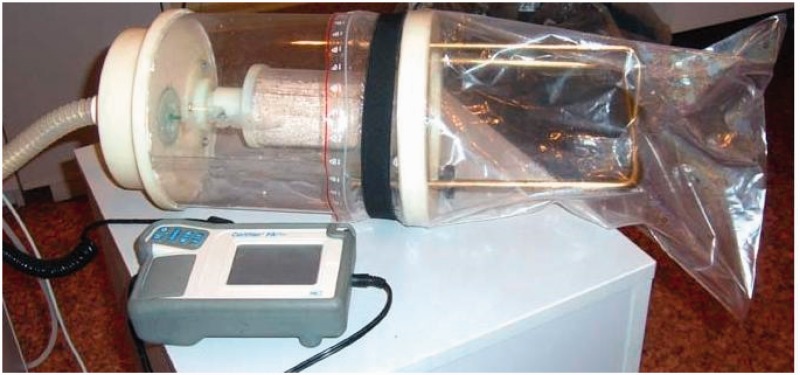
The global industrialization has brought profound lifestyle changes and environmental pollutions leading to higher risks of cardiovascular diseases. Such tremendous challenges outweigh the benefits of major advances in pharmacotherapies (such as statins, antihypertensive, antithrombotic drugs) and exacerbate the public healthcare burdens. One of the promising complementary non-pharmacologic therapies is the so-called intermittent hypoxia training (IHT) via activation of the human body's own natural defense through adaptation to intermittent hypoxia. This review article primarily focuses on the practical questions concerning the utilization of IHT as a non-pharmacologic therapy against cardiovascular diseases in humans. Evidence accumulated in the past five decades of research in healthy men and patients has suggested that short-term daily sessions consisting 3-4 bouts of 5-7 min exposures to 12-10% O2 alternating with normoxic durations for 2-3 weeks can result in remarkable beneficial effects in treatment of cardiovascular diseases such as hypertension, coronary heart disease, and heart failure. Special attentions are paid to the therapeutic effects of different IHT models, along with introduction of a variety of specialized facilities and equipment available for IHT, including hypobaric chambers, hypoxia gas mixture deliver equipment (rooms, tents, face masks), and portable rebreathing devices. Further clinical trials and thorough evaluations of the risks versus benefits of IHT are much needed to develop a series of standardized and practical guidelines for IHT. Taken together, we can envisage a bright future for IHT to play a more significant role in the preventive and complementary medicine against cardiovascular diseases.
Keywords: Intermittent hypoxia; cardioprotection; complementary therapy; coronary heart disease; heart failure; hypertension.
© 2016 by the Society for Experimental Biology and Medicine.
Figures
References
-
- Lozano R, Naghavi M, Foreman K, Lim S, Shibuya K, Aboyans V, Abraham J, Adair T, Aggarwal R, Ahn SY, Alvarado M, Anderson HR, Anderson LM, Andrews KG, Atkinson C, Baddour LM, Barker-Collo S, Bartels DH, Bell ML, Benjamin EJ, Bennett D, Bhalla K, Bikbov B, Bin AA, Birbeck G, Blyth F, Bolliger I, Boufous S, Bucello C, Burch M, Burney P, Carapetis J, Chen H, Chou D, Chugh SS, Coffeng LE, Colan SD, Colquhoun S, Colson KE, Condon J, Connor MD, Cooper LT, Corriere M, Cortinovis M, de Vaccaro KC, Couser W, Cowie BC, Criqui MH, Cross M, Dabhadkar KC, Dahodwala N, De LD, Degenhardt L, Delossantos A, Denenberg J, Des Jarlais DC, Dharmaratne SD, Dorsey ER, Driscoll T, Duber H, Ebel B, Erwin PJ, Espindola P, Ezzati M, Feigin V, Flaxman AD, Forouzanfar MH, Fowkes FG, Franklin R, Fransen M, Freeman MK, Gabriel SE, Gakidou E, Gaspari F, Gillum RF, Gonzalez-Medina D, Halasa YA, Haring D, Harrison JE, Havmoeller R, Hay RJ, Hoen B, Hotez PJ, Hoy D, Jacobsen KH, James SL, Jasrasaria R, Jayaraman S, Johns N, Karthikeyan G, Kassebaum N, Keren A, Khoo JP, Knowlton LM, Kobusingye O, Koranteng A, Krishnamurthi R, Lipnick M, Lipshultz SE, Ohno SL, Mabweijano J, MacIntyre MF, Mallinger L, March L, Marks GB, Marks R, Matsumori A, Matzopoulos R, Mayosi BM, McAnulty JH, McDermott MM, McGrath J, Mensah GA, Merriman TR, Michaud C, Miller M, Miller TR, Mock C, Mocumbi AO, Mokdad AA, Moran A, Mulholland K, Nair MN, Naldi L, Narayan KM, Nasseri K, Norman P, O'Donnell M, Omer SB, Ortblad K, Osborne R, Ozgediz D, Pahari B, Pandian JD, Rivero AP, Padilla RP, Perez-Ruiz F, Perico N, Phillips D, Pierce K, Pope CA, III, Porrini E, Pourmalek F, Raju M, Ranganathan D, Rehm JT, Rein DB, Remuzzi G, Rivara FP, Roberts T, De Leon FR, Rosenfeld LC, Rushton L, Sacco RL, Salomon JA, Sampson U, Sanman E, Schwebel DC, Segui-Gomez M, Shepard DS, Singh D, Singleton J, Sliwa K, Smith E, Steer A, Taylor JA, Thomas B, Tleyjeh IM, Towbin JA, Truelsen T, Undurraga EA, Venketasubramanian N, Vijayakumar L, Vos T, Wagner GR, Wang M, Wang W, Watt K, Weinstock MA, Weintraub R, Wilkinson JD, Woolf AD, Wulf S, Yeh PH, Yip P, Zabetian A, Zheng ZJ, Lopez AD, Murray CJ, AlMazroa MA, Memish ZA. Global and regional mortality from 235 causes of death for 20 age groups in 1990 and 2010: a systematic analysis for the Global Burden of Disease Study 2010. Lancet 2012; 380: 2095–128. - PMC - PubMed
-
- Mateika JH, El-Chami M, Shaheen D, Ivers B. Intermittent hypoxia: a low-risk research tool with therapeutic value in humans. J Appl Physiol 2015; 118: 520–32. - PubMed
Publication types
MeSH terms
LinkOut - more resources
Full Text Sources
Other Literature Sources
Medical
Molecular Biology Databases
Miscellaneous