Independent evaluation of a FOXM1-based quantitative malignancy diagnostic system (qMIDS) on head and neck squamous cell carcinomas
- PMID: 27409343
- PMCID: PMC5342363
- DOI: 10.18632/oncotarget.10512
Independent evaluation of a FOXM1-based quantitative malignancy diagnostic system (qMIDS) on head and neck squamous cell carcinomas
Abstract
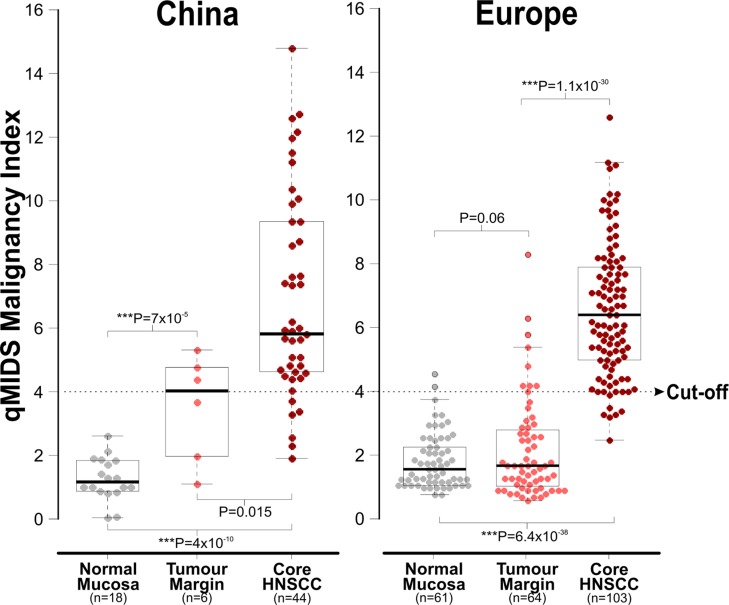
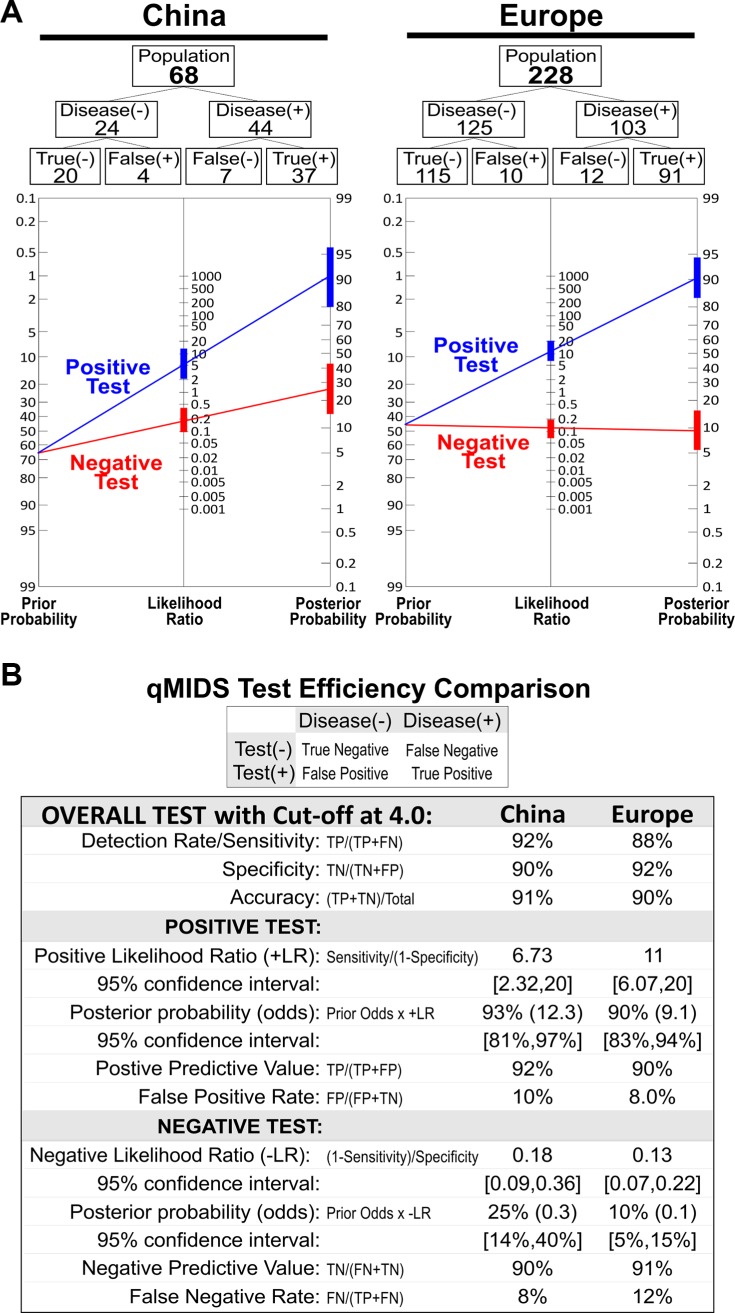
The forkhead box M1 (FOXM1) transcription factor gene has been implicated in almost all human cancer types. It would be an ideal biomarker for cancer detection but, to date, its translation into a cancer diagnostic tool is yet to materialise. The quantitative Malignancy Index Diagnostic System (qMIDS) was the first FOXM1 oncogene-based diagnostic test developed for quantifying squamous cell carcinoma aggressiveness. The test was originally validated using head and neck squamous cell carcinomas (HNSCC) from European patients. The HNSCC gene expression signature across geographical and ethnic differences is unknown. This is the first study evaluated the FOXM1-based qMIDS test using HNSCC specimens donated by ethnic Chinese patients. We tested 50 Chinese HNSCC patients and 18 healthy subjects donated 68 tissues in total. qMIDS scores from the Chinese cohort were compared with the European datasets (n = 228). The median ± SD scores for the Chinese cohort were 1.13 ± 0.66, 4.02 ± 1.66 and 5.83 ± 3.13 in healthy oral tissues, adjacent tumour margin and HNSCC core tissue, respectively. Diagnostic test efficiency between the Chinese and European datasets was almost identical. Consistent with previous European data, qMIDS scores for HNSCC samples were not influenced by gender or age. The degree of HNSCC differentiation, clinical stage and lymphatic metastasis status were found to be correlated with qMIDS scores. This study provided the first evidence that the pathophysiology of HNSCC was molecularly indistinguishable between the Chinese and European specimens. The qMIDS test robustly quantifies a universal FOXM1-driven oncogenic program, at least in HNSCC, which transcends ethnicity, age, gender and geographic origins.
Keywords: FOXM1; early cancer biomarkers; ethnicity; molecular diagnostics; squamous cell carcinoma.
Conflict of interest statement
There is no conflicts of interest declared by any of the authors in this manuscript.
Figures
References
-
- Ferlay J, Shin HR, Bray F, Forman D, Mathers C, Parkin DM. Estimates of worldwide burden of cancer in 2008: GLOBOCAN 2008. Int J Cancer. 2010;127:2893–2917. - PubMed
-
- de Juan J, Garcia J, Lopez M, Orus C, Esteller E, Quer M, Leon X. Inclusion of extracapsular spread in the pTNM classification system: a proposal for patients with head and neck carcinoma. JAMA Otolaryngol Head Neck Surg. 2013;139:483–488. - PubMed
-
- Kreimer AR, Clifford GM, Boyle P, Franceschi S. Human papillomavirus types in head and neck squamous cell carcinomas worldwide: a systematic review. Cancer Epidemiol Biomarkers Prev. 2005;14:467–475. - PubMed
-
- Chen W, Zheng R, Baade PD, Zhang S, Zeng H, Bray F, Jemal A, Yu XQ, He J. Cancer statistics in China, 2015. CA Cancer J Clin. 2016 - PubMed
MeSH terms
Substances
LinkOut - more resources
Full Text Sources
Other Literature Sources
Medical
Miscellaneous