


Vitamin D Status Is Negatively Correlated with Insulin Resistance in Chinese Type 2 Diabetes
- PMID: 27413370
- PMCID: PMC4931076
- DOI: 10.1155/2016/1794894
Vitamin D Status Is Negatively Correlated with Insulin Resistance in Chinese Type 2 Diabetes
Abstract
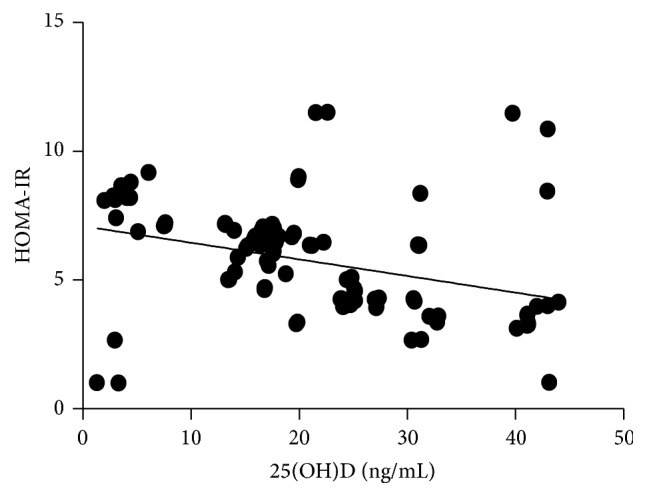
Objectives. Vitamin D deficiency plays a role in insulin resistance and the pathogenesis of type 2 diabetes mellitus. Little information is available about the association between vitamin D status and insulin resistance in the Chinese population. Currently, vitamin D status is evaluated by the concentrations of serum 25-hydroxyvitamin D [25(OH)D]. This study explores the relationship between insulin resistance and serum 25-hydroxyvitamin D concentrations in Chinese patients with type 2 diabetes mellitus. Subjects and Methods. This study included 117 patients with type 2 diabetes. The following variables were measured: 25-hydroxyvitamin D [25(OH)D], glycosylated hemoglobin A1c (HbA1c), fasting blood glucose (FBS), fasting blood insulin (FINS), fasting blood C-peptide, serum creatinine (SCr), glomerular filtration rate (eGFR), body mass index (BMI), and homeostatic model estimates of insulin resistance (HOMA-IR). Results. The cases were divided into three groups: Group 1 (G1) with 25(OH)D ≤ 20 ng/mL [≤50 nmol/L], Group 2 (G2) with 25(OH)D values from 20 ng/mL [50 nmol/L] to 30 ng/mL [75 nmol/L], and Group 3 (G3) with 25(OH)D ≥ 30 ng/mL [≥75 nmol/L], with 52.6%, 26.3%, and 21.1% of subjects in Groups 1-3, respectively. There was a negative correlation between 25(OH)D and HOMA-IR (β = -0.314, p = 0.001) adjusted by age, BMI, and eGFR. Conclusion. Better vitamin D status may be protective of glucose homeostasis since 25(OH)D was negatively associated with insulin resistance in Chinese patients with type 2 diabetes.
Figures
References
-
- Mitri J., Dawson-Hughes B., Hu F. B., Pittas A. G. Effects of vitamin D and calcium supplementation on pancreatic β cell function, insulin sensitivity, and glycemia in adults at high risk of diabetes: the Calcium and Vitamin D for Diabetes Mellitus (CaDDM) randomized controlled trial. American Journal of Clinical Nutrition. 2011;94(2):486–494. doi: 10.3945/ajcn.111.011684. - DOI - PMC - PubMed
LinkOut - more resources
Full Text Sources
Other Literature Sources
Research Materials
Miscellaneous
