


Bioengineered non-coding RNA agent (BERA) in action
- PMID: 27415469
- PMCID: PMC5094625
- DOI: 10.1080/21655979.2016.1207011
Bioengineered non-coding RNA agent (BERA) in action
Erratum in
Abstract
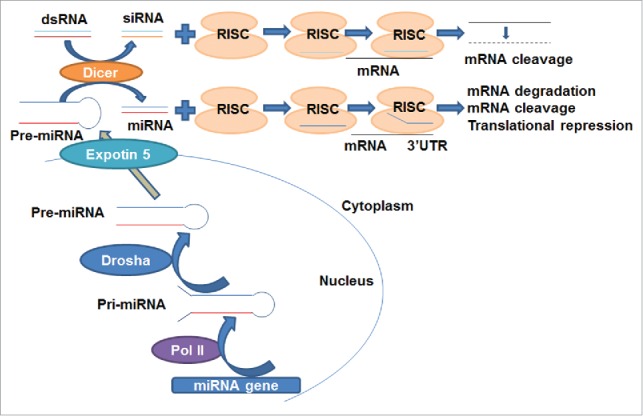
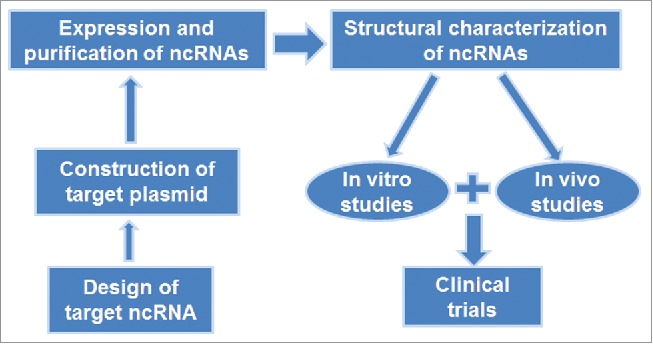
Non-coding RNAs (ncRNAs) including microRNAs (miRNAs) and small interfering RNAs (siRNAs) are important players in the control of gene regulation and represent novel promising therapeutic targets or agents for the treatment of various diseases. While synthetic ncRNAs are predominately utilized, the effects of excessive artificial modifications on higher-order structures, activities and toxicities of ncRNAs remain uncertain. Inspired by recombinant protein technology allowing large-scale bioengineering of proteins for research and therapy, efforts have been made to develop practical and effective means to bioengineer ncRNA agents. The fermentation-based approaches shall offer biological ncRNA agents with natural modifications and proper folding critical for ncRNA structure, function and safety. In this article, we will summarize current recombinant RNA platforms to the production of ncRNA agents including siRNAs and miRNAs. The applications of bioengineered ncRNA agents for basic research and potential therapeutics are also discussed.
Keywords: bioengineering; cancer; miRNA; non-coding RNAs; siRNA; therapy.
Figures
References
-
- Mattick JS, Makunin IV. Non-coding RNA. Hum Mol Genet 2006; 15 Spec No 1:R17-29; PMID:16651366; http://dx.doi.org/ 10.1093/hmg/ddl046 - DOI - PubMed
-
- Agrawal N, Dasaradhi PV, Mohmmed A, Malhotra P, Bhatnagar RK, Mukherjee SK. RNA interference: biology, mechanism, and applications. Microbiol Mol Biol Rev 2003; 67:657-85; PMID:14665679; http://dx.doi.org/ 10.1128/MMBR.67.4.657-685.2003 - DOI - PMC - PubMed
-
- Bartel DP. MicroRNAs: target recognition and regulatory functions. Cell 2009; 136:215-33; PMID:19167326; http://dx.doi.org/ 10.1016/j.cell.2009.01.002 - DOI - PMC - PubMed
-
- Bader AG, Brown D, Stoudemire J, Lammers P. Developing therapeutic microRNAs for cancer. Gene Ther 2011; 18:1121-6; PMID:21633392; http://dx.doi.org/ 10.1038/gt.2011.79 - DOI - PMC - PubMed
-
- Shah MY, Calin GA. MicroRNAs as therapeutic targets in human cancers. Wiley Interdiscip Rev RNA 2014; 5:537-48; PMID:24687772; http://dx.doi.org/ 10.1002/wrna.1229 - DOI - PMC - PubMed
Publication types
MeSH terms
Substances
Grants and funding
LinkOut - more resources
Full Text Sources
Other Literature Sources
