


Ameliorative effect of black tea on nicotine induced cardiovascular pathogenesis in rat
- PMID: 27418907
- PMCID: PMC4942803
Ameliorative effect of black tea on nicotine induced cardiovascular pathogenesis in rat
Abstract
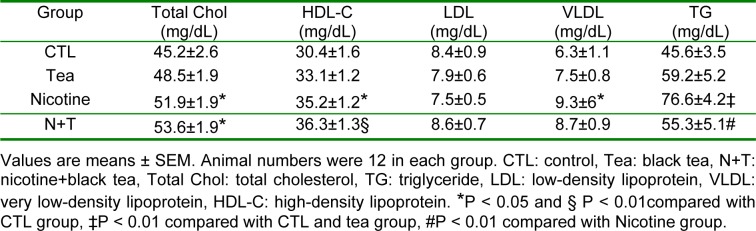
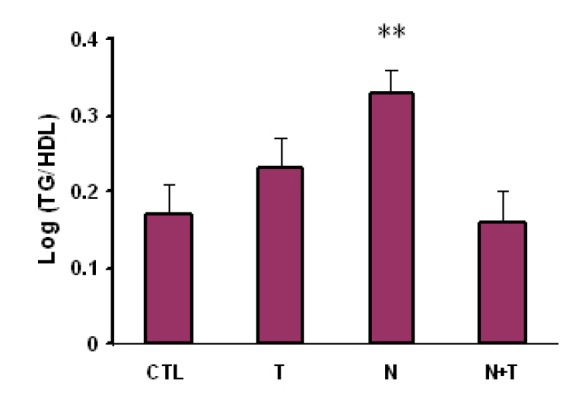
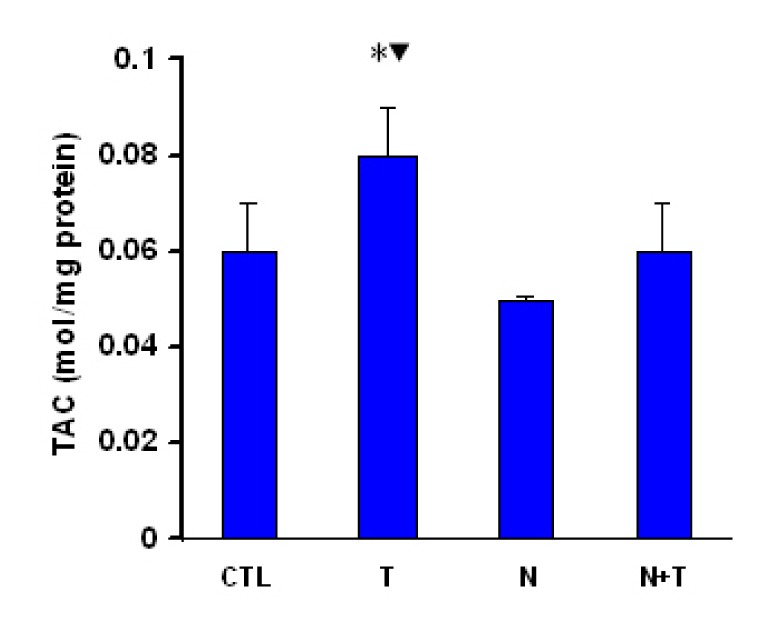
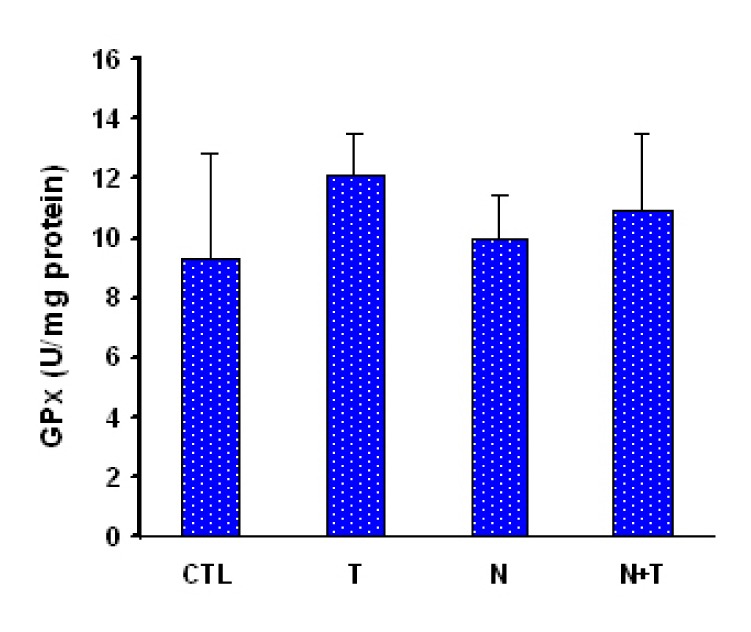
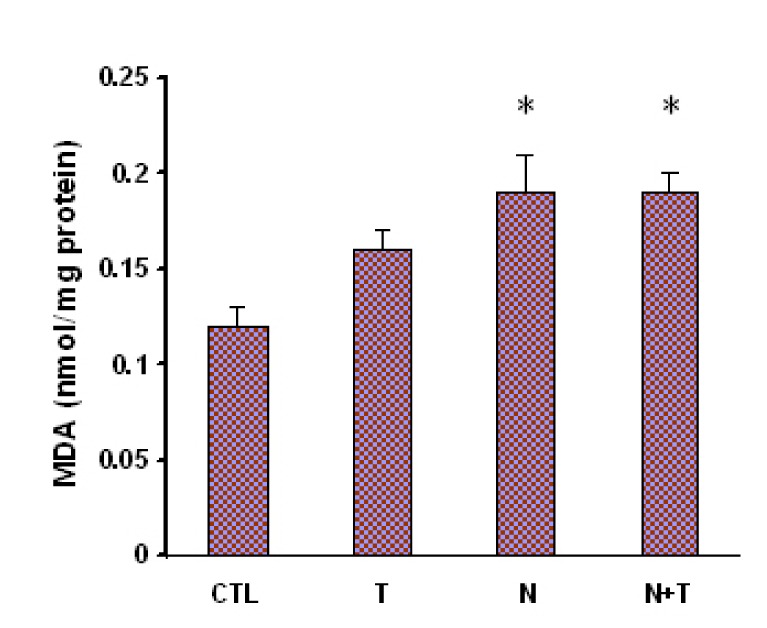
Regarding the role of nicotine in the development of cardiovascular complications of smoking, we investigated whether black tea has a modulatory effect on cardiovascular pathogenesis of nicotine in rat. Animals were randomized to control, tea, nicotine and tea plus nicotine groups. Test groups received black tea brewed (adding 400 ml boiling water to 10 g Lipton black tea for 5 min) orally alone or with nicotine 2 mg/kg/day, s.c. separately or combined for four weeks. On 28th day, lipids profile of blood and also malondialdehyde (MDA) level, glutathione peroxidase (GPx) activity and total antioxidant capacity (TAC) of heart tissue were measured. Nicotine administration caused a significant increase in total cholesterol, TG and HDL-C and also atherogenic index of plasma (log TG/HDL-C). Moreover, nicotine increased MDA level of heart. Black tea alone increased the antioxidant capacity of heart tissue without significant effect on lipid profile and MDA levels. Concomitant use of black tea and nicotine significantly attenuated the hyperlipidemic and atherogenic effects of nicotine but was unable to attenuate the MDA. Our findings suggest that black tea consumption reduces hyperlipidemia and atherogenesis as two cardiovascular risk factors and complications of nicotine, in rat. If these results can be extrapolated to human, smokers who daily drink black tea may be less at risk of cardiovascular disease.
Keywords: atherogenic index; black tea; blood lipids; heart; nicotine; total antioxidant capacity.
Figures
References
-
- Allen SS, Hatsukami D, Gorsline J. Cholesterol changes in smoking cessation using the transdermal nicotine system. Transdermal Nicotine Study Group. Prev Med. 1994;23:190–196. - PubMed
-
- Andresen JH, Godang K, Munkeby BH, Stray-Pedersen B, Saugstad OD. Nicotine in a small-to-moderate dose does not cause a significant increase in plasma catecholamine levels in newborn piglets. Neonatology. 2008;94:279–83. - PubMed
-
- Ashakumary L, Vijayammal PL. Additive effect of alcohol and nicotine on lipid peroxidation and antioxidant defence mechanism in rats. J Appl Toxicol. 1996;16:305–308. - PubMed
-
- Ashakumary L, Vijayammal PL. Effect of nicotine on lipoprotein metabolism in rats. Lipids. 1997;32:311–315. - PubMed
-
- Barter PJ, Brewer HB, Jr, Chapman MJ, Hennekens CH, Rader DJ, Tall AR. Cholesteryl ester transfer protein: a novel target for raising HDL-C and inhibiting atherosclerosis. Arterioscler Thromb Vasc Biol. 2003;23:160–7. - PubMed
LinkOut - more resources
Full Text Sources
Miscellaneous