


Morinda citrifolia L. fruit extracts modulates H2O2-induced oxidative stress in human liposarcoma SW872 cells
- PMID: 27419097
- PMCID: PMC4936763
- DOI: 10.1016/j.jtcme.2015.09.003
Morinda citrifolia L. fruit extracts modulates H2O2-induced oxidative stress in human liposarcoma SW872 cells
Abstract
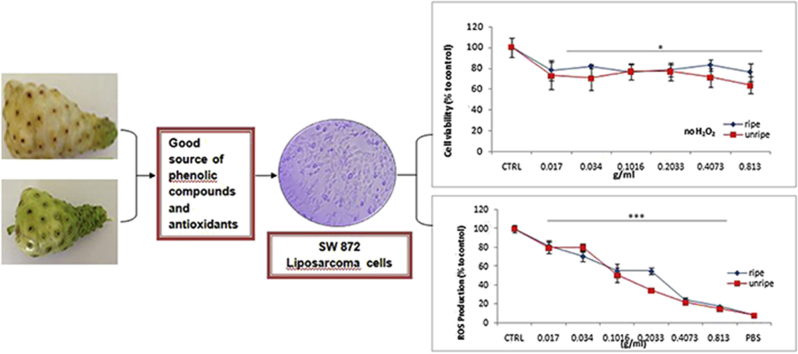
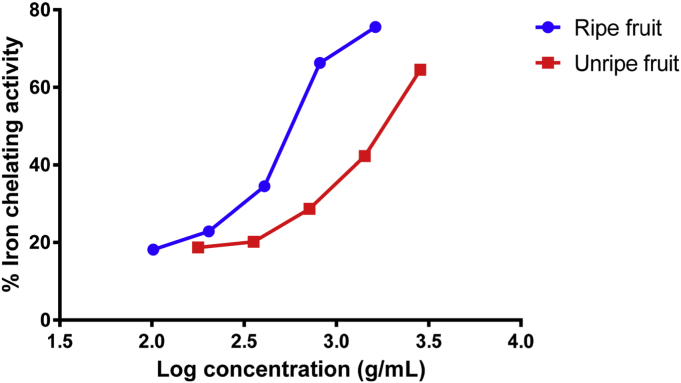
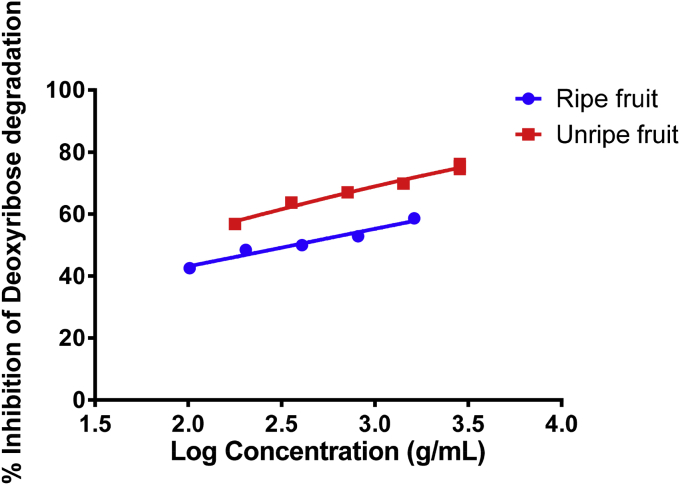
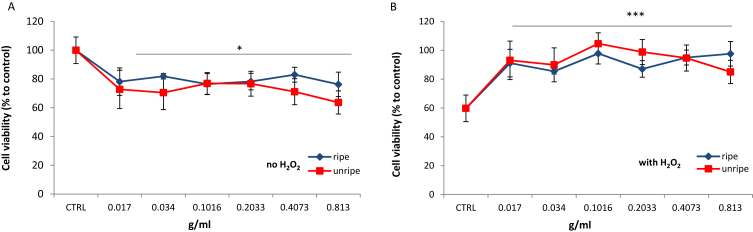
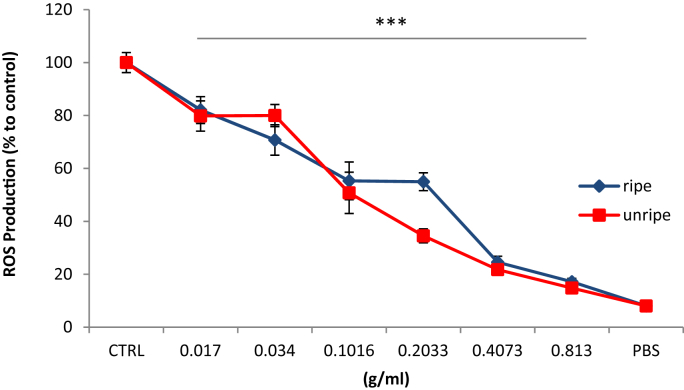
Morinda citrifolia L. commonly known as noni is used by the pharmaceutical and cosmetic industries due to the plethora of pharmacological activities of its metabolites. In Mauritius, the fruits of M. citrifolia are used in folk medicine against a number of indications. The present study aimed at evaluating the antioxidant activity of ripe and unripe noni fruit at both biochemical and cellular levels. Using an array of established assay systems, the fruit antioxidant propensity was assessed in terms of its radical scavenging, iron reducing and metal chelating potentials. Ascorbic acid, total phenolic and total flavonoid contents of the fruits were also determined. The ascorbic acid content of ripe noni was 76.24 ± 1.13 mg/100 g while total phenolics of ripe and unripe fruit extracts were 748.40 ± 8.85 μg and 770.34 ± 2.27 μg GAE g(-1) FW respectively. Both the ripe and unripe extracts of M. citrifolia were potent scavengers of nitric oxide, superoxide and hydroxyl radicals. The ferric reducing capacity ranged from 11.26 ± 0.33 to 11.90 ± 0.20 mM Fe(2+) g(-1) FW while the IC50 values for the iron (II) chelating power were 0.50 ± 0.01 and 1.74 ± 0.01 g FW/mL for the ripe and unripe fruit extracts respectively. Cellular studies additionally demonstrated that noni were able to dose-dependently counteract accumulation of reactive oxygen species (ROS)-induced oxidative stress, a potential obesogenic factor within human liposarcoma SW872 cells as well as significantly restore cell death within the concentration range of 0.106-0.813 g/mL. Results reported herein suggest noni as an interesting source of prophylactic antioxidants modulated by its polyphenol composition.
Keywords: Antioxidant activity; Folk medicine; Morinda citrifolia; Oxidative stress; Polyphenolics.
Figures
References
-
- Hybertson B.M., Bifeng Gao B., Bose S.K., Mccord J.M. Oxidative stress in health and disease: the therapeutic potential of Nrf2 activation. Mol Aspects Med. 2011;32:234–246. - PubMed
-
- Cervellati C., Bonaccorsi G., Cremonini E. Bone mass density selectively correlates with serum markers of oxidative damage in post menopausal women. Clin Chem Lab Med. 2013;51:333–338. - PubMed
-
- Gironés-Vilaplana A., Baenas N., Villaño D. Evaluation of the latin-Americain fruits rich in phytochemicals with biological effects. J Funct Foods. 2014;7:599–608.
-
- Joshi P.M., Chilkawar, Jadhav B.A. Studies on physicochemical properties of noni fruit (Morinda citrifolia) and preparation of Noni beverages. Int J Food Sci Nutr Diet. 2012;1:3–8.
LinkOut - more resources
Full Text Sources
Other Literature Sources