


Review
doi: 10.1016/j.yapd.2016.04.005.
Prader Willi Syndrome: Genetics, Metabolomics, Hormonal Function, and New Approaches to Therapy
Affiliations
- PMID: 27426895
- PMCID: PMC4955809
- DOI: 10.1016/j.yapd.2016.04.005
Item in Clipboard
Review
Prader Willi Syndrome: Genetics, Metabolomics, Hormonal Function, and New Approaches to Therapy
Adv Pediatr.
2016 Aug.
No abstract available
Keywords: Childhood obesity syndrome; Growth hormone; Hyperphagia; Imprinting defect.
Figures

Representation of chromosome 15q11-13
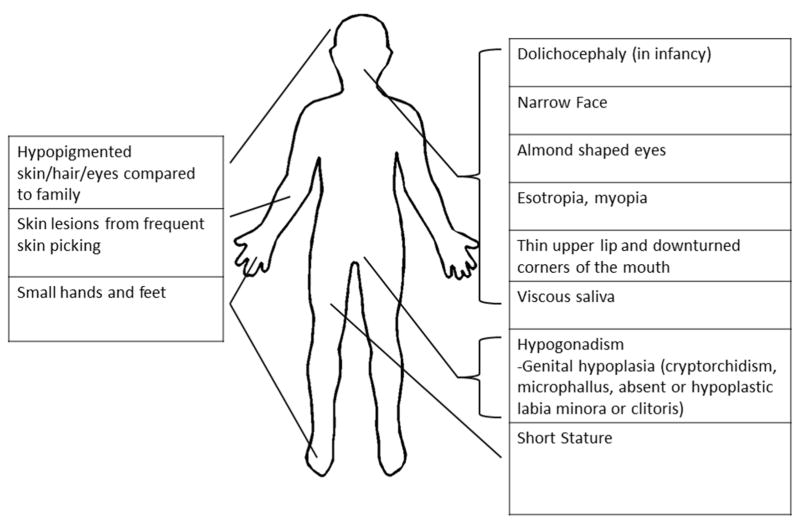
Physical Findings in PWS

Algorithm for Initiation of GH Therapy in Infants and Children

Timeline of nutritional phases in PWS (adapted from Miller J, et al. 2011 Am J Med Genet Part A 155:1040–1049).
References
-
- Cassidy SB, Dykens E, Williams CA. Prader-Willi and Angelman syndromes: Sister imprinted disorders. American Journal of Medical Genetics. 2000;97(2):136–146. - PubMed
-
- Bervini S, Herzog H. Mouse models of Prader–Willi Syndrome: A systematic review. Front Neuroendocrinol. 2013;34(2):107–119. - PubMed
-
- Bischof JM, Stewart CL, Wevrick R. Inactivation of the mouse Magel2 gene results in growth abnormalities similar to Prader-Willi syndrome. Hum Mol Genet. 2007;16(22):2713–2719. - PubMed
Publication types
MeSH terms
Substances
Grants and funding
LinkOut - more resources
Full Text Sources
Other Literature Sources
Medical
