


Efavirenz is associated with higher bone mass in South African children with HIV
- PMID: 27427876
- PMCID: PMC5069169
- DOI: 10.1097/QAD.0000000000001204
Efavirenz is associated with higher bone mass in South African children with HIV
Abstract
Background: We investigate if switching from a ritonavir-boosted lopinavir (LPV/r)-based to an efavirenz-based antiretroviral therapy (ART) regimen is associated with beneficial bone development.
Methods: The CHANGES Bone Study follows HIV-infected children who participated in a noninferiority randomized trial in Johannesburg, South Africa evaluating the safety and efficacy of preemptive switching to efavirenz (n = 106) compared with remaining on LPV/r (n = 113). HIV-uninfected children were also recruited. Whole-body and lumbar spine bone mineral content (BMC) were assessed by dual-energy X-ray absorptiometry at a cross-sectional visit. BMC Z-scores adjusted for sex, age, and height were generated. Physical activity and dietary intake were assessed. CD4 percentage and viral load were measured. We compared bone indices of HIV-infected with HIV-uninfected children and LPV/r with efavirenz by intent-to-treat.
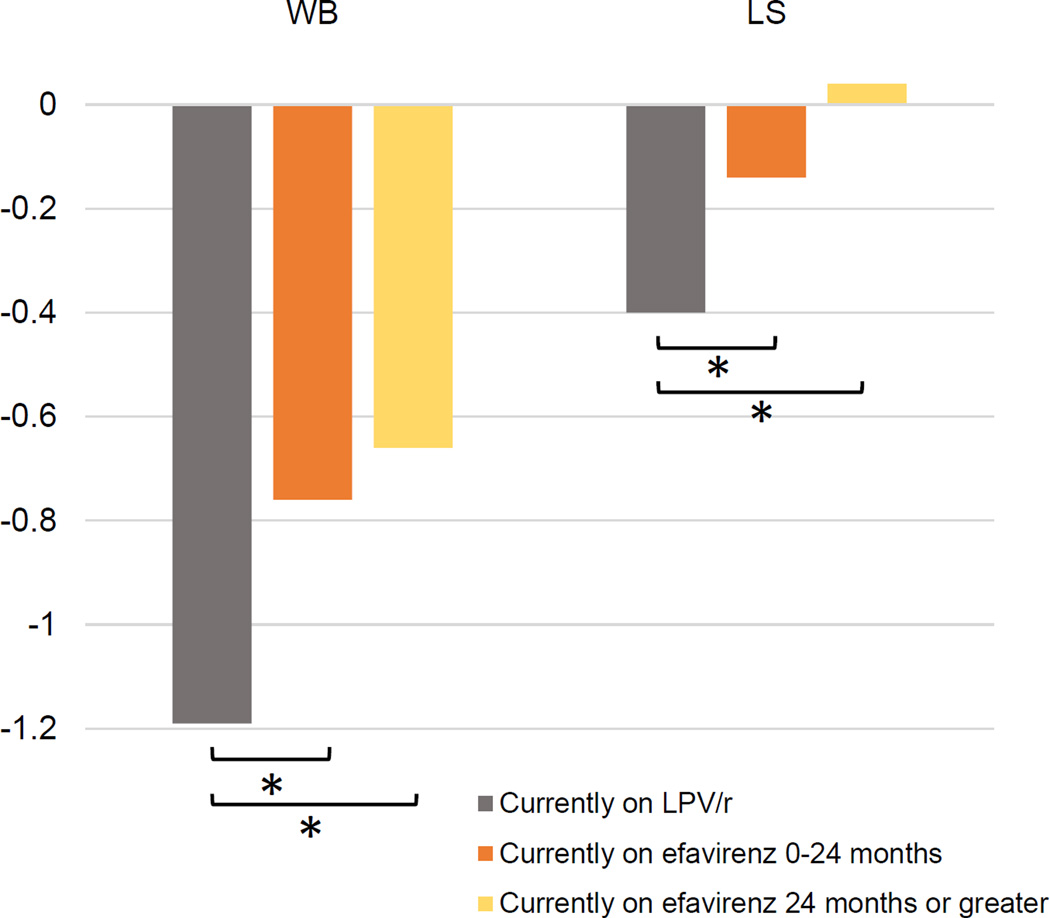
Results: The 219 HIV-infected (52% boys) and 219 HIV-uninfected (55% boys) children were 6.4 and 7.0 years of age, respectively. Mean ART duration for HIV-infected children was 5.7 years. Whole-body BMC Z-score was 0.17 lower for HIV-infected children compared with HIV-uninfected children after adjustment for physical activity, dietary vitamin D and calcium (P = 0.03). Whole-body BMC Z-score was 0.55 higher for HIV-infected children switched to efavirenz compared with those remaining on LPV/r after adjustment for physical activity, dietary vitamin D and calcium, CD4 percentage, and viral load (P < 0.0001).
Conclusion: South African HIV-infected children receiving ART have lower bone mass compared with HIV-uninfected controls. Accrued bone mass is positively associated with switching to efavirenz-based ART compared with remaining on LPV/r, providing additional rationale for limiting LPV/r exposure once viral suppression has been achieved.
Figures
References
-
- UNAIDS. UNAIDS report on the global AIDS epidemic. 2013
-
- Dollfus C, Le Chenadec J, Faye A, Blanche S, Briand N, Rouzioux C, et al. Long-term outcomes in adolescents perinatally infected with HIV-1 and followed up since birth in the French perinatal cohort (EPF/ANRS CO10) Clin Infect Dis. 2010;51:214–224. - PubMed
-
- Foster C, Judd A, Tookey P, Tudor-Williams G, Dunn D, Shingadia D, et al. Young people in the United Kingdom and Ireland with perinatally acquired HIV: the pediatric legacy for adult services. AIDS Patient Care STDS. 2009;23:159–166. - PubMed
Publication types
MeSH terms
Substances
Grants and funding
LinkOut - more resources
Full Text Sources
Other Literature Sources
Medical
Research Materials
